Amboseli National Park
Amboseli National Park: A Complete Guide to Kenya’s Wildlife, Landscapes, and Mount Kilimanjaro Views
Amboseli National Park is one of Kenya’s most famous and visually spectacular wildlife destinations. Located in southern Kenya near the border with Tanzania, the park is celebrated for its enormous elephant herds, wide open savannahs, wetlands, acacia trees, and breathtaking views of Mount Kilimanjaro. The combination of wildlife and dramatic mountain scenery makes Amboseli a remarkable destination for travelers, photographers, nature lovers, and anyone interested in experiencing Africa’s wild landscapes.
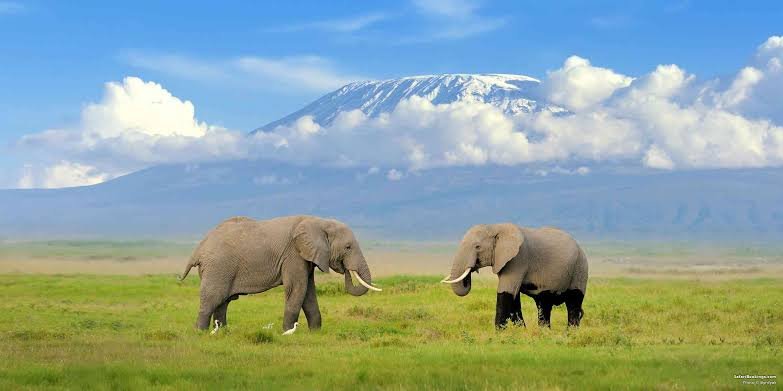
The park may not be the largest protected area in Kenya, but its scenery and wildlife make it one of the country’s most memorable safari destinations. On a clear morning, elephants can be seen moving slowly across golden grasslands while the snow-covered summit of Mount Kilimanjaro rises in the distance. Few safari landscapes provide such a powerful combination of giant animals and an enormous mountain backdrop.
Amboseli also has an important ecological story. Its wetlands and underground water sources support wildlife during dry periods, while the surrounding ecosystem extends beyond the official boundaries of the national park. Local communities, conservation organizations, tourism businesses, and wildlife authorities all play important roles in protecting this remarkable landscape.
1. Introduction to Amboseli National Park
Amboseli National Park is situated in Kajiado County in southern Kenya. It lies close to the Tanzanian border and is part of a larger ecosystem that includes surrounding community lands and conservancies. The park is particularly famous for its African elephants, many of which have become accustomed to safari vehicles and can often be observed at relatively close range under responsible wildlife-viewing conditions.
The name Amboseli is associated with the Maasai word for a place of salty, dusty, or dry terrain. This description reflects the landscape visitors encounter in parts of the ecosystem. During dry periods, dust can rise from the plains, while seasonal wetlands remain important sources of water and vegetation.
Amboseli offers a different experience from Kenya’s larger savannah parks. Its relatively compact size means visitors can explore several different habitats during a safari without spending enormous amounts of time traveling between distant regions. At the same time, the park’s location beneath Mount Kilimanjaro creates a distinctive visual identity.
2. Where Is Amboseli National Park?
Amboseli National Park is located in southern Kenya, approximately 240 kilometers southeast of Nairobi by road, depending on the route and starting point. The park is close to the international border between Kenya and Tanzania. Mount Kilimanjaro stands across the border in Tanzania and dominates the horizon from many parts of Amboseli.
The park’s location makes it a popular addition to Kenyan safari itineraries. Travelers may visit Amboseli before or after destinations such as Nairobi, Tsavo, Lake Naivasha, or the Maasai Mara. It can also form part of a longer East African journey that includes northern Tanzania.
The surrounding landscape is important because wildlife does not recognize political or park boundaries. Elephants, zebras, wildebeest, giraffes, predators, and other animals may move between protected areas and community lands depending on water, food, season, and other ecological factors.
3. The History of Amboseli National Park
The Amboseli landscape has a long human history. The Maasai people have traditionally lived in and around this region, maintaining pastoral lifestyles based largely on livestock. Their relationship with the landscape is an important part of understanding the ecosystem.
During the colonial period, increasing attention was given to wildlife protection and hunting regulation in East Africa. The area that eventually became Amboseli National Park passed through several stages of conservation management before receiving national park status.
Amboseli became a national park in 1974. The establishment of the park helped strengthen formal protection for wildlife and habitats while also creating a foundation for tourism and conservation programs.
Today, conservation in Amboseli is broader than simply protecting land inside the park. The surrounding ecosystem includes community areas that are essential for wildlife movement. Conservation therefore increasingly involves cooperation between local communities, government institutions, conservation organizations, researchers, tourism operators, and visitors.
4. Mount Kilimanjaro and Amboseli
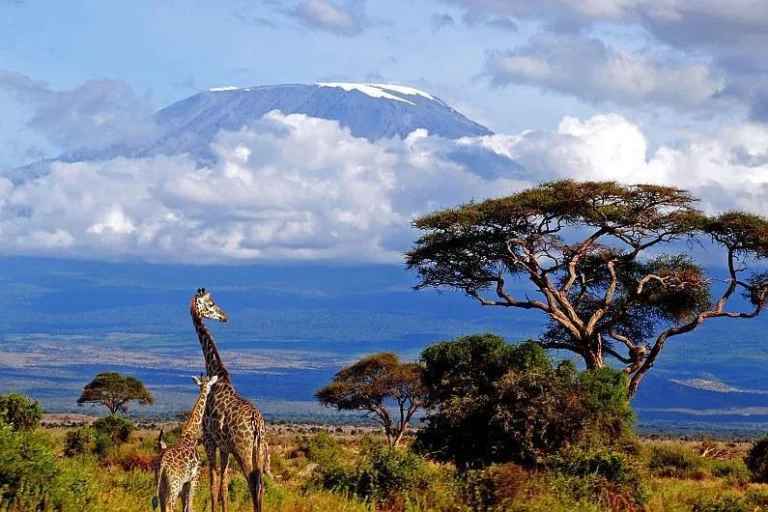
One of the defining features of Amboseli National Park is its view of Mount Kilimanjaro. At approximately 5,895 meters above sea level, Kilimanjaro is Africa’s highest mountain. Although the mountain is located in Tanzania, some of the most famous views of it are associated with Amboseli in Kenya.
The relationship between the mountain and the park creates spectacular photographic opportunities. Elephants walking across the plains with Kilimanjaro behind them have become one of the most recognizable images of African wildlife.
Mount Kilimanjaro is an active geological feature in the broad sense of being a volcanic massif with major geological history, although it is not currently erupting. Its snow and ice cover have changed considerably over time due to climate and environmental factors.
Visitors should remember that clear mountain views are never guaranteed. Clouds often gather around Kilimanjaro, particularly later in the day. Early morning is frequently considered one of the best periods for mountain photography because the atmosphere can be clearer before clouds build around the summit.
5. The Landscape of Amboseli
Amboseli has a varied landscape despite its relatively compact area. Open plains, dry grasslands, wetlands, seasonal streams, acacia woodland, thorny vegetation, and areas of dusty terrain all contribute to the park’s ecological diversity.
The landscape may appear extremely dry during certain months. However, water from underground sources connected to the Kilimanjaro region supports important wetland areas. These wetlands can remain green when surrounding areas are much drier.
This contrast between dry plains and green wetlands is one of the most interesting aspects of Amboseli. Wildlife can gather around water-rich areas, creating excellent opportunities for observation.
6. Amboseli’s Famous Elephants
Elephants are the symbol of Amboseli National Park. The park and surrounding ecosystem support an important population of African savannah elephants, and researchers have studied some Amboseli elephant families for decades.
Amboseli elephants are known for their large size and impressive tusks. Some individuals have become particularly famous because of their long ivory tusks. These elephants are sometimes described as “super tuskers,” although the term is used informally for elephants with exceptionally large tusks.
Watching elephants in Amboseli can be a powerful experience. Families may walk slowly across the plains, feed on vegetation, bathe in water, or interact with one another. Young calves often stay close to adults for protection.
Elephant societies are complex. Family groups are generally led by experienced females, and older elephants can play an important role in remembering water sources, migration routes, and other environmental information.
7. Other Wildlife in Amboseli
Although elephants receive the most attention, Amboseli supports many other species. Visitors may encounter lions, cheetahs, hyenas, jackals, buffaloes, zebras, wildebeest, giraffes, hippos, antelopes, warthogs, and numerous bird species.
Wildlife sightings vary according to season, weather, water availability, and animal movements. No safari can guarantee sightings of a particular species, but Amboseli provides excellent opportunities for observing a wide variety of animals.
Lions
Lions are among the most exciting predators to encounter in Amboseli. They may be found resting under trees during the heat of the day or becoming more active during cooler morning and evening hours.
Lions can hunt zebra, wildebeest, buffalo, and other prey. Their presence contributes to the natural balance of the ecosystem.
Cheetahs
Cheetahs are also found in the Amboseli ecosystem. These specialized predators are adapted for speed and often hunt smaller antelope. They are more difficult to find than some of the park’s common herbivores.
Buffaloes
African buffaloes are powerful herbivores that can be encountered in grasslands and wetland areas. They are social animals and may gather in large groups.
Zebras
Plains zebras are among the most recognizable animals in Amboseli. Their black-and-white patterns create beautiful scenes against the golden grasslands, especially when herds move across open areas.
Wildebeest
Wildebeest are another important herbivore. Their movements can vary according to local environmental conditions, rainfall, and availability of grazing.
Giraffes
Giraffes can often be seen browsing on trees and shrubs. Their long necks allow them to feed on vegetation that many other herbivores cannot reach.
Hippos
Hippopotamuses are associated with wet areas where suitable water is available. They spend much of their time in water or mud during hot periods and usually become more active around dusk.
Warthogs
Warthogs are commonly associated with open grasslands. They often move quickly across the landscape and may kneel while feeding.
8. Birdlife in Amboseli National Park
Amboseli is also an excellent destination for birdwatchers. The combination of wetlands, grasslands, woodland, and seasonal water sources creates habitats for many bird species.
Depending on the season, visitors may see flamingos, pelicans, herons, egrets, storks, eagles, vultures, kingfishers, bee-eaters, hornbills, and many smaller birds.
Birdwatching is particularly rewarding during the early morning when birds are active and temperatures are cooler. Wetlands can be especially productive locations for observing water-associated species.
9. Wetlands and Water in Amboseli
Water is central to the ecological importance of Amboseli. The park’s wetlands are supplied partly by underground water systems connected with the greater Kilimanjaro landscape. These wet areas can remain valuable during dry seasons.
Wetlands provide drinking water, feeding areas, and resting places for wildlife. They also support plants and insects that form the foundation of larger food chains.
The existence of these wetland habitats in an otherwise dry environment explains why large numbers of animals can survive in the region. During particularly dry periods, wildlife may concentrate around available water and green vegetation.
10. Climate of Amboseli National Park
Amboseli has a generally warm and dry climate. Temperatures can vary significantly between daytime and nighttime, especially during clearer and drier periods.
The park experiences rainy seasons during which vegetation becomes greener and the landscape changes dramatically. Rainfall can be unpredictable, however, and conditions may vary from one year to another.
Dry seasons can provide excellent wildlife viewing because vegetation is less dense and animals may gather around reliable water sources. Wet seasons can produce beautiful scenery, fresh vegetation, dramatic skies, and excellent birdwatching.
11. Best Time to Visit Amboseli
There is no single perfect month for every traveler. The best time depends on whether your priority is wildlife viewing, photography, birdwatching, lower visitor numbers, or green landscapes.
Dry Season
The dry season is often popular for wildlife viewing. Grass can become shorter and water becomes more important, making animals easier to locate in some areas.
For photographers, dry conditions can create dramatic golden landscapes. Dust can also produce atmospheric images, although it may make roads uncomfortable.
Wet Season
The wet season transforms the landscape. Grass becomes greener, flowers may appear, and migratory birds can add to the diversity of birdlife.
Rain can sometimes make roads challenging, so travelers should consider vehicle quality and local road conditions.
12. Safari Experience in Amboseli
The classic way to explore Amboseli is through guided game drives. Safari vehicles travel along designated routes while guides search for wildlife and explain animal behavior, ecology, and conservation.
Morning game drives are popular because temperatures are cooler and many animals are active. Afternoon drives can also be productive, particularly as temperatures begin to fall.
Night driving rules vary by protected-area regulations and should always be followed. Visitors should never leave a vehicle in areas where it is prohibited or approach wild animals on foot without authorized guidance.
13. Photography in Amboseli
Amboseli is one of Africa’s most attractive destinations for wildlife photography. Elephants, open landscapes, dramatic skies, and Mount Kilimanjaro provide numerous opportunities for memorable photographs.
A telephoto lens is useful for photographing animals safely from a distance. A wide-angle lens can help capture environmental portraits showing animals within the larger landscape.
Early morning and late afternoon light can create attractive conditions. Photographers should always prioritize wildlife welfare over obtaining a particular photograph.
14. Photography Tips
- Carry spare batteries and memory cards.
- Use a suitable telephoto lens for distant wildlife.
- Keep camera equipment protected from dust.
- Use early morning light for soft landscapes.
- Keep a safe distance from elephants and predators.
- Avoid blocking animals with vehicles.
- Be patient rather than chasing wildlife.
- Include Mount Kilimanjaro when conditions are clear.
- Photograph animal behavior rather than only close-up portraits.
15. Maasai Culture Around Amboseli
The Maasai are an important part of the cultural landscape surrounding Amboseli. Traditionally known for pastoralism, Maasai communities have strong cultural relationships with livestock, land, water, and wildlife.
Visitors may have opportunities to learn about Maasai culture through responsible community tourism programs. These experiences can include visits to villages, cultural performances, craft demonstrations, and discussions about traditional lifestyles.
Responsible tourism is essential. Travelers should respect local customs, ask permission before photographing people, and support community-led tourism where possible.
16. Conservation in Amboseli
Conservation in Amboseli involves more than protecting animals inside the national park. Wildlife depends on a much larger ecosystem that includes community-owned and community-managed lands.
Elephants and other animals may move outside park boundaries in search of food, water, and breeding areas. Maintaining wildlife corridors is therefore an important part of long-term conservation.
Community conservation initiatives can provide financial and social incentives for protecting wildlife habitats. Tourism revenue can contribute to local employment and community development when managed responsibly.
17. Challenges Facing Amboseli
Like many wildlife destinations, Amboseli faces environmental and social challenges. Climate variability, drought, habitat pressure, human-wildlife conflict, water availability, and changing land-use patterns can affect the ecosystem.
Drought can reduce food and water availability for wildlife and livestock. Communities living near wildlife areas can also face crop damage, livestock losses, or other conflicts.
Long-term conservation therefore requires cooperation between communities and conservation authorities. Solutions must consider both wildlife protection and the needs of people who depend on the landscape.
18. Human-Wildlife Conflict
Human-wildlife conflict is a major conservation issue across many parts of Africa. As human populations grow and land is increasingly used for settlements, agriculture, and livestock, wildlife may encounter people more frequently.
Elephants can sometimes damage crops, while predators may threaten livestock. Such incidents can create serious economic challenges for local families.
Effective conservation programs aim to reduce conflict through improved land-use planning, compensation or benefit-sharing systems where appropriate, community involvement, and better understanding of wildlife movement.
19. Accommodation in Amboseli
Visitors to Amboseli can choose from lodges, tented camps, campsites, and other accommodation options in and around the park. The best choice depends on budget, preferred comfort level, location, and the type of safari experience desired.
Luxury lodges may offer spacious rooms, restaurants, swimming pools, lounges, and guided activities. Mid-range camps can provide comfortable accommodation while maintaining a closer connection with the natural environment.
Budget travelers may find campsites or simpler lodging options more suitable. Booking ahead is advisable during busy travel periods.
20. Food and Dining
Many safari lodges and camps provide meals as part of accommodation packages. Menus may include Kenyan dishes alongside international food designed for visitors.
Travelers should inform accommodation providers about dietary requirements in advance. Drinking water should come from safe, approved sources, and visitors should follow local guidance regarding food and water safety.
21. How to Reach Amboseli National Park
Amboseli can be reached by road from Nairobi and other Kenyan destinations. Road travel provides opportunities to see rural landscapes and communities along the journey.
Another option is air travel. Small aircraft can connect safari destinations with airstrips serving the Amboseli area. Flying can significantly reduce travel time, especially for travelers combining multiple safari destinations.
Travelers should choose transportation according to budget, schedule, comfort, and the number of destinations included in their itinerary.
22. Driving Around the Park
Visitors should remain on authorized roads and tracks and follow park regulations. Driving off-road can damage vegetation, disturb animals, and contribute to erosion.
Professional safari guides know the park’s roads and wildlife behavior. Their knowledge can make a major difference to the quality of a safari experience.
23. Family Safari in Amboseli
Amboseli can be an excellent destination for families interested in wildlife. Children may find elephants, giraffes, zebras, and other animals particularly exciting.
Parents should choose accommodations that are suitable for children and confirm age restrictions for safari activities. Young children may need additional supervision around swimming pools, open camp areas, and wildlife.
A family safari can also be an educational experience. Children can learn about ecosystems, animal behavior, geography, conservation, and different cultures.
24. Amboseli for First-Time Safari Travelers
For travelers who have never been on safari, Amboseli offers an accessible introduction to African wildlife. The combination of open landscapes and abundant wildlife can make animal viewing rewarding.
A knowledgeable guide can explain the difference between species, identify animal tracks, describe bird calls, and provide information about local ecology.
First-time visitors should remember that safari is not like visiting a zoo. Animals are wild, sightings are unpredictable, and every drive can be different.
25. Responsible Tourism in Amboseli
Responsible tourism helps protect the park and supports the people who live around it. Visitors should follow park rules, avoid littering, respect wildlife, and support local businesses where possible.
Do not feed wild animals. Feeding can alter natural behavior and create dangerous situations. Visitors should also avoid loud noises and sudden movements near wildlife.
Responsible travelers should select tourism providers that demonstrate genuine commitment to conservation, local employment, community partnerships, and environmental responsibility.
26. What to Pack for Amboseli
- Lightweight, comfortable clothing
- A warm layer for cool mornings and evenings
- Sun hat or cap
- Sunglasses
- Sunscreen
- Binoculars
- Camera and spare batteries
- Dust protection for electronics
- Comfortable walking shoes
- Personal medicines
- Reusable water bottle
- Small day bag
27. Binoculars and Wildlife Viewing
Binoculars are one of the most useful accessories for an Amboseli safari. They allow visitors to observe animals without asking the vehicle to approach too closely.
Binoculars are also excellent for birdwatching. A good pair can reveal details that are difficult to see with the naked eye, especially when birds are perched in distant trees.
28. Safety in Amboseli
Wild animals are unpredictable and should always be treated with respect. Visitors should listen carefully to guides and park authorities.
Never approach an elephant, lion, buffalo, hippo, or other dangerous animal on foot unless accompanied by authorized professionals in a permitted activity. Do not leave the safari vehicle in restricted areas.
Travelers should also protect themselves from excessive sun, dehydration, and dust. Carry sufficient drinking water and use appropriate sun protection.
29. A Sample Three-Day Amboseli Itinerary
Day 1: Arrival and Evening Safari
Arrive in the Amboseli area, check into your accommodation, rest, and enjoy an afternoon or evening game drive if available. The first drive can provide an introduction to the landscape and wildlife.
Day 2: Full Wildlife Day
Start early with a game drive. Explore wetland areas and open plains while looking for elephants, zebras, giraffes, lions, buffaloes, and birds. Return for lunch and rest before another afternoon activity.
Day 3: Morning Safari and Departure
Take one final early morning drive. If weather conditions are clear, this may provide a beautiful opportunity to photograph Mount Kilimanjaro. Return for breakfast and continue your journey.
30. A Longer Amboseli Itinerary
A four- or five-day stay allows travelers to explore at a slower pace. Instead of trying to see everything in a single day, visitors can spend more time observing animal behavior and visiting different habitats.
Longer stays can also provide greater flexibility when weather conditions hide Mount Kilimanjaro. If the mountain is covered by clouds on one morning, another day may provide a clearer view.
31. Amboseli and Other Kenyan Destinations
Amboseli can be combined with other Kenyan destinations. A classic itinerary might include Nairobi, Amboseli, the Maasai Mara, and another wildlife or scenic destination.
Each park provides a different experience. Amboseli is especially known for elephants and Kilimanjaro views, while other destinations may offer different landscapes and wildlife concentrations.
32. Why Amboseli Is Famous
Amboseli is famous for several reasons. Its elephant population is perhaps the best-known attraction. The dramatic view of Mount Kilimanjaro provides another major reason to visit.
The park also offers excellent wildlife photography, diverse birdlife, wetland ecosystems, cultural experiences, and opportunities to learn about African conservation.
33. The Beauty of Sunrise in Amboseli
Sunrise can be one of the most beautiful times in the park. The soft morning light gradually illuminates the grasslands while animals begin their daily activities.
Elephants may move across the plains, birds become active, and the distant mountain can appear dramatically against the morning sky when conditions are clear.
34. Sunset in Amboseli
Sunset brings a different atmosphere. The grasslands can take on warm golden tones, silhouettes become more pronounced, and many animals begin preparing for evening activity.
Visitors should always follow their guide’s instructions and return according to park regulations rather than remaining in the field solely to photograph sunset.
35. The Importance of Elephants to Amboseli
Elephants are not only a tourist attraction. They are an important ecological force. Their feeding behavior can influence vegetation, create pathways, and modify habitats used by other species.
Because elephants require large areas and move between habitats, protecting their migration routes is essential for their long-term survival.
36. Research and Scientific Importance
Amboseli has been an important location for long-term elephant research. Studies of elephant families have contributed significantly to understanding social behavior, reproduction, movement, communication, and conservation.
Long-term research is valuable because scientists can observe changes over many years rather than relying only on short-term surveys.
37. Amboseli and Climate Change
Climate variability is an important concern for the Amboseli ecosystem. Changes in rainfall patterns and prolonged drought can affect water supplies, vegetation, livestock, and wildlife.
Conservation strategies increasingly need to consider resilience and adaptation. Protecting wetlands, wildlife corridors, and community livelihoods can help the ecosystem respond to environmental changes.
38. The Role of Local Communities
Local communities are essential partners in conservation. Wildlife protection is more likely to succeed when people living near protected areas receive meaningful benefits and participate in decision-making.
Tourism can support employment, hospitality businesses, guiding services, craft markets, transportation, and community conservation programs. Visitors can contribute by choosing responsible operators and purchasing locally made products when appropriate.
39. Visiting with a Professional Guide
A professional guide can transform a safari from a simple wildlife-viewing trip into an educational experience. Guides can identify distant animals, explain tracks, recognize bird calls, and understand animal behavior.
Experienced guides also know how to position vehicles responsibly without unnecessarily disturbing wildlife.
40. Amboseli for Nature Lovers
Amboseli is ideal for travelers who enjoy nature in many forms. It is not only about seeing the Big Five or photographing elephants. The landscape itself is a major attraction.
The interaction between wetlands, dry plains, mountains, wildlife, birds, and people creates a fascinating ecosystem that rewards travelers who take time to observe carefully.
41. Frequently Asked Questions About Amboseli National Park
What is Amboseli National Park famous for?
Amboseli is especially famous for its large elephant population and spectacular views of Mount Kilimanjaro.
Where is Amboseli National Park?
Amboseli is in southern Kenya near the Tanzania border, in the wider Kilimanjaro ecosystem.
Can you see Mount Kilimanjaro from Amboseli?
Yes. Mount Kilimanjaro can be seen from many locations in and around Amboseli when weather and cloud conditions are favorable.
What animals can be seen in Amboseli?
Visitors may see elephants, lions, cheetahs, buffaloes, zebras, wildebeest, giraffes, hippos, warthogs, hyenas, antelopes, and many bird species.
Is Amboseli good for photography?
Yes. Elephants, open plains, wildlife, wetlands, dramatic skies, and Mount Kilimanjaro make Amboseli an excellent wildlife photography destination.
How many days should I spend in Amboseli?
Two to three days can provide a good introduction, while four or more days allow a slower and more flexible experience.
Is Amboseli suitable for families?
Yes, provided families select suitable accommodation and follow all wildlife safety rules.
Are elephants dangerous?
Wild elephants can be dangerous if they feel threatened. Visitors should never approach them independently and should always follow the instructions of trained guides.
Can Amboseli be visited throughout the year?
Yes. Amboseli can be visited in different seasons, although wildlife conditions, road conditions, rainfall, and scenery vary throughout the year.
Is Amboseli only about elephants?
No. Although elephants are its most famous attraction, the park also supports predators, herbivores, birds, wetlands, and diverse plant communities.
42. Final Thoughts
Amboseli National Park is one of Kenya’s most distinctive wildlife destinations. Its combination of huge elephant herds, open savannahs, wetlands, diverse wildlife, Maasai culture, and views toward Mount Kilimanjaro gives it an identity unlike almost any other safari destination.
The park demonstrates how wildlife, landscapes, people, and conservation are interconnected. Elephants depend on large habitats and migration routes, wetlands support wildlife during dry periods, and surrounding communities play a critical role in protecting the wider ecosystem.
For travelers, an Amboseli safari can be far more than a checklist of animals. It can be an opportunity to watch elephants moving peacefully across the plains, listen to birds around wetlands, photograph dramatic landscapes, learn about Maasai culture, and understand the importance of protecting African wildlife.
Whether you are an experienced safari traveler, a wildlife photographer, a family looking for an unforgettable adventure, or someone visiting Kenya for the first time, Amboseli offers an extraordinary natural experience. Its famous elephants and unforgettable Kilimanjaro backdrop make it a destination that can remain in a traveler’s memory for many years.