Kinabalu National Park
Kinabalu National Park: A Complete Guide to One of Malaysia’s Most Beautiful Natural Wonders
Kinabalu National Park is one of the most remarkable natural destinations in Malaysia and one of the most important protected areas in Southeast Asia. Located in the state of Sabah on the island of Borneo, the park is famous for Mount Kinabalu, extraordinary biodiversity, dramatic mountain landscapes, tropical forests, waterfalls, rare plants, and unforgettable hiking experiences.
Introduction to Kinabalu National Park
Kinabalu National Park is a spectacular protected natural area located in Sabah, Malaysian Borneo. The park surrounds Mount Kinabalu, one of the highest mountains in Southeast Asia and the highest peak on the island of Borneo. Its combination of mountains, forests, rivers, waterfalls, wildlife, flowers, and unusual plant species makes it one of the most fascinating national parks in the world.
The park is especially famous for its biological diversity. Within a relatively compact geographical area, visitors can experience several different ecological zones. These range from warm tropical forests at lower elevations to cool montane environments and alpine vegetation near the upper slopes of Mount Kinabalu. Every change in elevation brings different plants, animals, landscapes, and weather conditions.
Kinabalu National Park is also internationally recognized for its natural importance. The area was designated a UNESCO World Heritage Site because of its exceptional biodiversity and ecological significance. Researchers, photographers, hikers, nature lovers, birdwatchers, and adventure travelers visit the park throughout the year.
For travelers searching for a destination that combines adventure and nature, Kinabalu National Park offers an impressive experience. A visit can include a challenging mountain climb, peaceful forest walks, botanical exploration, birdwatching, photography, sightseeing, and learning about the traditional relationship between local communities and the natural environment.
Where Is Kinabalu National Park?
Kinabalu National Park is located in the state of Sabah in Malaysian Borneo. It lies approximately 90 kilometers from Kota Kinabalu, the capital city of Sabah. The park is situated around Mount Kinabalu and covers a large mountainous landscape with forests, valleys, rivers, and high-elevation habitats.
The park’s location makes it relatively accessible compared with many other remote natural destinations in Borneo. Travelers commonly begin their journey in Kota Kinabalu before traveling by road toward the park. The journey itself can be beautiful because the landscape changes gradually from urban and agricultural areas to green hills and forested mountain scenery.
The main park headquarters is situated near the entrance to the protected area. From this area, visitors can access several trails, information facilities, botanical attractions, and routes leading toward Mount Kinabalu.
History of Kinabalu National Park
The history of Kinabalu National Park is closely connected with Mount Kinabalu and the communities living around the mountain. For generations, the mountain has held cultural importance for local people. Its impressive appearance, unique environment, and spiritual significance have contributed to its special place in local traditions.
As scientific interest in Borneo increased, Mount Kinabalu became an important destination for explorers and naturalists. European explorers and researchers began documenting the mountain’s plants, animals, geological features, and high-altitude environments. Their studies helped reveal that the region contained an extraordinary number of species.
Kinabalu National Park was established in the middle of the twentieth century to protect the mountain and surrounding ecosystems. Conservation efforts have continued to develop over the decades, helping protect forests and wildlife from excessive development and uncontrolled exploitation.
The international importance of the park was further recognized when Kinabalu Park was inscribed as a UNESCO World Heritage Site. This recognition reflects the exceptional biological diversity of the area and its importance for conservation and scientific research.
Mount Kinabalu
Mount Kinabalu is the central attraction of the national park. Rising dramatically above the surrounding landscape, the mountain is famous for its enormous granite summit and spectacular views. Its highest point is Low’s Peak, which reaches approximately 4,095 meters above sea level.
The mountain is unusual not only because of its height but also because of its geology and biodiversity. Its slopes contain different vegetation zones, and the landscape changes significantly as hikers gain elevation.
Climbing Mount Kinabalu is one of the most popular adventure activities in Sabah. The standard climb is physically demanding but achievable for many reasonably fit travelers with appropriate preparation and guidance. Climbers normally spend time ascending through forested areas before reaching higher, more exposed terrain.
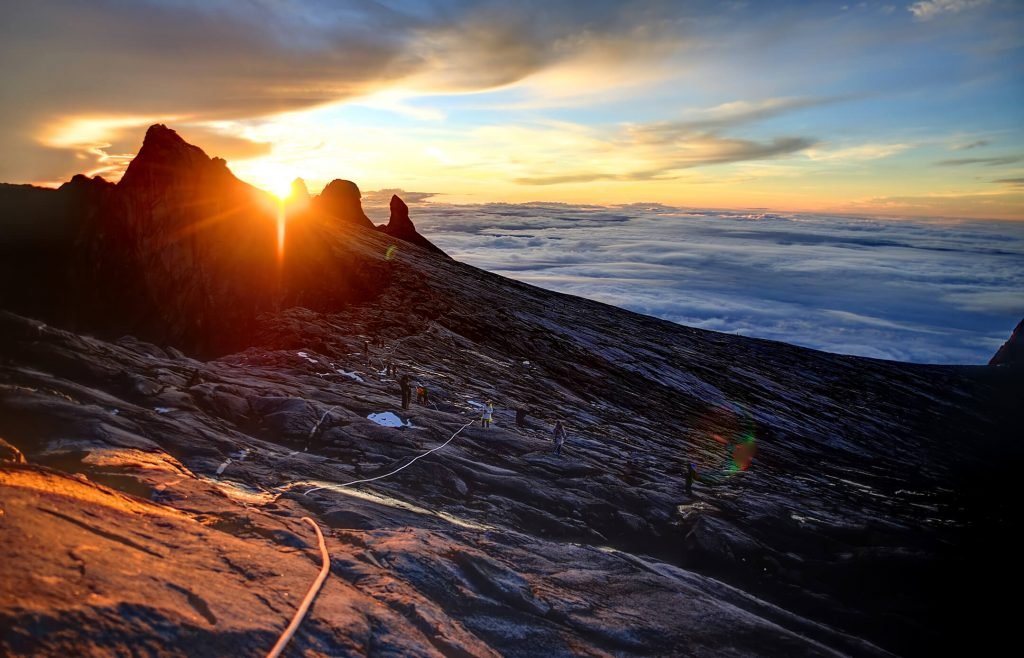
One of the most memorable moments for many climbers is reaching the summit area before sunrise. The changing colors of the sky, clouds below the mountain, distant landscapes, and enormous granite surfaces create an unforgettable experience.
Why Kinabalu National Park Is Famous
Kinabalu National Park is famous for several reasons. The most obvious is Mount Kinabalu, but the park’s importance goes far beyond mountain climbing.
- Mount Kinabalu and its dramatic summit landscape
- Exceptional biodiversity
- Rare and unusual plant species
- Large numbers of orchid species
- Carnivorous pitcher plants
- Beautiful tropical and montane forests
- Unique wildlife
- Excellent birdwatching opportunities
- Important scientific research areas
- Scenic hiking and nature trails
- Cool mountain climate
- UNESCO World Heritage recognition
The combination of these characteristics makes Kinabalu National Park different from ordinary tropical parks. Visitors can experience warm rainforest conditions at lower elevations and much cooler mountain environments at higher elevations within the same protected landscape.
Biodiversity of Kinabalu National Park
Biodiversity is one of the greatest treasures of Kinabalu National Park. The park contains an extraordinary variety of plants and animals, many of which are restricted to Borneo or to the mountain itself.
Scientists have identified thousands of plant species in the wider Kinabalu region. The changes in altitude, climate, geology, and soil conditions create numerous habitats. These habitats support different communities of vegetation.
The park is particularly famous among botanists because of its orchids, pitcher plants, rhododendrons, ferns, mosses, and other specialized mountain plants. Some species have highly restricted ranges and are found nowhere else on Earth.
The biological richness of the park is one of the main reasons it is considered a global conservation treasure. Protecting this biodiversity is important not only for Sabah and Malaysia but also for international scientific research and ecological understanding.
Flora of Kinabalu National Park
Orchids
Orchids are among the most famous plants found in Kinabalu National Park. The park and surrounding region contain an impressive variety of orchid species. Some have delicate flowers, unusual shapes, bright colors, and highly specialized adaptations.
Orchid enthusiasts travel to the park specifically to observe these plants. Because many orchids grow in particular habitats and elevations, guided walks can be especially useful for visitors interested in identifying them.
Pitcher Plants
Pitcher plants are another fascinating feature of Kinabalu’s vegetation. These carnivorous plants have specialized structures that can trap insects and other small organisms. Several species occur in the Kinabalu region.
Their unusual appearance makes them a favorite subject for photographers. Some pitcher plants grow close to the ground, while others may occur among shrubs and vegetation at higher elevations.
Rhododendrons
Rhododendrons are also well represented in the mountain environment. Their flowers contribute beautiful colors to the landscape, especially during suitable flowering periods.
Ferns and Mosses
The humid forest environment provides excellent conditions for ferns, mosses, liverworts, and other moisture-loving plants. Walking through the forest can reveal an incredible variety of textures, shapes, and shades of green.
Montane Vegetation
As elevation increases, tropical lowland vegetation gradually gives way to montane forest and high-elevation vegetation. Trees become shorter, temperatures become cooler, and the landscape becomes increasingly exposed.
Wildlife in Kinabalu National Park
Kinabalu National Park provides habitat for many species of mammals, birds, reptiles, amphibians, insects, and other organisms. Many animals are difficult to see because they are shy, small, nocturnal, or well camouflaged.
Wildlife observation requires patience. Visitors who move quietly and spend time looking carefully at the forest may discover birds in the canopy, insects among leaves, small mammals crossing trails, or reptiles resting in vegetation.
Mammals
The park supports various small mammals and other forest animals. Species associated with the wider Kinabalu region include squirrels, civets, mouse deer, and other forest-dwelling creatures.
Birds
Birdwatching is an excellent activity in Kinabalu National Park. The forests provide habitat for numerous bird species, including several birds associated with Borneo’s mountain ecosystems.
Early mornings are often the best time for birdwatching because birds are more active during the cooler hours of the day. A pair of binoculars and a field guide can greatly improve the experience.
Insects
Insects are an important part of the park’s ecosystem. Butterflies, moths, beetles, ants, and many other insects contribute to pollination, decomposition, and food webs.
Reptiles and Amphibians
The humid forests also support reptiles and amphibians. Frogs are particularly associated with wet forest habitats, while reptiles can often be found near vegetation, streams, and rocky areas.
Climate of Kinabalu National Park
The climate of Kinabalu National Park varies considerably with elevation. Lower areas generally experience tropical conditions, while higher parts of Mount Kinabalu are much cooler.
Rain can occur throughout the year, and weather conditions can change quickly on the mountain. Clouds, mist, strong winds, and sudden rain are common possibilities at higher elevations.
Climbers should therefore prepare for changing conditions. Waterproof clothing, warm layers, suitable hiking shoes, gloves, and protection from rain can make a major difference.
Visitors exploring the lower park trails may experience warm and humid conditions, so lightweight clothing, drinking water, sun protection, and insect protection are useful.
Best Time to Visit Kinabalu National Park
Kinabalu National Park can be visited throughout much of the year, but weather conditions should always be considered. Mountain weather is unpredictable, and rain can affect hiking and climbing conditions.
For visitors interested in hiking, relatively dry periods can be more comfortable, although there is never a complete guarantee of clear weather. The best time also depends on the visitor’s interests.
- For mountain climbing: Choose a period with favorable weather forecasts and confirm current climbing conditions.
- For photography: Early mornings can provide beautiful light and clearer mountain views.
- For wildlife: Early morning and late afternoon are generally productive periods.
- For botanical exploration: Different plants flower at different times, so conditions vary throughout the year.
- For families: Shorter nature trails can be enjoyed whenever weather conditions are comfortable.
Things to Do in Kinabalu National Park
1. Climb Mount Kinabalu
Climbing Mount Kinabalu is the most famous activity in the park. The climb combines forest trails, steep sections, mountain scenery, granite terrain, and high-altitude conditions.
2. Explore Nature Trails
Visitors who do not want to climb Mount Kinabalu can enjoy shorter trails around the park. These walks provide opportunities to see trees, flowers, birds, insects, streams, and other natural features.
3. Visit the Botanical Garden
The botanical attractions of Kinabalu National Park are excellent places to learn about the region’s plant diversity. Guided botanical walks can help visitors identify unusual species.
4. Go Birdwatching
Bring binoculars and spend time quietly observing the forest. Early morning is usually ideal because many birds are most active during this period.
5. Photography
Kinabalu National Park is an outstanding destination for nature photography. Mountain landscapes, clouds, flowers, forests, wildlife, and sunrise views offer countless photographic opportunities.
6. Learn About Local Culture
The communities around Mount Kinabalu have long-standing cultural relationships with the mountain. Learning about local traditions can add an important cultural dimension to a visit.
7. Enjoy Forest Walks
Forest walks are suitable for travelers who want a slower experience. The sounds of birds, flowing water, insects, and wind moving through the trees create a peaceful atmosphere.
Hiking in Kinabalu National Park
Hiking is one of the best ways to experience Kinabalu National Park. The park contains trails with different levels of difficulty, allowing visitors to choose experiences according to their interests and physical abilities.
Shorter trails around the park headquarters can be suitable for casual visitors. These trails allow people to experience the forest without committing to a long mountain expedition.
Mount Kinabalu climbing is considerably more demanding. Climbers need to follow park regulations and current requirements. The route includes steep sections and significant elevation gain.
Proper preparation is essential. Visitors should train before attempting the climb, bring appropriate equipment, stay hydrated, and follow the instructions of authorized guides and park staff.
Mount Kinabalu Climbing Experience
The classic Mount Kinabalu climb is generally completed over more than one day. Climbers ascend from the lower mountain area toward accommodation at higher elevation before continuing toward the summit.
The upper section is particularly challenging because of steep terrain, cold temperatures, darkness during early summit attempts, and reduced oxygen levels compared with sea level.
Many climbers begin the summit section during the early morning hours. The objective is often to reach the summit area around sunrise, depending on current route rules and weather conditions.
Reaching the summit can be an emotional moment. After hours of climbing, seeing the surrounding mountains and clouds illuminated by the first sunlight can make the physical effort feel worthwhile.
Climbers should remember that mountain conditions can change quickly. Summit access may sometimes be affected by weather, safety considerations, or other operational restrictions.
Difficulty of Climbing Mount Kinabalu
Mount Kinabalu should not be underestimated. Although the mountain is climbed by many travelers every year, it requires endurance and preparation.
The main challenge is not technical climbing in the traditional mountaineering sense but sustained uphill movement, long distances, steep sections, altitude, weather changes, and fatigue.
People who regularly exercise may find preparation easier, but fitness levels vary greatly. Training that includes walking, hiking, stairs, and cardiovascular exercise can be useful before the trip.
Visitors should also listen to their bodies. Severe symptoms at altitude should never be ignored. Safety should always be more important than reaching the summit.
Accommodation Near Kinabalu National Park
Visitors can find several accommodation options around Kinabalu National Park and nearby communities. Options range from park-related accommodation and mountain facilities to hotels, lodges, guesthouses, and smaller local stays.
Climbers usually need to arrange specific accommodation as part of the official mountain climbing process. Requirements and availability can change, so visitors should check current official information before making plans.
Travelers who are simply visiting the park for sightseeing can choose accommodation outside the immediate mountain route. Staying nearby allows visitors to arrive early and spend more time exploring the park.
Food and Dining
Visitors can find food options around the park and in nearby towns and villages. Local Sabah cuisine can be an enjoyable part of the trip.
Travelers preparing for a mountain hike should pay attention to nutrition and hydration. Energy-rich foods can help support long periods of physical activity.
It is also sensible to carry personal snacks and drinking water when permitted, especially when spending extended periods on trails.
How to Reach Kinabalu National Park
Most international travelers begin their journey by flying to Kota Kinabalu. From the city, Kinabalu National Park can be reached by road.
Private vehicles, taxis, organized tours, and other transport options can be used depending on the traveler’s budget and itinerary.
Renting a vehicle can provide greater flexibility for visitors who want to explore other attractions in Sabah. Organized tours can be convenient for travelers who prefer transportation, accommodation, and activities to be arranged together.
Before traveling, visitors should confirm current transportation conditions, park opening information, climbing permits, accommodation requirements, and trail restrictions.
Travel Tips for Kinabalu National Park
- Check official park information before traveling.
- Reserve mountain climbing arrangements well in advance.
- Wear comfortable and durable hiking shoes.
- Carry rain protection because weather can change quickly.
- Bring warm clothing for higher elevations.
- Carry sufficient drinking water.
- Use sunscreen and insect protection.
- Start hikes early when appropriate.
- Follow marked trails and park instructions.
- Never disturb plants or wildlife.
- Take all rubbish with you.
- Use a qualified guide when required.
- Check your fitness level before attempting the mountain climb.
- Keep your camera protected from rain.
- Respect local communities and cultural traditions.
What to Pack for Kinabalu National Park
Packing depends on the type of visit. A short nature walk requires much less equipment than a Mount Kinabalu expedition.
For General Park Visits
- Comfortable walking shoes
- Lightweight clothing
- Rain jacket
- Drinking water
- Sun protection
- Insect repellent
- Camera or smartphone
- Small backpack
- Basic personal medicines
For Mountain Climbers
- Good-quality hiking boots
- Warm layers
- Waterproof outer layer
- Warm gloves
- Headlamp
- Extra socks
- Water bottle or hydration system
- Energy snacks
- Personal first-aid supplies
- Sun protection
Photography at Kinabalu National Park
Photography is one of the most rewarding activities in the park. The destination offers an enormous variety of subjects, from tiny orchids to massive mountain landscapes.
Early morning is particularly attractive for landscape photography. Soft light can illuminate Mount Kinabalu while clouds move around the mountain slopes.
Macro photography is also popular because of the park’s flowers, insects, mosses, and unusual plants. A macro lens can reveal details that are easy to miss during a normal walk.
Photographers should always follow conservation rules. Plants should not be damaged or moved simply to create a photograph, and wildlife should never be disturbed.
Birdwatching in Kinabalu National Park
Kinabalu National Park is a rewarding destination for birdwatchers. The combination of forest habitats and elevation zones supports a wide range of bird species.
Birdwatchers should arrive early, remain quiet, and scan the tree canopy carefully. Some birds are easier to hear than to see, so learning local bird calls can improve the experience.
Binoculars are highly recommended. A field guide or bird identification application can also help visitors record their observations.
Kinabalu National Park and Conservation
Conservation is essential to the future of Kinabalu National Park. The park protects forests, mountain ecosystems, rare plants, wildlife habitats, water sources, and landscapes that have enormous ecological value.
Tourism can provide economic benefits to surrounding communities, but it must be managed responsibly. Large numbers of visitors can place pressure on trails, waste-management systems, water resources, and sensitive habitats.
Responsible tourism helps reduce these impacts. Visitors can contribute by staying on designated trails, avoiding single-use plastic when possible, carrying waste out of natural areas, respecting wildlife, and following park regulations.
Why Biodiversity Conservation Matters
Every species in an ecosystem has a role. Plants provide food and habitat, insects support pollination and decomposition, birds spread seeds, and microorganisms help maintain healthy soils.
Losing even small species can affect larger ecological relationships. This is particularly important in mountain ecosystems where many species have limited geographic ranges.
Kinabalu National Park therefore serves as an important natural laboratory. Scientists can study evolution, adaptation, climate effects, ecology, plant diversity, and other subjects in an environment containing numerous unique species.
Local Communities and Culture
The landscape around Mount Kinabalu is home to communities with deep cultural connections to the mountain. Local traditions, stories, food, crafts, and livelihoods are part of the broader visitor experience.
Visitors should approach local culture respectfully. Buying locally produced goods, using local guides, and supporting community-based tourism can help ensure that tourism provides benefits beyond the park itself.
Understanding local culture can make a trip more meaningful because a national park is not only a collection of landscapes and wildlife. It is also part of the history and identity of the people who live around it.
Responsible Tourism in Kinabalu National Park
Responsible tourism means enjoying the park while helping protect it for future generations.
- Stay on established trails.
- Do not pick flowers or plants.
- Do not feed wildlife.
- Do not approach wild animals.
- Keep noise levels low.
- Carry reusable water bottles when practical.
- Dispose of waste properly.
- Respect local communities.
- Follow instructions from guides and park authorities.
- Support responsible local businesses.
Family Visit to Kinabalu National Park
Kinabalu National Park can be an excellent destination for families, particularly those interested in nature and outdoor education. Families do not need to climb Mount Kinabalu to enjoy the park.
Short walks, botanical attractions, scenic viewpoints, and educational experiences can provide children with opportunities to learn about plants, animals, forests, mountains, and conservation.
Parents should choose activities according to children’s ages and physical abilities. Weather conditions should also be considered carefully, particularly during rainy periods.
Kinabalu National Park for Adventure Travelers
Adventure travelers will find plenty to enjoy in the region. Mount Kinabalu provides the primary challenge, while the surrounding forests offer hiking, exploration, photography, wildlife observation, and other outdoor activities.
The mountain’s combination of altitude and changing environments makes the climb particularly rewarding. Travelers can begin in humid tropical surroundings and eventually reach cold, exposed high-altitude terrain.
Kinabalu National Park for Nature Lovers
Nature lovers may prefer to spend their time exploring the park’s biodiversity rather than climbing the mountain. The forest trails provide opportunities to observe plants, fungi, birds, insects, streams, and unusual ecological features.
A slow approach is often best. Instead of walking quickly from one destination to another, visitors can stop regularly and observe small details in the forest.
Geology of Mount Kinabalu
Mount Kinabalu has a fascinating geological history. Its enormous granite summit and surrounding rock formations are among the most visually distinctive features of the mountain.
Geological processes over millions of years helped create the mountain landscape seen today. Weathering, erosion, tectonic activity, and other natural forces continue to shape the mountain.
The exposed rock at higher elevations creates a dramatic contrast with the dense forests below. This geological diversity also contributes to the ecological variety of the area.
Water and Rivers Around the Park
Mountain forests play an important role in collecting and regulating water. Rainfall moves through soils, streams, and rivers, supporting ecosystems and communities in the surrounding region.
Forest conservation is therefore closely connected to water security. Protecting vegetation on mountain slopes can help reduce erosion and maintain healthy watersheds.
Health and Safety
Visitors should take basic safety precautions when exploring Kinabalu National Park. Mountain environments are unpredictable, and conditions can change rapidly.
Anyone planning to climb Mount Kinabalu should consider their physical fitness and follow official requirements. People with relevant medical concerns should seek professional medical advice before undertaking strenuous high-altitude activities.
Never continue climbing simply because you feel pressured to reach the summit. If weather becomes dangerous or you develop serious symptoms, follow the advice of guides and authorities.
Environmental Challenges
Like many popular natural destinations, Kinabalu National Park faces environmental pressures. Climate change, tourism, habitat disturbance, invasive species, pollution, and other factors can affect mountain ecosystems.
Climate change is especially important because mountain species can have limited opportunities to move when temperatures change. Species adapted to specific elevation zones may be particularly vulnerable.
Continued scientific research, habitat protection, visitor management, and community involvement are important for the long-term conservation of the park.
Educational Importance of Kinabalu National Park
The park is an outstanding outdoor classroom. Students and researchers can study ecology, geology, botany, zoology, geography, climate, conservation, and environmental science.
Observing ecosystems in their natural environment provides learning opportunities that cannot be completely reproduced inside a classroom.
Why You Should Visit Kinabalu National Park
Kinabalu National Park offers an extraordinary combination of natural beauty, adventure, science, culture, and biodiversity. Whether you are an experienced hiker, a photographer, a family traveler, a birdwatcher, or simply someone who enjoys beautiful landscapes, the park has something to offer.
The presence of Mount Kinabalu gives the park its iconic character, but the mountain is only one part of the experience. The forests, plants, animals, local communities, geological formations, and changing climates together create a destination unlike many other national parks.
Interesting Facts About Kinabalu National Park
- Kinabalu National Park is located in Sabah, Malaysian Borneo.
- The park surrounds the famous Mount Kinabalu.
- Mount Kinabalu’s highest summit is Low’s Peak.
- Low’s Peak rises to approximately 4,095 meters above sea level.
- The park is internationally recognized for its exceptional biodiversity.
- Kinabalu Park is a UNESCO World Heritage Site.
- The region is famous for orchids and pitcher plants.
- The park contains several different ecological zones.
- Birdwatching is a popular activity.
- The mountain environment changes significantly with elevation.
- The park is an important area for scientific research.
- Local communities have long cultural connections with Mount Kinabalu.
Frequently Asked Questions About Kinabalu National Park
1. Where is Kinabalu National Park located?
Kinabalu National Park is located in Sabah, Malaysian Borneo, approximately 90 kilometers from Kota Kinabalu.
2. What is Kinabalu National Park famous for?
The park is famous for Mount Kinabalu, extraordinary biodiversity, orchids, pitcher plants, mountain landscapes, forests, wildlife, and hiking opportunities.
3. Can tourists climb Mount Kinabalu?
Yes. Mount Kinabalu is a popular climbing destination, but climbers must follow current park regulations, permits, accommodation requirements, and safety procedures.
4. Is Kinabalu National Park suitable for families?
Yes. Families can enjoy shorter nature trails, botanical attractions, scenic landscapes, and educational activities without climbing the mountain.
5. What animals can be seen in Kinabalu National Park?
The park supports many birds, mammals, reptiles, amphibians, insects, and other organisms. Some wildlife is difficult to observe because of its small size, behavior, or habitat.
6. What plants are famous in the park?
Orchids, pitcher plants, rhododendrons, ferns, mosses, and many other specialized mountain plants are among the park’s botanical highlights.
7. Is Kinabalu National Park good for photography?
Yes. The park offers excellent opportunities for landscape, wildlife, flower, macro, forest, and sunrise photography.
8. How difficult is Mount Kinabalu?
The climb requires good physical endurance because of steep trails, elevation gain, long walking periods, and changing weather. It should be approached as a serious mountain hike.
9. What should I wear in Kinabalu National Park?
For lower trails, comfortable lightweight clothing and good walking shoes are useful. Climbers should bring warm layers, waterproof clothing, gloves, and suitable hiking footwear.
10. Does it rain in Kinabalu National Park?
Yes. Rain can occur throughout the year, and mountain weather can change quickly. Visitors should always be prepared for wet conditions.
11. What is the best time to visit Kinabalu National Park?
The park can be visited throughout the year. The best period depends on the activity, but visitors should always check current weather and park conditions before traveling.
12. Is Kinabalu National Park a UNESCO World Heritage Site?
Yes. Kinabalu Park has been recognized as a UNESCO World Heritage Site because of its exceptional biological diversity and conservation importance.
Conclusion
Kinabalu National Park is one of the most extraordinary natural destinations in Southeast Asia. Its spectacular mountain scenery, remarkable biodiversity, rare plants, fascinating wildlife, tropical forests, and cultural importance make it a place of exceptional value.
Mount Kinabalu is undoubtedly the park’s most famous attraction, but visitors should not overlook the wider ecosystem. A simple forest walk can reveal beautiful orchids, unusual insects, birds, mosses, and plants that are easy to miss when traveling quickly.
For adventure travelers, climbing Mount Kinabalu can be a memorable achievement. For families, nature trails provide an easier introduction to the region. For photographers, the mountain and forests offer endless subjects. For researchers and nature enthusiasts, the park represents an extraordinary living laboratory.
The future of Kinabalu National Park depends on responsible conservation and sustainable tourism. Every visitor has a role to play by respecting nature, following park rules, protecting wildlife, avoiding litter, and supporting local communities.
A journey to Kinabalu National Park is more than a trip to a beautiful mountain. It is an opportunity to experience one of Borneo’s most important natural landscapes and to understand why protecting biodiversity is essential for future generations.