Tongariro National Park
Tongariro National Park: A Complete Guide to New Zealand’s Volcanic Wonderland
Tongariro National Park is one of New Zealand’s most spectacular natural destinations, famous for its
volcanic mountains, emerald-colored lakes, dramatic valleys, alpine landscapes, forests, waterfalls, and
rich Māori heritage. Located in the central North Island, the park is a remarkable place where geology,
wildlife, culture, adventure, and breathtaking scenery come together.
Introduction to Tongariro National Park
Tongariro National Park is a world-famous protected area in the central North Island of New Zealand.
It is best known for three major volcanic mountains: Mount Tongariro, Mount Ngauruhoe, and Mount Ruapehu.
These mountains dominate the surrounding landscape and create an extraordinary environment of lava fields,
crater basins, alpine meadows, volcanic lakes, ridges, streams, forests, and snow-covered peaks.
The park has a special place in New Zealand’s natural and cultural history. It was established as New
Zealand’s first national park and is one of the oldest national parks in the world. Its significance is
not limited to scenery. Tongariro is deeply connected with the Māori people, particularly Ngāti Tūwharetoa,
whose ancestral relationship with the mountains has continued for generations.
The park is also internationally recognized for its natural and cultural importance. Its landscapes
demonstrate the powerful geological processes that have shaped the North Island, while its cultural
heritage reflects the deep relationship between people and the natural environment.
For travelers, Tongariro National Park offers an impressive variety of experiences. Visitors can enjoy
challenging alpine hikes, peaceful forest walks, waterfalls, scenic viewpoints, winter activities,
photography, birdwatching, and opportunities to learn about Māori traditions. The famous Tongariro
Alpine Crossing attracts hikers from around the world, while other trails provide quieter experiences
for visitors who prefer shorter walks.
Where Is Tongariro National Park?
Tongariro National Park is situated in the central part of New Zealand’s North Island. It lies within
the volcanic plateau of the North Island and is surrounded by rural landscapes, forests, towns, and
mountain country.
The nearest communities commonly used as gateways to the park include National Park Village, Whakapapa,
Ohakune, and Turangi. These communities provide accommodation, restaurants, transportation, outdoor
equipment, guided activities, and other services for visitors.
The central location of the park makes it accessible from several major cities. Travelers arriving from
Auckland can drive south through the North Island, while visitors from Wellington can travel north.
The journey itself can be part of the experience because the surrounding region contains farmland,
forests, volcanic landscapes, and mountain views.
Whakapapa is an important gateway on the western side of the park and is particularly useful for visitors
exploring Mount Ruapehu and the northern sections of the park. Ohakune, on the southern side of Mount
Ruapehu, is another popular base and is well known for outdoor recreation.
The Three Great Volcanic Mountains
The character of Tongariro National Park is strongly defined by its volcanic mountains. Mount Ruapehu,
Mount Ngauruhoe, and Mount Tongariro create the dramatic skyline that makes the park instantly recognizable.
Mount Ruapehu
Mount Ruapehu is the highest mountain on New Zealand’s North Island. It is an impressive stratovolcano
with a large volcanic massif and several peaks. Its upper slopes are often covered with snow during the
colder months, giving the mountain a spectacular appearance.
Ruapehu is an active volcano and has experienced numerous eruptions throughout its geological history.
Its volcanic activity has helped shape the surrounding terrain and contributed to the unique environment
found within the national park.
The mountain is also a major destination for winter recreation. Ski areas on its slopes attract visitors
who enjoy skiing and snowboarding. During summer, hiking routes provide opportunities to explore the
mountain environment without snow sports.
Mount Ngauruhoe
Mount Ngauruhoe is a striking volcanic cone located between Ruapehu and Tongariro. Its symmetrical shape
has made it one of the most recognizable volcanic features in the region.
Ngauruhoe became internationally famous after appearing in the landscapes associated with Mount Doom in
the film adaptations of J.R.R. Tolkien’s The Lord of the Rings. Although the fictional Mount Doom
is not the real geological identity of Ngauruhoe, the mountain’s dramatic appearance helped make the area
even more popular with international visitors.
Mount Tongariro
Mount Tongariro is a large volcanic complex containing multiple cones, craters, ridges, and volcanic
formations. The mountain is not simply one symmetrical peak; instead, it consists of a complex landscape
created through many periods of volcanic activity.
The famous Tongariro Alpine Crossing passes through this volcanic environment and provides hikers with
views of several remarkable geological features, including volcanic craters, alpine lakes, lava formations,
and expansive mountain scenery.
Geological History of Tongariro National Park
Tongariro National Park is one of the best places in New Zealand to observe volcanic landscapes. The park
lies within the Taupō Volcanic Zone, a region associated with significant volcanic and geothermal activity.
Over thousands of years, eruptions have repeatedly changed the landscape. Lava flows, ash deposits,
volcanic bombs, crater formation, erosion, earthquakes, and glacial processes have all contributed to the
terrain visitors see today.
The mountains are not static monuments. They are part of an active geological system. Volcanic activity
continues to influence the region, which means visitors should always respect official warnings and
follow current park and volcanic safety information.
The different colors and textures of the volcanic landscape are particularly fascinating. Dark volcanic
rocks contrast with green vegetation, red crater walls, blue and turquoise lakes, and white snowfields.
These natural contrasts make Tongariro an exceptional destination for photographers.
Māori Culture and the Sacred Mountains
The mountains of Tongariro National Park have profound cultural significance for Māori communities. The
landscape is not simply considered a collection of natural attractions. Mountains, rivers, lakes, forests,
and volcanic formations are connected with ancestral stories, identity, history, and spiritual traditions.
Ngāti Tūwharetoa has a particularly important ancestral relationship with the Tongariro region. Māori
traditions explain the history and significance of the mountains through stories passed from generation
to generation.
In the nineteenth century, Te Heuheu Tūkino IV Horonuku played an important role in protecting the mountains.
In 1887, he gifted the peaks of Tongariro, Ngauruhoe, and part of Ruapehu to the Crown, helping establish
the foundation of what became Tongariro National Park.
This history is important because the creation of the park represents more than environmental protection.
It also reflects a Māori vision of protecting culturally significant landscapes for future generations.
Visitors should remember that some places in the park have special cultural significance. Responsible
tourism means respecting signs, staying on appropriate tracks, avoiding unnecessary disturbance, and
understanding that the mountains are more than scenic attractions.
Tongariro National Park as a World Heritage Area
Tongariro National Park has exceptional international significance because of both its natural and
cultural values. It became New Zealand’s first national park and was later recognized by UNESCO for its
combined cultural and natural importance.
The park demonstrates how protected areas can represent both ecological systems and living cultural
traditions. Its volcanic mountains provide an outstanding example of active geological processes, while
its Māori heritage demonstrates the continuing relationship between Indigenous communities and the land.
This combination makes Tongariro particularly interesting for travelers who want more than beautiful
scenery. A visit can provide an opportunity to learn about geology, conservation, Indigenous culture,
history, and outdoor recreation at the same time.
Tongariro Alpine Crossing
The Tongariro Alpine Crossing is the park’s most famous hiking experience. It is widely regarded as one
of New Zealand’s great day walks and attracts hikers from many countries.
The crossing travels through an extraordinary volcanic landscape. Along the route, hikers encounter
volcanic craters, mountain ridges, lava formations, alpine vegetation, and strikingly colored lakes.
Weather conditions can change rapidly, making preparation essential.
The route is challenging rather than a simple recreational walk. Hikers should be prepared for steep
climbs, uneven terrain, exposed ridges, strong winds, cold temperatures, and changing weather. Conditions
can be very different from those experienced at lower elevations.
Why the Crossing Is Famous
One reason the Tongariro Alpine Crossing is so popular is the variety of scenery encountered during a
single hike. A visitor can begin in vegetation, climb toward volcanic terrain, cross dramatic ridges,
pass colorful lakes, and descend through different landscapes.
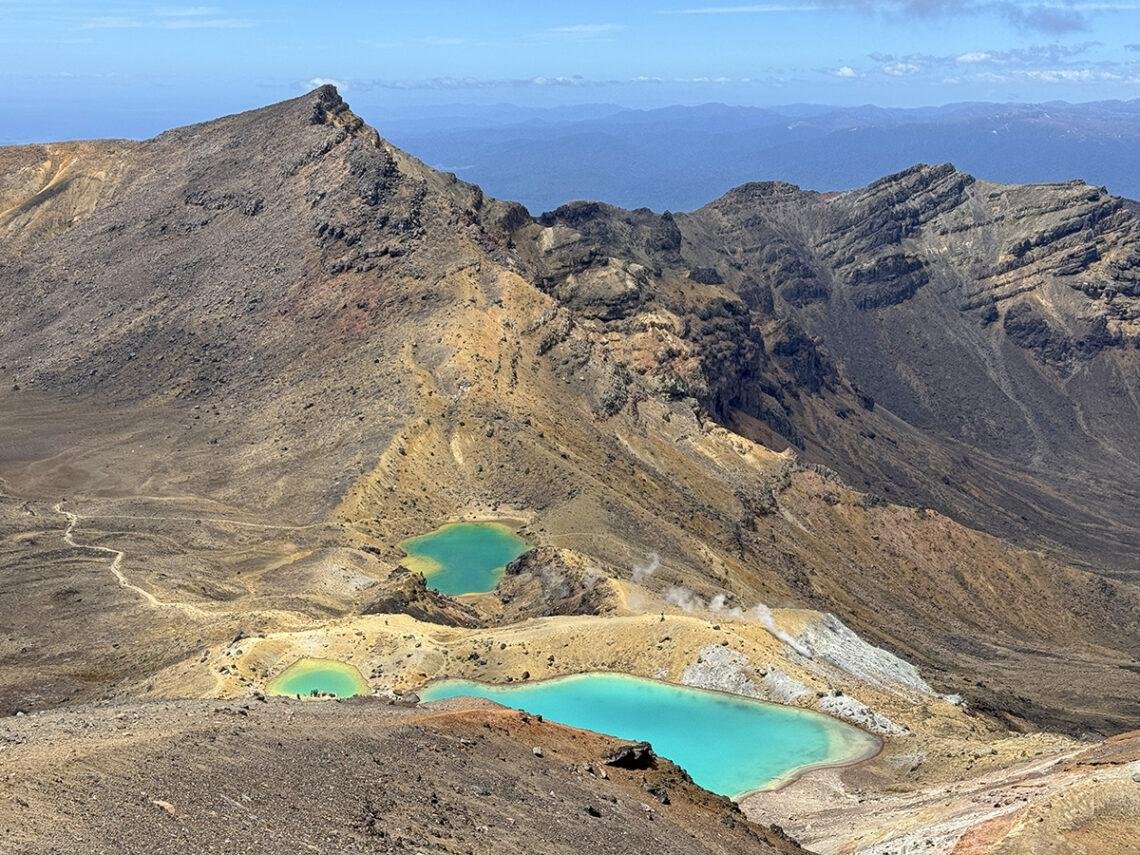
The Emerald Lakes are among the most recognizable features of the crossing. Their unusual colors contrast
beautifully with the surrounding volcanic terrain. The Blue Lake is another memorable feature and has
important cultural significance.
Preparing for the Crossing
Preparation is one of the most important parts of enjoying the Tongariro Alpine Crossing. Visitors should
check current weather forecasts, track conditions, volcanic alerts, transport arrangements, and official
safety information before starting.
Proper footwear is essential. Hikers should carry enough water, food, warm layers, rain protection,
sun protection, and navigation equipment. Even in summer, mountain weather can become cold and unpleasant.
Visitors should never assume that a sunny morning guarantees good conditions throughout the day. Weather
can change quickly, especially around exposed mountain areas.
Emerald Lakes
The Emerald Lakes are among the most photographed sights in Tongariro National Park. Their brilliant
green and turquoise colors create an extraordinary contrast with the dark volcanic surroundings.
The unusual colors are related to minerals and volcanic materials in the surrounding environment. The
lakes demonstrate how volcanic processes continue to influence the landscape long after an eruption has
ended.
From nearby ridges, hikers can see the lakes from above, creating excellent opportunities for landscape
photography. However, visitors should remain on designated tracks and follow conservation guidance.
Blue Lake
Blue Lake is another important feature along the Tongariro Alpine Crossing. Its deep blue appearance
makes it visually different from the Emerald Lakes.
The lake also has cultural significance, so visitors should treat the area with respect. In particular,
travelers should follow guidance regarding where they may walk, rest, eat, or take photographs.
Red Crater
Red Crater is one of the most dramatic volcanic formations in the park. Its reddish volcanic rock creates
a striking landscape and offers hikers a close view of the geological character of Mount Tongariro.
The crater area can be exposed to strong winds and difficult weather. Hikers should take extra care on
narrow or steep sections and avoid approaching dangerous edges.
Other Walking Tracks in the Park
Not every visitor wants to complete a demanding alpine crossing. Fortunately, Tongariro National Park
contains many other walking opportunities ranging from short nature walks to longer backcountry routes.
Taranaki Falls Track
The Taranaki Falls Track is a popular walk that leads through a diverse landscape and provides views of
Taranaki Falls. The waterfall drops over a volcanic cliff and is surrounded by rugged scenery.
The walk is a good choice for visitors who want to experience the volcanic environment without committing
to the full Tongariro Alpine Crossing.
Silica Rapids Track
The Silica Rapids Track provides an opportunity to explore a different side of the park. The route passes
through vegetation and along streams and volcanic formations.
Its accessibility makes it attractive for travelers looking for a shorter experience near Whakapapa.
Whakapapa Nature Walks
The Whakapapa area includes shorter walks suitable for visitors who have limited time or prefer easier
terrain. These walks can introduce travelers to alpine vegetation, streams, volcanic landscapes, and
mountain views.
Ohakune Old Coach Road
The Ohakune Old Coach Road is another interesting route in the wider region. It combines natural scenery
with historical features and provides a different perspective on the landscape.
Wildlife of Tongariro National Park
Tongariro National Park supports a variety of native and introduced wildlife. Its forests, alpine areas,
wetlands, streams, and open landscapes provide habitats for different species.
New Zealand’s native birdlife is particularly important. Visitors may encounter species such as the
North Island robin, tomtit, fantail, tūī, bellbird, kererū, and other native birds depending on location
and conditions.
The park also provides habitat for the North Island brown kiwi, although seeing one in the wild is
difficult because kiwi are nocturnal and secretive.
Conservation programs have helped protect native wildlife from introduced predators. Pest management is
an important part of maintaining healthy ecosystems in New Zealand’s protected areas.
Plants and Vegetation
Tongariro National Park contains several vegetation zones. At lower elevations, visitors can encounter
native forest, shrublands, and other vegetation adapted to the region’s climate.
As elevation increases, vegetation becomes shorter and more specialized. Alpine plants must survive strong
winds, cold temperatures, snow, intense sunlight, and limited growing seasons.
The contrast between forests and bare volcanic slopes is one of the park’s most interesting ecological
features. In some places, vegetation gradually colonizes volcanic surfaces, demonstrating the slow process
of ecological recovery.
Weather in Tongariro National Park
Mountain weather can be unpredictable, and this is one of the most important things visitors should
understand before exploring Tongariro National Park.
Conditions can change rapidly. Sunshine can be followed by cloud, rain, strong winds, or cold temperatures.
Higher elevations can experience winter-like conditions even when nearby towns are relatively comfortable.
Summer is generally popular for hiking because longer daylight hours and milder conditions can make trails
more accessible. However, summer does not guarantee perfect mountain weather.
Autumn can bring beautiful colors and cooler temperatures. Winter transforms the volcanic mountains with
snow and ice, creating a spectacular landscape but also making many hiking routes more difficult.
Spring can bring changing conditions, melting snow, and unstable weather. Visitors should always check
current conditions rather than relying only on the calendar.
Winter in Tongariro National Park
Winter creates a completely different experience in Tongariro National Park. Snow covers the upper slopes
of the volcanic mountains and turns the region into a dramatic alpine environment.
Mount Ruapehu becomes a major winter recreation destination, with skiing and snowboarding attracting
visitors to its slopes.
Winter hiking requires significantly more experience and equipment. Snow, ice, poor visibility, avalanche
hazards, and freezing temperatures can create serious risks. Routes that are relatively manageable during
warmer months may become technically demanding in winter.
Travelers without appropriate alpine experience should consider guided activities or easier winter
experiences rather than attempting difficult routes independently.
Photography in Tongariro National Park
Tongariro National Park is an outstanding destination for landscape photography. Its volcanic mountains,
colorful lakes, dramatic ridges, waterfalls, forests, snowfields, and changing skies provide countless
subjects.
Early morning and late afternoon can provide beautiful light and long shadows across the mountains.
Clouds can also add depth and atmosphere to photographs.
Photographers should avoid leaving designated tracks simply to capture a particular angle. Protecting the
landscape is more important than getting a photograph.
Lord of the Rings and Tongariro
New Zealand became internationally famous as a filming destination through Peter Jackson’s adaptations of
The Lord of the Rings and The Hobbit. Tongariro National Park and surrounding landscapes
contributed to the visual identity of Middle-earth.
Mount Ngauruhoe was famously used as the visual basis for Mount Doom. The surrounding volcanic terrain
also helped create the harsh and dramatic atmosphere associated with Mordor.
Film tourism has introduced many international visitors to the central North Island. Fans can explore
landscapes that resemble the fictional world while also learning about the real geology, ecology, and
cultural history of the region.
Best Time to Visit Tongariro National Park
The best time to visit depends on the activities you want to enjoy.
For many visitors interested in hiking, warmer months are the easiest period because trails are generally
more accessible and daylight hours are longer. However, popular routes can become busy during peak periods.
Winter is ideal for visitors interested in snow sports and alpine scenery. It is less suitable for casual
hikers because conditions can be significantly more difficult.
Autumn and spring can offer quieter experiences, but weather conditions can be more variable. Whatever
season you choose, checking the latest official information before departure is essential.
How Long Should You Stay?
A short visit can provide a taste of Tongariro National Park, but spending several days allows travelers
to explore more of the region.
One day can be enough for a specific walk if weather and transport conditions cooperate. Two or three days
provide more flexibility and allow visitors to choose alternative activities if mountain weather becomes
unsuitable.
Longer stays are useful for travelers who want to combine hiking with sightseeing, cultural experiences,
nearby attractions, photography, cycling, or winter activities.
Accommodation Near Tongariro National Park
Visitors can choose from hotels, lodges, hostels, holiday parks, cabins, and private accommodation in
nearby communities.
National Park Village is particularly convenient for visitors planning activities around the western
side of the park. Whakapapa provides close access to the mountain environment, while Ohakune is popular
for visitors exploring Mount Ruapehu from the south.
Turangi provides another useful base, especially for travelers exploring the eastern side of the park
and the wider central North Island.
During busy hiking and winter periods, accommodation can become popular, so advance planning is advisable.
Food and Supplies
Visitors should plan their food and water requirements carefully, especially before long hikes. Mountain
routes may not provide convenient opportunities to purchase food or drinks.
Nearby towns and villages provide restaurants, cafés, supermarkets, outdoor stores, and other services.
However, hikers should not depend on finding food along remote trails.
For longer walks, lightweight high-energy food can be useful. Visitors should also carry enough water
and understand where reliable water sources are available.
Safety in Tongariro National Park
Tongariro is beautiful but can be a demanding mountain environment. Safety should always be treated as a
priority.
Check the Weather
Always check the forecast before starting a hike. Weather can change quickly at higher elevations.
Check Volcanic Conditions
The park contains active volcanic systems. Visitors should follow current volcanic alerts and official
instructions.
Carry Appropriate Clothing
Warm layers, waterproof clothing, sturdy footwear, sun protection, and emergency supplies can be essential.
Stay on Marked Tracks
Marked routes reduce the risk of getting lost and help protect fragile vegetation and culturally important
areas.
Do Not Underestimate Distance
Mountain trails can take longer than expected. Allow enough time to complete the route before darkness.
Tell Someone Your Plans
For longer or remote trips, make sure someone knows your route and expected return time. Carry appropriate
navigation and emergency equipment.
Responsible Tourism
Tongariro National Park is a protected landscape, and every visitor has a role in conserving it.
Travelers should take all rubbish with them, stay on designated tracks, avoid damaging plants, respect
wildlife, and follow park regulations.
Visitors should also respect Māori cultural values. Some natural features have deep spiritual significance,
and treating these places respectfully is an important part of responsible travel.
Avoid disturbing birds and other wildlife. Do not feed wild animals, and keep a safe distance from them.
Why Tongariro National Park Is Special
Tongariro National Park is special because very few places combine volcanic geology, alpine scenery,
Indigenous culture, biodiversity, outdoor adventure, and international heritage in such a concentrated
landscape.
The mountains are visually spectacular, but their importance goes much deeper. They tell a geological
story about volcanic activity and landscape formation while also carrying centuries of Māori cultural
history.
For adventurous travelers, the park provides challenging hiking and winter recreation. For photographers,
it offers extraordinary scenery. For families and casual visitors, shorter walks provide accessible ways
to experience the environment.
Top Things to Do in Tongariro National Park
- Hike the Tongariro Alpine Crossing when conditions are suitable.
- See the Emerald Lakes and Blue Lake.
- Explore the volcanic landscapes around Mount Tongariro.
- Admire Mount Ruapehu.
- Visit Taranaki Falls.
- Explore shorter walks around Whakapapa.
- Enjoy winter sports on Mount Ruapehu.
- Take landscape photographs of the volcanic mountains.
- Explore the wider central North Island region.
- Learn about Māori cultural connections to the mountains.
- Watch native birds in forested areas.
- Experience the park during different seasons.
A Sample Three-Day Tongariro Itinerary
Day 1: Arrival and Easy Exploration
Arrive in one of the nearby communities and settle into your accommodation. Use the afternoon for a short
walk or scenic drive. This is also a good time to check weather forecasts and prepare equipment for the
following day’s activity.
Day 2: Alpine Adventure
If conditions are appropriate and you are properly prepared, dedicate the day to the Tongariro Alpine
Crossing. Start early and allow sufficient time. Alternatively, choose another trail if conditions are
unsuitable or if you prefer a shorter walk.
Day 3: Waterfalls and Scenic Areas
Explore Taranaki Falls or another shorter walking route. Spend time enjoying the scenery rather than
rushing between attractions. Depending on your travel schedule, depart in the afternoon or continue
exploring the wider region.
Tips for First-Time Visitors
- Check official park conditions before every hike.
- Never rely on good weather at the trailhead.
- Wear strong and comfortable hiking footwear.
- Carry warm and waterproof clothing.
- Take enough food and drinking water.
- Start long walks early enough to finish safely.
- Keep your phone charged, but do not rely entirely on mobile coverage.
- Respect Māori cultural values and protected areas.
- Stay on marked tracks.
- Take all rubbish with you.
- Check volcanic alerts and mountain safety information.
- Consider guided activities if you lack mountain experience.
Frequently Asked Questions
What is Tongariro National Park famous for?
Tongariro National Park is famous for its volcanic mountains, the Tongariro Alpine Crossing, Emerald
Lakes, dramatic alpine scenery, Māori cultural heritage, and its connection with the landscapes used in
the Lord of the Rings films.
Is Tongariro National Park worth visiting?
Yes. It is one of New Zealand’s most distinctive national parks and offers experiences for hikers,
photographers, nature lovers, cultural travelers, and winter sports enthusiasts.
How difficult is the Tongariro Alpine Crossing?
The crossing is a demanding alpine hike rather than a casual walk. Steep sections, exposed terrain,
changing weather, and volcanic landscapes mean that visitors should prepare carefully.
Can beginners visit Tongariro National Park?
Yes. Beginners can enjoy shorter and easier walks in the park. However, beginners should not assume that
every trail is suitable for them. The Tongariro Alpine Crossing requires suitable fitness, preparation,
equipment, and favorable conditions.
Can you see Mount Doom in Tongariro National Park?
Mount Doom is a fictional location from The Lord of the Rings. Mount Ngauruhoe was used as the
visual basis for Mount Doom in the films, making it one of the most recognizable movie-related landscapes
in New Zealand.
Is Tongariro National Park safe?
The park can be safely enjoyed when visitors prepare properly and follow official advice. However, it is
an alpine and volcanic environment, so weather, terrain, volcanic activity, snow, and other hazards must
be taken seriously.
What should I take on a hike?
Depending on the route and season, hikers should carry suitable footwear, warm layers, waterproof clothing,
food, water, sun protection, navigation equipment, and emergency supplies.
What animals live in Tongariro National Park?
The park supports a range of native birds and other wildlife. Native bird species include tūī, bellbirds,
fantails, kererū, tomtits, robins, and other species. Kiwi also inhabit the wider region but are difficult
to see because they are nocturnal and secretive.
What is the best season to visit?
For many hiking visitors, the warmer months are generally more suitable, while winter is particularly
attractive for snow sports and alpine experiences. Conditions can vary greatly, so current forecasts and
official safety information are more important than the season alone.
How many days are needed for Tongariro National Park?
Two or three days can provide a useful introduction to the park, while longer stays allow more flexibility
and opportunities to explore different trails and nearby attractions.
Conclusion
Tongariro National Park is one of New Zealand’s most extraordinary natural destinations. Its towering
volcanic mountains, colorful lakes, ancient forests, waterfalls, alpine landscapes, and dramatic weather
create scenery that is difficult to find anywhere else.
The park’s importance goes beyond its appearance. It is a place of deep Māori cultural significance, a
remarkable example of volcanic geology, an important habitat for native wildlife, and a protected landscape
enjoyed by visitors from around the world.
The Tongariro Alpine Crossing is the park’s most famous experience, but it is only one part of what makes
the region special. Short walks, waterfalls, winter activities, photography, wildlife observation, and
cultural learning provide many other ways to experience the park.
Whether you visit for a challenging mountain adventure or simply want to admire the scenery, Tongariro
National Park offers an unforgettable journey through one of New Zealand’s most fascinating landscapes.
With careful preparation, respect for the environment, and appreciation for its cultural heritage, a visit
to Tongariro can become one of the highlights of a New Zealand trip.