Taman Negara: A Complete Guide to Malaysia’s Ancient Rainforest
Taman Negara: A Complete Guide to Malaysia’s Ancient Rainforest
Taman Negara is one of Malaysia’s most remarkable natural destinations and one of the most fascinating rainforest areas in Southeast Asia. Located across several Malaysian states, this vast protected region is famous for its ancient tropical rainforest, diverse wildlife, rivers, mountains, caves, waterfalls, walking trails, and unforgettable outdoor experiences. For travelers who love nature, adventure, wildlife, photography, hiking, and peaceful surroundings, Taman Negara offers an extraordinary journey into one of the oldest rainforest environments on Earth.
The name Taman Negara literally means “National Park” in Malay. The park is widely recognized as one of Malaysia’s most important protected natural areas. Its landscape is dominated by dense tropical forests, flowing rivers, limestone formations, hills, and remote wilderness. The forest provides shelter to countless species of plants and animals, many of which are difficult to see anywhere else.
Unlike ordinary tourist attractions, Taman Negara gives visitors the opportunity to experience nature on a much deeper level. Instead of simply looking at a landscape from a viewpoint, travelers can walk beneath enormous trees, cross forest trails, travel by boat, listen to insects and birds, explore caves, visit indigenous communities, and spend time surrounded by thick green vegetation.
This article provides a comprehensive guide to Taman Negara, including its history, geography, rainforest ecosystem, wildlife, attractions, activities, hiking opportunities, transportation, accommodation, food, safety advice, best time to visit, photography opportunities, and practical travel tips.
What Is Taman Negara?
Taman Negara is Malaysia’s most famous national park and a major destination for rainforest tourism. It protects a huge area of tropical forest and represents one of the country’s most valuable natural treasures. The park is especially famous for its biodiversity and its enormous rainforest trees.
The protected area covers parts of Pahang, Kelantan, and Terengganu. Different sections of the park offer different experiences, but the most popular gateway for visitors is the area around Kuala Tahan in Pahang.
Taman Negara is often described as an ancient rainforest because the region has experienced extremely long periods of ecological continuity. This makes it especially interesting for people who want to understand tropical forests and the natural history of Southeast Asia.
The park contains many different types of habitats. These include lowland rainforest, river environments, hill forests, rocky areas, caves, wetlands, and mountain landscapes. Each environment supports its own collection of plants and animals.
History of Taman Negara
The history of Taman Negara is closely connected to Malaysia’s efforts to protect its natural environment. The area was originally established as a protected forest reserve during the colonial period. It was later officially developed into a national park after Malaysia became independent.
The park was originally known by another name, King George V National Park. After independence, its name was changed to Taman Negara, reflecting Malaysia’s national identity.
The creation of the park was an important step in protecting Malaysia’s rainforest ecosystems. Without legal protection, forests can be affected by logging, agriculture, road construction, hunting, and other forms of development. National park status provides a framework for protecting forests and wildlife while also allowing carefully managed tourism and research.
Over the decades, Taman Negara became increasingly popular among international travelers. What was once an extremely remote wilderness gradually developed visitor facilities, walking trails, river transportation, guides, accommodation, and educational programs.
Even though tourism has increased, large parts of Taman Negara remain wild and difficult to access. This combination of accessibility and wilderness is one of the reasons the park is so attractive to adventurous travelers.
Where Is Taman Negara Located?
Taman Negara is located in Peninsular Malaysia. Because the protected area extends across multiple states, it is not a single small destination. The most common tourist gateway is Kuala Tahan, a village located near the Pahang section of the park.
Visitors generally travel to Kuala Tahan before crossing the river into the national park. The journey itself can be part of the adventure because boats are an important means of transportation around the rainforest.
The park is relatively close to several major Malaysian cities compared with many remote rainforest destinations around the world, but reaching the interior still requires planning. The sense of distance increases as travelers move away from roads and villages and deeper into the forest.
The Ancient Rainforest of Taman Negara
One of the most impressive characteristics of Taman Negara is its rainforest environment. Tropical rainforests are among the most biologically productive ecosystems on Earth, and Taman Negara demonstrates this incredible complexity.
The forest is made up of multiple layers. The highest layer consists of giant trees whose crowns rise above much of the surrounding vegetation. Beneath them is a middle layer containing smaller trees and climbing plants. Lower levels contain shrubs, ferns, young trees, vines, fungi, insects, and fallen leaves.
Every level of the forest supports life. Birds can occupy the canopy, monkeys can move between branches, insects live in bark and leaves, reptiles move through vegetation, and countless microorganisms break down organic material on the forest floor.
The result is an ecosystem that may appear quiet at first but is actually full of activity. A short walk can reveal bird calls, insects, animal tracks, unusual plants, butterflies, and changing sounds from the forest.
Biodiversity in Taman Negara
Taman Negara is famous for its biodiversity. The combination of tropical climate, forests, rivers, mountains, and protected habitats allows a huge variety of species to survive.
The park contains numerous species of mammals, birds, reptiles, amphibians, insects, fish, trees, flowers, and other plants. Some species are common and relatively easy to encounter, while others are rare, shy, nocturnal, or restricted to remote areas.
The diversity of plant life is especially impressive. Travelers may encounter giant trees, palms, bamboo, ferns, vines, orchids, mosses, fungi, and many other forms of vegetation.
The forest also plays an important ecological role by storing carbon, protecting soil, regulating water systems, and providing habitat for wildlife.
Wildlife of Taman Negara
Wildlife is one of the biggest reasons people visit Taman Negara. However, visitors should understand that seeing wild animals is never guaranteed. Animals live freely in their natural habitats and often avoid people.
Malayan Tiger
The Malayan tiger is one of the most famous animals associated with Malaysia’s forests. Although these magnificent predators are extremely difficult to see, their presence represents the importance of protecting large connected forest habitats.
Tigers require large territories and sufficient prey. The survival of such predators depends on healthy ecosystems containing many other animals.
Malayan Tapir
The Malayan tapir is another fascinating animal found in the region. Its distinctive black-and-white body makes it one of Southeast Asia’s most recognizable mammals.
Tapirs are generally shy and more active during quieter periods. They feed mainly on vegetation and play a role in the forest ecosystem by moving through the vegetation and dispersing seeds.
Asian Elephant
Asian elephants are among the largest animals that can inhabit Malaysian forests. They require large areas of habitat and access to water and food.
Seeing an elephant in the wild can be a memorable experience, but visitors should always maintain a safe distance and follow instructions from experienced guides.
Wild Boar
Wild boars are among the animals that may be encountered in rainforest environments. They are adaptable and can be active at different times of the day and night.
Deer
Several species of deer inhabit Malaysian forests. They contribute to the food chain as herbivores and are also important prey for larger predators.
Monkeys and Other Primates
Visitors may hear or see different species of monkeys in the forest. Their movements through the canopy can be surprisingly fast, and their calls often provide clues about where animals are located.
Some primates spend much of their time high in the trees, making binoculars useful for wildlife observation.
Birds of Taman Negara
Taman Negara is a fantastic destination for birdwatchers. Tropical forests support a remarkable variety of bird species, and early morning is usually one of the best times to listen for and observe birds.
Hornbills are among the most exciting birds associated with Malaysian rainforests. Their large bodies, powerful bills, and distinctive calls make them memorable sightings.
Other birds that may be encountered include kingfishers, barbets, broadbills, flycatchers, pheasants, woodpeckers, bulbuls, drongos, and many smaller forest species.
Birdwatching requires patience. Instead of walking quickly from one attraction to another, visitors should sometimes stop, remain quiet, and listen carefully. Many birds are easier to hear than to see.
Plants and Trees in Taman Negara
The plants of Taman Negara are just as important as its animals. The rainforest contains a complex community of trees, vines, palms, ferns, flowers, mosses, fungi, and other organisms.
Some trees grow to impressive heights and form part of the forest canopy. Their roots, trunks, branches, and leaves provide shelter and food for insects, birds, mammals, and microorganisms.
Climbing plants and vines use trees for support as they reach toward sunlight. Ferns grow in shaded areas, while fungi help decompose fallen organic material.
This interconnected system demonstrates that a rainforest is not simply a collection of trees. It is a living network in which plants, animals, water, soil, sunlight, and microorganisms depend on one another.
Canopy Walkway
One of the most famous attractions associated with Taman Negara is its canopy walkway. The elevated walkway allows visitors to experience the forest from above the ground.
Walking high among the trees provides a completely different perspective compared with ordinary forest trails. Instead of looking upward at the canopy, visitors can stand closer to the level where birds, insects, and tree-dwelling animals live.
The walkway is also a popular photography location. Early morning light can create beautiful views through the trees, although weather conditions and operating arrangements can vary.
Visitors should follow safety instructions and respect any temporary closures or restrictions.
Jungle Trekking
Jungle trekking is one of the best ways to experience Taman Negara. There are trails suitable for different levels of fitness and experience.
Short walks can provide an introduction to the rainforest, while longer hikes allow travelers to move deeper into the wilderness.
A guided trek can be especially valuable because experienced guides know how to interpret animal tracks, identify plants, recognize sounds, and explain the ecological relationships within the forest.
Travelers should wear comfortable footwear, carry sufficient drinking water, use insect protection, and prepare for hot and humid conditions.
Mount Tahan
Mount Tahan is one of the major natural landmarks associated with Taman Negara. It is the highest mountain in Peninsular Malaysia and is a significant challenge for serious hikers.
A Mount Tahan expedition is very different from a short rainforest walk. It requires physical preparation, appropriate equipment, planning, and sufficient time.
The route passes through demanding rainforest terrain and can include steep sections, river crossings, changing weather, and long periods away from developed facilities.
Anyone considering a Mount Tahan trek should obtain current information about permits, trail conditions, guides, weather, equipment, and safety requirements before starting.
River Adventures
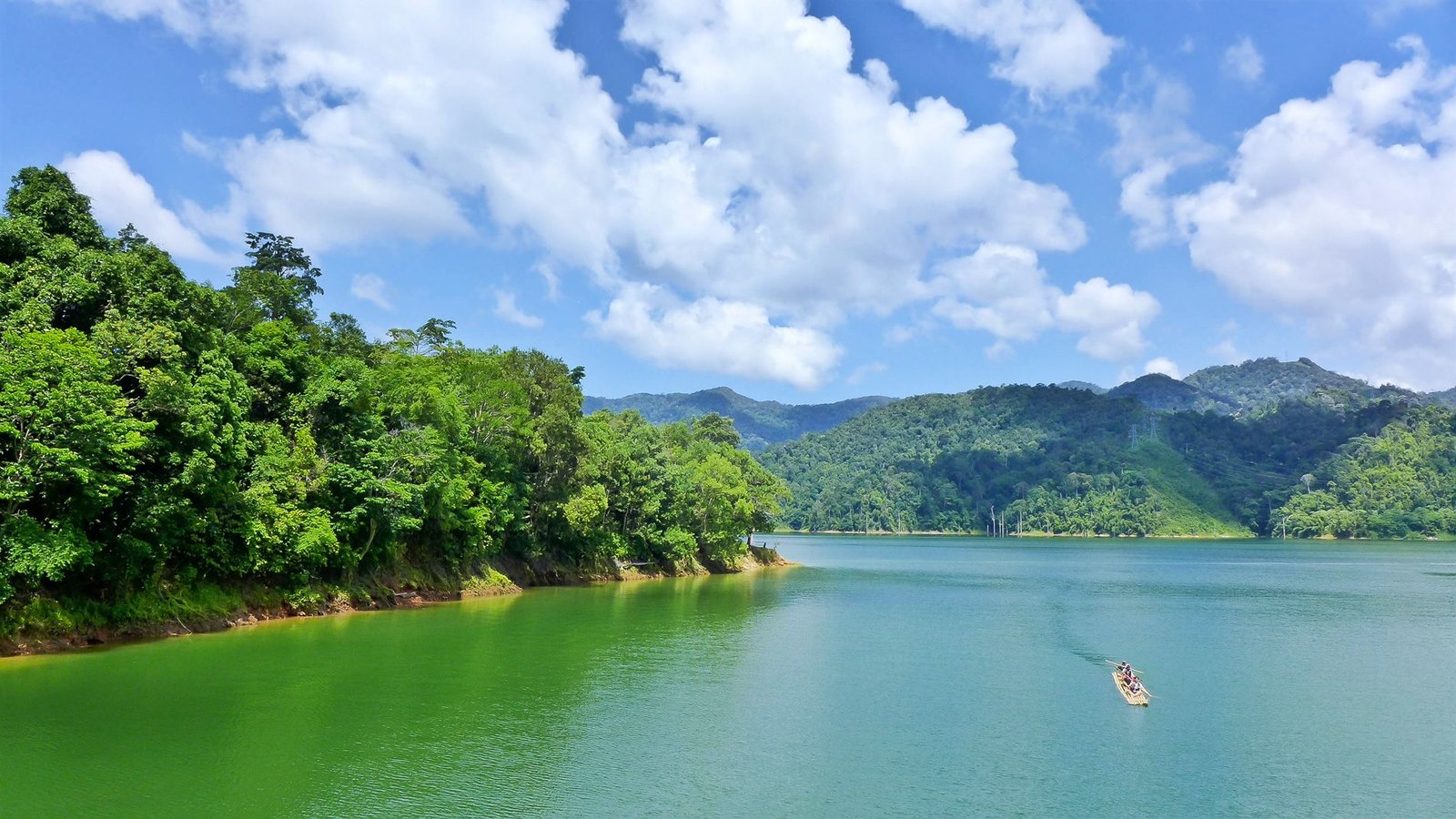
Rivers are an essential part of the Taman Negara experience. Boats provide transportation and also create opportunities to enjoy the scenery from the water.
River journeys can reveal forest landscapes that are difficult to appreciate from walking trails. The sound of flowing water combined with dense vegetation creates a peaceful atmosphere.
Boat trips can also be used to reach different areas of the park and nearby attractions.
Rapid Shooting
Rapid shooting is a popular adventure activity involving a boat traveling through sections of faster-moving river water.
The experience can be exciting, particularly for travelers who enjoy outdoor adventures. Participants should follow the guide’s instructions and use appropriate safety equipment.
Because river conditions can change with rainfall and water levels, activities may be modified or cancelled when conditions are unsafe.
Caving Adventures
Taman Negara and its surrounding areas also offer opportunities to explore caves. Cave environments provide a different type of ecosystem from the rainforest above.
Caves can contain bats, insects, unusual rock formations, and underground passages. Visitors should never disturb wildlife or damage natural formations.
Good footwear and a reliable guide are important for cave exploration, particularly in wet conditions.
Night Jungle Walks
A night jungle walk can reveal a completely different side of Taman Negara.
Many rainforest animals are nocturnal, meaning they become active after sunset. Insects, frogs, spiders, snakes, and other creatures may become easier to observe at night.
Night walks should generally be undertaken with an experienced guide. The forest can become extremely dark, and some animals may be difficult to identify safely.
A flashlight or headlamp is essential, but visitors should avoid shining bright lights directly into animals’ eyes for long periods.
Indigenous Communities
Taman Negara is also important because of its connection with indigenous communities. The Orang Asli, the Indigenous peoples of Peninsular Malaysia, have longstanding cultural relationships with forest environments.
Visitors may have opportunities to learn about traditional knowledge, forest resources, hunting methods, crafts, and aspects of local culture through organized and respectful experiences.
Cultural tourism should always be approached respectfully. Travelers should follow local guidance, ask before taking photographs, and remember that communities are not tourist displays but living cultures with their own traditions and values.
Why Taman Negara Is Important
Taman Negara is important for many reasons. First, it protects an enormous area of tropical rainforest and provides habitat for wildlife.
Second, the forest contributes to environmental stability. Trees store carbon, vegetation influences rainfall and water cycles, and forest soils help regulate water movement.
Third, the park provides opportunities for scientific research and environmental education. Researchers can study biodiversity, ecology, climate, animal behavior, plant communities, and conservation.
Finally, responsible tourism creates economic opportunities for local communities and helps people understand the value of natural ecosystems.
Best Time to Visit Taman Negara
Taman Negara can be visited during different times of the year, but weather conditions should always be considered.
Malaysia has a tropical climate, meaning temperatures remain relatively warm throughout the year. Rainfall can be significant, and weather conditions can influence trails, river levels, boat transportation, and outdoor activities.
The best time for one traveler may not be the same for another. Some visitors prefer drier conditions for hiking, while others enjoy the rainforest during wetter periods because the forest becomes especially lush.
Before traveling, it is wise to check current weather forecasts and local park conditions.
How to Reach Taman Negara
The most common tourist route into Taman Negara involves traveling toward Kuala Tahan. Visitors can reach the area using combinations of road transportation and river boats.
Travelers coming from Kuala Lumpur often arrange transportation through buses, private transfers, taxis, or organized tours depending on their budget and preferred travel style.
Once travelers reach the gateway area, river transportation may be required to enter the park.
Because transportation schedules can change, visitors should confirm current departure times and arrangements before beginning the journey.
Accommodation in Taman Negara
Accommodation around Taman Negara ranges from simple guesthouses to resorts and jungle lodges.
Budget travelers can find basic rooms and guesthouses, while travelers seeking greater comfort may choose hotels or jungle resorts.
Some visitors also choose accommodation packages that combine lodging with guided walks, river trips, meals, and other activities.
For a first visit, staying near the main gateway can be convenient because it makes access to guides, restaurants, transportation, and tour operators easier.
Food and Dining
Visitors can find a variety of Malaysian and international food options around the tourist areas near Taman Negara.
Local Malaysian cuisine offers dishes based on rice, noodles, vegetables, seafood, chicken, spices, and aromatic herbs.
Travelers should carry some snacks and drinking water when going on longer jungle excursions because food options inside remote forest areas can be limited.
What to Pack for Taman Negara
Packing correctly can make a major difference to your experience.
- Lightweight, breathable clothing
- Comfortable hiking shoes
- Extra socks
- Rain jacket or poncho
- Insect repellent
- Sunscreen
- Reusable water bottle
- Small backpack
- Flashlight or headlamp
- Basic first-aid supplies
- Personal medications
- Power bank
- Binoculars
- Camera
- Dry bags or waterproof bags
A waterproof bag can be particularly useful because tropical rain can arrive unexpectedly and river activities may involve splashing water.
Safety Tips for Visitors
Taman Negara is a natural wilderness, so visitors should treat the environment with respect and caution.
Do not leave marked trails without proper knowledge or permission. Deep rainforest environments can be confusing, and getting lost can become dangerous.
Do not approach wild animals. Even animals that appear calm can become defensive when threatened.
Keep food properly stored and avoid feeding wildlife. Feeding animals can change their natural behavior and create conflicts with humans.
Always listen to guides during river trips, jungle walks, and other adventure activities.
Visitors should also pay attention to weather conditions. Heavy rain can affect river levels, trails, and outdoor activities.
Photography in Taman Negara
Taman Negara is an excellent destination for nature photography. The rainforest offers opportunities to photograph giant trees, insects, birds, rivers, waterfalls, plants, landscapes, and cultural experiences.
Patience is essential for wildlife photography. Instead of expecting animals to appear immediately, photographers should spend time observing the environment.
A telephoto lens or binoculars can be useful for animals high in trees or far across rivers.
Rain protection for camera equipment is strongly recommended. Waterproof bags and protective covers can prevent expensive equipment from being damaged.
Birdwatching in Taman Negara
Birdwatchers can spend hours exploring forest trails and listening to bird calls.
Early morning is often particularly rewarding because many birds become active around sunrise. A quiet approach increases the chances of seeing shy forest species.
Keeping a bird checklist can make the experience more interesting. Beginners do not need expensive equipment; simple binoculars and a field guide can be enough to start.
Family Travel to Taman Negara
Families can enjoy Taman Negara, especially when activities are selected according to the age and fitness of children.
Short nature walks, boat trips, wildlife observation, and educational experiences can be suitable for many families.
Parents should supervise children closely around rivers, steep trails, caves, and wildlife.
Long jungle treks and demanding mountain expeditions may not be appropriate for younger children.
Taman Negara for Adventure Travelers
Adventure travelers will find many opportunities to challenge themselves in Taman Negara. Hiking, river journeys, cave exploration, night walks, and longer expeditions provide different levels of adventure.
The rainforest environment itself is part of the adventure. Unlike highly developed tourist destinations, Taman Negara requires travelers to adapt to heat, humidity, insects, rain, muddy paths, and changing conditions.
Taman Negara for Nature Lovers
Nature lovers can enjoy Taman Negara without participating in extreme activities. Simply walking through the forest and observing plants, birds, insects, rivers, and natural sounds can be deeply rewarding.
The park encourages visitors to slow down and pay attention to details that are often missed in ordinary daily life.
Responsible Tourism in Taman Negara
Responsible tourism is essential for protecting Taman Negara for future generations.
Visitors should follow the principles of leaving no trace. Do not throw rubbish, damage plants, disturb animals, remove rocks or natural objects, or make unnecessary noise.
Plastic waste should be minimized whenever possible. Reusable bottles and bags are useful alternatives to disposable products.
Travelers should also support local businesses and guides when appropriate. Spending money locally can help communities benefit from conservation and tourism.
Environmental Challenges
Although Taman Negara is protected, tropical forests face environmental challenges. Climate change, habitat fragmentation, illegal hunting, pollution, and development pressures can affect wildlife and ecosystems.
Protecting a forest is not simply about drawing a boundary around it. Effective conservation requires monitoring, law enforcement, scientific research, community involvement, habitat management, and responsible tourism.
Visitors can contribute by respecting regulations and supporting organizations and businesses that promote conservation.
The Sounds of the Rainforest
One of the most memorable aspects of Taman Negara is its soundscape.
The forest may contain thousands of sounds, including bird calls, insects, frogs, flowing water, leaves moving in the wind, and distant animal calls.
At first, these sounds can seem confusing. After spending more time in the forest, visitors begin to recognize different patterns.
This makes a jungle experience different from visiting a traditional sightseeing attraction. Taman Negara is something that should be experienced with the ears as well as the eyes.
Rainforest Climate
Taman Negara has a warm and humid tropical climate. Temperatures generally remain high, and humidity can make physical activities feel more demanding.
Rainfall can occur throughout the year. Heavy rain can arrive suddenly, making waterproof clothing useful even when the morning begins with clear skies.
The tropical climate is one of the reasons the rainforest remains so green and productive.
How Long Should You Stay?
The ideal length of a Taman Negara trip depends on the activities you want to experience.
A short two- or three-day visit can provide an introduction to the rainforest, including a canopy experience, jungle walk, boat trip, and night activity.
A longer stay allows travelers to explore deeper trails, spend more time watching wildlife, and participate in more activities without feeling rushed.
Serious hikers planning longer expeditions should allow additional time for preparation and weather-related changes.
One-Day Experience
A one-day visit can provide a taste of Taman Negara, but it may feel rushed because travel time can be significant.
Visitors with only one day should focus on a small number of experiences rather than trying to see everything.
A short jungle walk, canopy experience, river journey, or guided nature activity can provide a good introduction.
Three-Day Taman Negara Itinerary
Day 1
Arrive near the park, settle into accommodation, and explore the surrounding area. Depending on arrival time, take a short jungle walk or river trip.
Day 2
Spend the morning exploring forest trails and experiencing the canopy walkway. In the afternoon, consider a river activity or visit to a nearby attraction. At night, join a guided jungle walk.
Day 3
Enjoy a relaxed morning nature experience, birdwatching session, or river journey before beginning your return trip.
Why Travelers Love Taman Negara
Taman Negara combines natural beauty, adventure, wildlife, culture, and education in one destination.
It allows visitors to experience a rainforest rather than simply look at one. The feeling of walking beneath enormous trees, traveling along a jungle river, hearing birds in the canopy, and watching the forest change from day to night creates memories that can last for years.
For photographers, it offers endless subjects. For hikers, it offers challenging trails. For families, it provides educational experiences. For wildlife enthusiasts, it offers the possibility of seeing fascinating tropical species.
Interesting Facts About Taman Negara
- Taman Negara is Malaysia’s best-known national park.
- The park protects a vast area of tropical rainforest.
- It extends across parts of Pahang, Kelantan, and Terengganu.
- Kuala Tahan is a major gateway for visitors.
- The park is famous for its biodiversity.
- Mount Tahan is located within the wider Taman Negara landscape.
- The rainforest contains numerous species of mammals, birds, reptiles, amphibians, insects, and plants.
- River travel is an important part of exploring the park.
- The area has strong connections with Indigenous communities.
- Responsible tourism plays an important role in supporting conservation.
Frequently Asked Questions About Taman Negara
What is Taman Negara famous for?
Taman Negara is famous for its ancient tropical rainforest, biodiversity, wildlife, jungle trekking, river adventures, canopy walkway, caves, and Mount Tahan.
Where is Taman Negara located?
Taman Negara is located in Peninsular Malaysia and covers parts of Pahang, Kelantan, and Terengganu. Kuala Tahan is one of the most popular tourist gateways.
Is Taman Negara worth visiting?
Yes. Taman Negara is an excellent destination for people who enjoy nature, wildlife, hiking, adventure, photography, and rainforest environments.
Can you see animals in Taman Negara?
Wild animals live throughout the park, but sightings are never guaranteed. Wildlife is often shy and may remain hidden in dense vegetation. Guided walks can improve opportunities for observation.
Are there tigers in Taman Negara?
Taman Negara provides habitat for Malayan tigers, although seeing one in the wild is extremely rare.
Can families visit Taman Negara?
Yes. Families can enjoy many activities, including short walks, boat trips, nature observation, and educational experiences. Activity difficulty should be selected according to children’s ages and abilities.
Is Taman Negara safe?
Taman Negara can be safely enjoyed when visitors follow park regulations, stay on appropriate trails, use experienced guides when necessary, respect wildlife, and pay attention to weather and river conditions.
What should I wear in Taman Negara?
Lightweight, breathable clothing and comfortable walking shoes are recommended. Rain protection and insect protection are also useful.
How many days are enough for Taman Negara?
Two to three days can provide a good introduction, while longer stays are better for travelers who want deeper rainforest experiences or longer hiking adventures.
Is Taman Negara good for photography?
Yes. The park offers excellent opportunities for rainforest, wildlife, bird, landscape, river, plant, and insect photography.
Final Thoughts on Taman Negara
Taman Negara is much more than a beautiful forest. It is a living ecosystem, a wildlife refuge, a cultural landscape, an outdoor adventure destination, and an important part of Malaysia’s natural heritage.
Its dense rainforest, rivers, mountains, wildlife, birds, plants, caves, and Indigenous cultural connections create an experience that is difficult to compare with ordinary tourist destinations. Every trail can reveal something new, from a tiny insect hidden on a leaf to the call of a bird high in the canopy.
The most rewarding way to experience Taman Negara is to slow down and allow the forest to become the main attraction. Walk quietly, listen carefully, observe patiently, and respect the environment.
Whether you are an experienced hiker, a wildlife enthusiast, a photographer, a family traveler, or simply someone looking for an unforgettable natural experience, Taman Negara offers an opportunity to connect with one of Southeast Asia’s remarkable rainforest landscapes.
A visit to Taman Negara can become more than a holiday. It can be a lesson in biodiversity, conservation, adventure, and the importance of protecting the natural world. The memories of green forest trails, flowing rivers, tropical birds, giant trees, and peaceful rainforest sounds can remain with travelers long after they leave Malaysia.
Conclusion
Taman Negara stands as one of Malaysia’s most impressive natural destinations. Its enormous rainforest, diverse wildlife, scenic rivers, challenging mountains, fascinating trails, and rich cultural environment make it an outstanding place for exploration.
The park reminds visitors how valuable tropical forests are and why conservation matters. By traveling responsibly, respecting wildlife, following park rules, and supporting local communities, visitors can help ensure that this extraordinary rainforest remains protected for future generations.
For anyone searching for a destination where adventure and nature come together, Taman Negara deserves a place high on the list. Its rainforest is not simply something to see—it is something to experience, hear, explore, and remember.