Göreme National Park
Göreme National Park: A Complete Guide to Cappadocia’s Extraordinary Landscape
Göreme National Park, located in the Cappadocia region of central Türkiye, is one of the most remarkable natural and cultural landscapes in the world. Famous for its unusual fairy chimneys, volcanic rock formations, cave dwellings, ancient churches, underground spaces, valleys, and spectacular sunrise hot-air-balloon flights, Göreme offers visitors an experience that combines nature, history, architecture, religion, and adventure.
The landscape of Göreme looks almost unreal. Tall rock pillars rise from the valleys, soft volcanic stone has been shaped by wind and water, and centuries-old communities carved homes, monasteries, chapels, and churches directly into the rock. The result is a destination unlike almost anywhere else on Earth.
Göreme National Park is closely associated with the wider Cappadocia region. While the famous town of Göreme is one of the main tourist bases, the surrounding valleys and historical settlements contain countless places worth exploring. Visitors can hike through dramatic landscapes, discover rock-cut churches, enjoy traditional Turkish food, watch the sunrise from a balloon, and learn about the civilizations that lived among these unusual formations.
1. Introduction to Göreme National Park
Göreme National Park is situated in central Türkiye, within the larger Cappadocia region. It is recognized for both its exceptional natural scenery and its cultural heritage. The park and surrounding Cappadocian landscape demonstrate how geological forces and human creativity can combine to create a unique environment.
The region developed over millions of years through volcanic activity, erosion, and weathering. Ancient volcanic eruptions deposited layers of ash and rock across the area. Over time, these materials hardened into soft volcanic tuff. Wind, rain, snow, and temperature changes gradually sculpted the stone into cliffs, towers, cones, valleys, and fairy chimneys.
Humans later transformed the soft rock into living spaces. People carved houses, storage rooms, religious buildings, shelters, and entire communities into the cliffs and underground. Some churches contain beautiful paintings that provide important evidence about the religious history of Cappadocia.
Today, Göreme is one of Türkiye’s most popular destinations for travelers who want to experience unusual landscapes and ancient history in the same place.
2. Where Is Göreme National Park?
Göreme National Park is located in central Türkiye, in the Cappadocia area of the Nevşehir region. The town of Göreme is the best-known tourist center in the area and is surrounded by valleys, rock formations, viewpoints, and historical sites.
The region is relatively far from Türkiye’s major coastal resort areas, but it is well connected with major Turkish cities. Travelers commonly reach Cappadocia by air, bus, or private vehicle.
Nevşehir and Kayseri are the main airports used by many international and domestic visitors. From the airports, travelers can continue to Göreme and other Cappadocian towns by shuttle, taxi, rental car, or organized transfer.
3. Why Is Göreme National Park Famous?
Göreme is famous for several reasons. The first is its extraordinary geology. The second is its ancient rock-cut architecture. The third is its connection with the cultural history of Cappadocia.
The famous fairy chimneys are probably the most recognizable feature. These tall formations can have narrow tops, broad bases, or unusual shapes created through differential erosion. Some resemble towers, mushrooms, cones, or giant stone sculptures.
Another major attraction is the collection of cave churches and monasteries. Many were created centuries ago by Christian communities. Some contain frescoes depicting biblical scenes, saints, and religious figures.
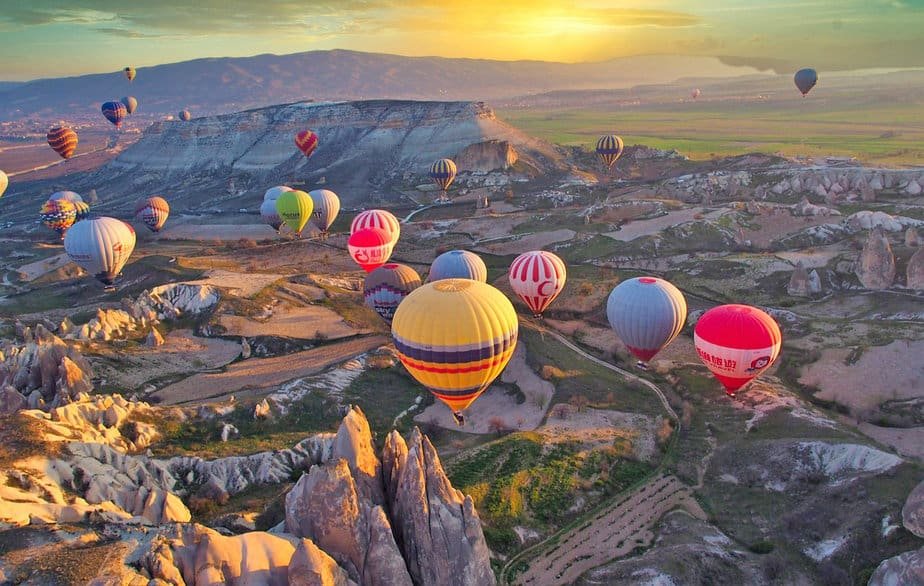
Göreme is also famous for hot-air balloons. At sunrise, dozens of colorful balloons may rise over the valleys when weather conditions are suitable. The view from above provides a remarkable perspective on Cappadocia’s unusual geography.
4. The Geological Formation of Göreme
The story of Göreme begins with volcanic activity. The Cappadocia region was influenced by major volcanic mountains, including Mount Erciyes, Mount Hasan, and Melendiz Mountain. Ancient eruptions spread volcanic materials across large parts of central Anatolia.
Layers of volcanic ash eventually became a soft rock known as tuff. In some locations, harder volcanic material formed protective caps over softer layers underneath.
Over thousands and millions of years, erosion removed softer material. Areas protected by harder rock remained standing, producing tall formations. This process helped create the fairy chimneys and distinctive cliffs seen throughout Cappadocia.
The geology is particularly fascinating because erosion continues today. Rainwater and wind gradually change the shapes of rocks. Some formations become more dramatic, while others slowly weaken and collapse.
5. The Famous Fairy Chimneys
Fairy chimneys are the visual symbol of Cappadocia. These unusual rock formations can be found throughout the Göreme area.
Many fairy chimneys consist of softer volcanic rock beneath a harder stone cap. As erosion removes the surrounding material, the protected rock remains standing. The result is a tall pillar topped by a cap of harder material.
Different formations have different shapes and sizes. Some are narrow and tall, while others form clusters that look like natural stone villages.
Visitors can see fairy chimneys from roads, hiking trails, viewpoints, and valleys. Walking among them is one of the best ways to appreciate their scale and detail.
6. History of Göreme and Cappadocia
Cappadocia has a long and complex history. Numerous civilizations and cultures have passed through the region, leaving behind archaeological remains and cultural traditions.
The landscape became particularly important for Christian communities during the late Roman and Byzantine periods. Cappadocia offered natural protection because caves and valleys could provide shelter and secluded places for religious life.
Monks and religious communities established monasteries, chapels, and churches in the rock. Some buildings were simple spaces, while others were decorated with elaborate frescoes.
Over time, Cappadocia became an important center of Eastern Christianity. The region was associated with influential Christian thinkers and religious communities.
The arrival and expansion of Turkish and Islamic civilizations later added new cultural influences. Cappadocia therefore represents many layers of Anatolian history rather than belonging to a single period.
7. Göreme Open-Air Museum
One of the most important attractions near Göreme is the Göreme Open-Air Museum. It contains a collection of rock-cut churches, chapels, monasteries, and religious spaces.
The museum demonstrates how communities used the natural rock landscape for religious and daily life. Visitors can walk between carved structures and enter several historic churches.
Some churches are famous for their frescoes. The paintings show religious scenes, including episodes from the life of Jesus, images of saints, and other Christian subjects.
The Dark Church, often called Karanlık Kilise, is particularly well known for its preserved frescoes. Its limited natural light helped protect some of the artwork from fading.
8. Rock-Cut Churches
The rock-cut churches of Göreme are among the most fascinating cultural treasures of Cappadocia. Instead of constructing churches from separate blocks of stone, builders carved spaces directly into the soft volcanic rock.
Inside these churches, visitors may find columns, arches, domes, niches, and decorative details carved from the same rock. Some interiors were covered with colorful frescoes.
The artwork provides insight into the religious beliefs, artistic styles, and cultural connections of medieval Cappadocia.
Because these sites are fragile, visitors should follow preservation rules. Touching paintings or carving surfaces can cause permanent damage.
9. The Dark Church
The Dark Church is one of the best-known churches in the Göreme Open-Air Museum. Its name comes from the limited amount of light that enters the interior.
The church contains impressive frescoes with rich colors and detailed compositions. The paintings represent important Christian stories and figures.
The preservation of the artwork makes the church especially valuable for historians, art researchers, and travelers interested in medieval religious art.
10. Tokalı Church
Tokalı Church, or the Buckle Church, is another important religious monument near Göreme. It is one of the notable rock-cut churches in the region.
The church contains extensive painted decoration. Different sections demonstrate different artistic approaches and periods.
Visitors interested in the history of Cappadocian art should allow enough time to appreciate the details rather than simply passing through quickly.
11. The Valleys of Göreme
Göreme is surrounded by valleys, and each valley has its own atmosphere. Some are covered with unusual rock formations, while others contain orchards, vineyards, caves, churches, and hiking paths.
The valleys are ideal for travelers who want to explore Cappadocia on foot. Hiking allows visitors to move away from busy roads and experience the landscape at a slower pace.
12. Love Valley
Love Valley is one of Cappadocia’s most recognizable landscapes. It contains tall, slender rock formations that create a dramatic skyline.
The valley can be viewed from elevated viewpoints or explored on foot. The unusual formations make it one of the most photographed areas near Göreme.
Early morning and late afternoon can be particularly attractive because the changing sunlight emphasizes the shapes and textures of the rocks.
13. Red Valley
Red Valley is famous for its warm colors and dramatic scenery. Depending on the time of day and weather conditions, the rocks can appear red, orange, pink, or golden.
The valley is especially popular around sunset. Walking through its trails can provide a peaceful experience away from the busiest tourist locations.
Red Valley also contains rock-cut religious structures and natural formations that add cultural interest to the hiking experience.
14. Rose Valley
Rose Valley gets its name from the soft pink and rose-colored tones found in its rock formations. The valley contains several walking routes and is popular with hikers.
Its combination of scenery, vineyards, caves, and historic structures makes it one of the most rewarding areas for exploration around Göreme.
15. Pigeon Valley
Pigeon Valley is located between Göreme and Uçhisar. It is named after the numerous pigeon houses carved into the cliffs.
Historically, pigeons were valuable to local communities because their droppings could be used as fertilizer. People carved small nesting spaces into the rock to encourage pigeons to live there.
The valley is also known for its scenery and hiking trails. Its combination of natural and human-made features demonstrates how closely people adapted to the Cappadocian environment.
16. Zemi Valley
Zemi Valley is another attractive hiking area near Göreme. The valley includes natural rock formations, vegetation, and quieter walking paths.
Compared with some of the more famous viewpoints, Zemi Valley can provide a more peaceful experience for travelers who prefer nature and walking.
17. Uçhisar Castle
Uçhisar Castle is a giant rock formation that has been shaped and used by people for centuries. Located close to Göreme, it provides one of the most impressive panoramic viewpoints in Cappadocia.
The rock contains numerous rooms, passages, and cavities. From higher viewpoints, visitors can see extensive portions of the Cappadocian landscape.
Sunset is a popular time to visit because the landscape can become golden and dramatic as the sun moves toward the horizon.
18. Hot-Air Balloon Flights
A hot-air-balloon ride is one of the most famous experiences in Cappadocia. When weather conditions are safe and flights operate, balloons rise around sunrise and float above valleys and rock formations.
From the basket, passengers can see fairy chimneys, valleys, villages, vineyards, and other balloons across the horizon.
Balloon flights are highly dependent on weather conditions. Wind, visibility, and other factors can cause flights to be delayed or canceled.
Anyone planning a balloon experience should therefore keep some flexibility in their itinerary.
19. Sunrise in Göreme
Sunrise is one of the most beautiful times to experience Cappadocia. The first sunlight gradually illuminates the valleys and rock formations.
Even without taking a balloon ride, travelers can visit a viewpoint and watch the balloons rise above the landscape.
Sunrise photography is particularly popular because the combination of soft light, colorful balloons, and unusual rock formations creates memorable images.
20. Sunset in Göreme
Sunset provides another spectacular experience. The rocks can change color as the sun becomes lower in the sky.
Popular sunset viewpoints can become busy, so arriving early is useful. Travelers who prefer quiet surroundings can choose a less crowded trail or viewpoint.
21. Hiking in Göreme National Park
Hiking is one of the best ways to experience Göreme. Many trails pass through valleys, rock formations, caves, orchards, vineyards, and historic sites.
Some routes are relatively easy, while others involve steep climbs and uneven surfaces. Good walking shoes are strongly recommended.
Travelers should carry water, especially during warmer months. The dry landscape can make a hike feel more demanding than expected.
22. Best Time to Visit Göreme
Göreme can be visited throughout much of the year, but each season offers a different experience.
Spring
Spring is attractive because temperatures are generally comfortable for hiking. The landscape may also contain more greenery and seasonal flowers.
Summer
Summer can be hot during the middle of the day. Early-morning and late-afternoon activities are often more comfortable.
Autumn
Autumn is popular because temperatures become more comfortable and the landscape can have beautiful warm colors.
Winter
Winter transforms Cappadocia into a different world. Snow can cover the fairy chimneys and valleys, creating dramatic scenery. However, cold temperatures and weather conditions may affect outdoor activities.
23. Weather in Göreme
Cappadocia has a continental climate, with hot summers and cold winters. Temperatures can vary significantly between seasons and between daytime and nighttime.
Visitors should check the forecast before hiking or booking outdoor activities. Even during warmer months, evenings can become cooler than expected.
24. How to Reach Göreme
Travelers can reach Göreme by airplane, bus, rental car, or private transfer.
Domestic flights from major Turkish cities can make air travel convenient. Airports serving the Cappadocia area include Nevşehir Kapadokya Airport and Kayseri Airport.
Long-distance buses also connect Cappadocia with several Turkish cities. Bus travel can be a practical choice for budget-conscious travelers.
Rental cars provide flexibility for visitors who want to explore valleys and attractions beyond Göreme.
25. Getting Around Cappadocia
Göreme itself is compact enough to explore many places on foot. However, the wider Cappadocia region covers a large area.
Travelers can use taxis, local transportation, organized tours, rental cars, or private transfers.
Guided tours can be useful for visitors who want historical explanations and organized transportation between multiple attractions.
26. Where to Stay in Göreme
Göreme is famous for its cave-style accommodation. Many hotels have rooms designed inside or inspired by traditional rock dwellings.
Some properties offer terraces overlooking the valleys. These terraces can be excellent locations for breakfast and sunrise views.
Accommodation ranges from hostels and affordable guesthouses to boutique cave hotels and luxury properties.
Travelers should compare location, views, facilities, transportation access, and seasonal prices before booking.
27. Cave Hotels
Cave hotels are one of the distinctive accommodation experiences in Cappadocia. Some rooms are carved into existing rock, while others combine traditional architecture with modern facilities.
Staying in a cave-style room can make a trip more memorable because it connects modern travelers with the architectural traditions of the region.
28. Turkish Food in Göreme
Food is an important part of the Cappadocian experience. Local restaurants serve Turkish dishes as well as regional specialties.
Visitors can try dishes such as testi kebab, gözleme, mantı, pide, kebabs, soups, stuffed vegetables, fresh salads, and traditional desserts.
Testi kebab is particularly associated with Cappadocia. The dish is traditionally prepared in a sealed clay pot, which is opened before serving.
29. Traditional Cappadocian Wine
Cappadocia has a long tradition of grape cultivation. The volcanic soils and local climate support vineyards in parts of the region.
Visitors interested in local food culture may encounter regional wines and vineyard products.
30. Pottery in Cappadocia
Pottery is another important traditional craft. The town of Avanos, near Göreme, is especially famous for pottery and ceramics.
Local artisans have maintained pottery traditions for generations. Visitors can see demonstrations and sometimes participate in pottery-making experiences.
31. Carpet and Textile Traditions
Turkish carpets and textiles are widely associated with Anatolian culture. Cappadocia is no exception.
Visitors may find shops displaying handwoven carpets, kilims, textiles, and decorative crafts. Anyone buying an expensive handmade product should ask about its origin, materials, craftsmanship, and certification.
32. Photography in Göreme
Göreme is an extraordinary destination for photographers. The combination of unusual geology, historic architecture, changing light, and balloons provides countless opportunities.
For landscape photography, sunrise and sunset are particularly useful because low-angle sunlight creates shadows and emphasizes textures.
Drone photography may be subject to local rules and restrictions. Travelers should always check current regulations before operating a drone.
33. Family Travel to Göreme
Families can enjoy Göreme, especially when activities are planned around the ages and abilities of children.
Short walks, viewpoints, cultural attractions, pottery experiences, and scenic drives can be suitable family activities.
Parents should take extra care around cliffs, steep trails, and uneven ground.
34. Göreme for Couples
Göreme is also a popular destination for couples. Sunrise balloon views, cave hotels, scenic walks, sunset viewpoints, and traditional dinners can create memorable experiences.
The landscape offers many opportunities for photography and peaceful exploration.
35. Göreme for Adventure Travelers
Adventure travelers can enjoy hiking, hot-air ballooning, horseback riding, cycling, and exploring valleys.
Each activity provides a different perspective on Cappadocia. Hiking offers close contact with the landscape, while ballooning provides a broad aerial view.
36. Horseback Riding in Cappadocia
Cappadocia is sometimes described as a land of beautiful horses. Horseback riding tours allow travelers to explore valleys from a traditional perspective.
Guided rides can range from short excursions to longer sunset experiences. Visitors should choose operators that prioritize animal welfare and provide appropriate safety equipment.
37. Cycling Around Göreme
Cycling can be another way to explore the region. Some roads and trails provide scenic routes through valleys and villages.
Because Cappadocia contains hills and uneven terrain, cycling may require a reasonable level of fitness.
38. Underground Cities Near Göreme
The wider Cappadocia region contains famous underground settlements, including Derinkuyu and Kaymakli.
These underground complexes contain tunnels, rooms, storage areas, ventilation systems, and other features that demonstrate the ingenuity of ancient communities.
Although they are not located directly inside Göreme, they can be included in a broader Cappadocia itinerary.
39. Why People Built Underground Spaces
Underground settlements provided protection and shelter during periods of conflict and uncertainty. Their underground environments could also provide stable temperatures.
The complexity of these structures shows that Cappadocian communities developed sophisticated ways to use the geological environment for survival.
40. Cultural Importance of Göreme
Göreme is important because it represents a long relationship between people and landscape. The rocks were not simply natural scenery; they became homes, churches, monasteries, storage rooms, shelters, and workplaces.
This combination of natural and cultural heritage makes the region particularly valuable.
41. Göreme and UNESCO World Heritage
The Göreme National Park and the Rock Sites of Cappadocia are recognized as a UNESCO World Heritage property. Its importance comes from the combination of exceptional geological formations and historic cultural remains.
The heritage designation highlights the need to protect both the natural landscape and the archaeological structures.
42. Conservation Challenges
Tourism brings economic opportunities to Cappadocia but also creates conservation challenges. Large numbers of visitors can place pressure on trails, historic structures, roads, and natural formations.
Climate and erosion also affect the soft volcanic rocks. Natural processes that created the landscape can eventually damage caves and monuments.
Responsible tourism is therefore important. Visitors should stay on marked routes where required, avoid touching ancient artwork, carry waste out of natural areas, and respect restrictions around protected structures.
43. Responsible Tourism
Responsible travelers can help protect Göreme by respecting the environment and local communities.
- Do not damage rock formations.
- Do not touch ancient frescoes.
- Keep natural areas clean.
- Follow marked hiking routes.
- Respect local religious sites.
- Use water responsibly.
- Support local businesses and artisans.
- Follow photography restrictions.
- Respect wildlife and plants.
44. What to Pack for Göreme
What you pack depends on the season and activities you plan to undertake.
- Comfortable walking shoes
- Reusable water bottle
- Sun protection
- Light layers
- Warm clothing in winter
- Small backpack
- Camera or smartphone
- Power bank
- Personal medicines
- Rain protection when appropriate
45. How Many Days Should You Spend in Göreme?
A short visit of two days can cover several major attractions, but three or four days allow travelers to explore the area at a more relaxed pace.
A longer stay gives visitors the opportunity to explore multiple valleys, visit museums and underground cities, experience a balloon flight, enjoy local food, and discover smaller villages.
46. Suggested Three-Day Itinerary
Day One
Begin with the Göreme Open-Air Museum and explore the historic rock-cut churches. Later, walk through one of the nearby valleys and finish the day at a sunset viewpoint.
Day Two
Start early with a balloon flight if weather permits. After breakfast, explore Uçhisar Castle and Pigeon Valley. Spend the evening enjoying local food in Göreme.
Day Three
Visit an underground city or explore additional valleys. End the trip with pottery, shopping, or another scenic viewpoint.
47. Safety Tips
Göreme is generally an accessible tourist destination, but travelers should take normal precautions.
Hiking trails can contain loose rocks, steep sections, and narrow passages. Wear suitable footwear and avoid climbing unstable formations.
During hot weather, carry sufficient water and avoid strenuous hikes during the hottest part of the day.
When entering caves or tunnels, follow official access rules and never enter restricted areas.
48. Photography Tips
Use early morning or late afternoon light for the best landscape photography. A wide-angle lens can help capture large rock formations and valleys.
For balloon photography, choose a viewpoint with a broad view of the horizon. A telephoto lens can help isolate individual balloons against the landscape.
Always respect restrictions inside churches and museums. Flash photography may not be allowed in some historic areas.
49. Göreme in Winter
Winter can provide one of the most dramatic views of Cappadocia. Snow-covered fairy chimneys create a striking contrast with the dark rock formations.
Cold weather means visitors need warm clothing and suitable footwear. Some outdoor activities may be affected by snow or strong weather.
50. Göreme in Spring
Spring is excellent for hiking because temperatures are often comfortable. Green vegetation and seasonal flowers can add color to the valleys.
The combination of fresh vegetation and Cappadocia’s rock formations makes spring a beautiful season for landscape photography.
51. Göreme in Summer
Summer attracts many visitors. Days can be hot, so early starts are recommended for hiking and outdoor activities.
Sunrise and sunset are particularly pleasant times to explore the landscape.
52. Göreme in Autumn
Autumn provides cooler conditions and beautiful light. Vineyards and surrounding vegetation can add seasonal colors to the scenery.
It is a good season for travelers who want to combine hiking, sightseeing, photography, and cultural exploration.
53. Local Villages Around Göreme
Exploring villages around Cappadocia can provide a different perspective from the main tourist center.
Local communities maintain traditional foods, crafts, agricultural practices, and architectural styles. Visitors who spend time outside the busiest areas may discover a quieter side of Cappadocia.
54. Architecture of Cappadocia
Cappadocian architecture is strongly influenced by the region’s geology. Homes and other structures were often built using local stone or carved into existing rock.
Traditional buildings can feature stone walls, courtyards, wooden details, and practical designs suited to the climate.
55. Ancient Monastic Life
Monastic communities played an important role in Cappadocian religious history. Remote valleys and naturally protected rock formations provided suitable locations for spiritual communities.
The churches and monasteries that remain today demonstrate the importance of religious life in the region during earlier centuries.
56. Frescoes of Cappadocia
The frescoes are among the greatest cultural treasures of Göreme. They provide visual records of Christian religious traditions and medieval artistic practices.
Many frescoes include scenes arranged in narrative sequences. Their colors and compositions can still be impressive despite centuries of age.
57. The Relationship Between Nature and Human Life
One of Göreme’s most important lessons is the relationship between human beings and nature. Instead of fighting the landscape, local communities adapted to it.
They carved homes into rock, created agricultural spaces in valleys, used natural caves for storage, and built religious centers within the geological environment.
58. Why Göreme Is Different From Other National Parks
Many national parks are primarily known for forests, mountains, rivers, lakes, or wildlife. Göreme is different because its identity comes from a combination of geology and human heritage.
Visitors can see natural rock formations and historic monuments within the same landscape. This combination makes Göreme particularly distinctive.
59. A Destination for Nature Lovers
Nature lovers can enjoy the valleys, unusual rock formations, seasonal vegetation, and panoramic viewpoints.
The landscape is especially rewarding for people who enjoy walking and photography.
60. A Destination for History Lovers
History enthusiasts can explore churches, monasteries, cave settlements, castles, museums, and underground cities.
The region provides opportunities to study different historical periods and understand how Anatolian communities adapted to changing political and religious circumstances.
61. A Destination for Photographers
Few destinations offer such a distinctive combination of subjects. Photographers can capture landscapes, architecture, caves, frescoes, villages, balloons, sunsets, and traditional crafts.
62. A Destination for Adventure
From balloon flights to hiking and horseback riding, Göreme offers plenty of activities for adventurous travelers.
The key is to select activities appropriate for your experience level and to follow safety instructions from professional operators.
63. A Destination for Culture
Cappadocia’s culture is visible through food, architecture, crafts, music, religious heritage, agriculture, and hospitality.
Travelers who take time to interact respectfully with local communities can gain a deeper understanding of the region beyond its famous landscapes.
64. Budget Travel in Göreme
Göreme can be experienced on different budgets. Budget travelers can stay in hostels or affordable guesthouses, use public transportation, and explore valleys independently.
Travelers with larger budgets can choose boutique cave hotels, private tours, premium transfers, and balloon experiences.
Planning ahead can help reduce costs, particularly during busy travel periods.
65. Tips for First-Time Visitors
- Book accommodation early during busy seasons.
- Bring comfortable shoes.
- Keep flexible plans for weather-dependent activities.
- Start hikes early during hot weather.
- Respect historic sites.
- Carry water.
- Allow time for sunsets and viewpoints.
- Explore more than one valley.
- Try local food.
- Take time to enjoy the landscape rather than rushing between attractions.
66. Frequently Asked Questions About Göreme National Park
What is Göreme National Park famous for?
Göreme is famous for fairy chimneys, volcanic landscapes, rock-cut churches, cave settlements, valleys, and Cappadocia’s hot-air-balloon experiences.
Where is Göreme National Park?
It is located in central Türkiye within the Cappadocia region, near the town of Göreme.
Is Göreme worth visiting?
Yes. It offers a rare combination of natural scenery, geological formations, historic monuments, hiking trails, traditional culture, and adventure activities.
How long should I stay in Göreme?
Two to four days is a useful range for seeing major attractions and enjoying several activities without rushing.
Can I hike in Göreme?
Yes. Several valleys around Göreme have hiking routes. Trail difficulty varies, so visitors should choose routes appropriate for their fitness level.
Can I see hot-air balloons in Göreme?
Yes. Cappadocia is famous for hot-air balloons, and Göreme provides many viewpoints where visitors can watch flights when weather conditions permit.
What are fairy chimneys?
Fairy chimneys are unusual rock formations created by erosion of volcanic material. Many have tall pillars topped by harder rock.
Is Göreme suitable for families?
Yes. Families can enjoy museums, viewpoints, short walks, cultural activities, and scenic attractions. Care is needed around steep cliffs and uneven trails.
What should I wear in Göreme?
Comfortable walking shoes and weather-appropriate layers are recommended. Modest clothing is useful when visiting religious or historic sites.
What is the best time to visit Göreme?
Spring and autumn are often comfortable for hiking, while winter offers snow-covered landscapes and summer provides long, warm days. The best season depends on your preferred activities.
Are there cave hotels in Göreme?
Yes. Göreme and the surrounding Cappadocia region are well known for cave-style hotels and guesthouses.
What food should I try in Cappadocia?
Visitors can try regional specialties such as testi kebab, gözleme, mantı, pide, Turkish kebabs, soups, desserts, and locally produced foods.
67. Final Thoughts
Göreme National Park is much more than a beautiful landscape. It is a place where geology, history, religion, architecture, culture, and tourism come together.
The fairy chimneys and valleys show the incredible power of natural erosion, while the cave homes, churches, monasteries, and underground settlements demonstrate human creativity and adaptability.
A visit to Göreme can include peaceful walks through ancient valleys, exploration of historic churches, sunrise views over Cappadocia, traditional Turkish food, local crafts, and unforgettable landscapes.
Whether you are a nature lover, photographer, history enthusiast, adventure traveler, family traveler, or simply someone looking for an extraordinary destination, Göreme offers something memorable.
The most rewarding way to experience the area is to slow down and appreciate both sides of its identity: the spectacular natural environment and the centuries of human history written into its rocks. With responsible tourism and careful conservation, the remarkable heritage of Göreme can continue to inspire visitors for generations to come.
Conclusion
Göreme National Park stands among the world’s most unusual destinations because its beauty cannot be separated from its history. The volcanic landscape created the raw material, erosion shaped the valleys and fairy chimneys, and generations of people transformed the soft rock into homes, churches, monasteries, storage areas, and places of refuge.
Today, travelers can walk through the same valleys, admire ancient frescoes, explore rock-cut structures, watch balloons float above the landscape, and experience the traditions of Cappadocia.
For anyone planning a journey through Türkiye, Göreme deserves a prominent place on the itinerary. Its landscapes are visually extraordinary, its history is deep, and its cultural heritage makes it a destination that can be appreciated from many different perspectives.