Los Glaciares National Park: A Complete Guide to Argentina’s Spectacular Glacial Wilderness
Los Glaciares National Park: A Complete Guide to Argentina’s Spectacular Glacial Wilderness
Los Glaciares National Park is one of the most extraordinary protected natural areas in South America. Located in the southern part of Argentina, in the province of Santa Cruz, the park is famous for enormous glaciers, turquoise lakes, rugged mountains, ancient forests, dramatic valleys, and some of Patagonia’s most impressive landscapes.
Introduction to Los Glaciares National Park
Los Glaciares National Park is a vast protected area in Argentine Patagonia. It covers a remarkable landscape shaped by ice over thousands of years. The park takes its name from the numerous glaciers that descend from the Southern Patagonian Ice Field, one of the largest ice masses outside Antarctica and Greenland.
For travelers, Los Glaciares is a destination where mountains and ice dominate the horizon. Huge peaks rise above deep valleys, while glaciers slowly move toward magnificent lakes. Among the park’s most famous natural attractions are Perito Moreno Glacier, Upsala Glacier, Spegazzini Glacier, Lake Argentino, Lake Viedma, Mount Fitz Roy, and Cerro Torre.
The park is particularly important because it protects a combination of glaciers, lakes, forests, wetlands, mountains, and wildlife habitats. Its landscapes also provide an opportunity to understand how glaciers shape the Earth. Deep valleys, polished rocks, moraines, and glacial lakes are all evidence of the enormous forces created by moving ice.
Los Glaciares National Park is also one of Patagonia’s most popular destinations for hiking, trekking, boat excursions, photography, wildlife observation, and nature tourism. Whether a visitor wants to enjoy an easy viewpoint or undertake a challenging multi-day trek, the region offers experiences for many different types of travelers.
Location and Geography
Los Glaciares National Park lies in the southwestern part of Santa Cruz Province in southern Argentina. It forms part of the spectacular Patagonian landscape close to the border with Chile.
The park contains two major geographical zones. The southern sector is closely associated with Lake Argentino, Perito Moreno Glacier, Upsala Glacier, and Spegazzini Glacier. The northern sector includes Lake Viedma, Mount Fitz Roy, Cerro Torre, and some of the most famous trekking routes in Patagonia.
The landscape is strongly influenced by the Andes Mountains. The mountains create a dramatic western boundary, while lower valleys and open steppe environments extend toward the east. This transition from high mountains and ice to forests and dry plains gives the park an exceptional variety of scenery.
One of the defining characteristics of the region is the enormous amount of ice stored in glaciers. Glaciers are rivers of ice that slowly flow under their own weight. In Los Glaciares, many glaciers originate in the Southern Patagonian Ice Field and move through mountain valleys before reaching lakes.
History of Los Glaciares National Park
The natural landscape of Patagonia has been shaped by geological and climatic processes over extremely long periods. Long before the creation of the national park, Indigenous peoples lived in and traveled through the wider region.
The Tehuelche peoples are especially associated with the southern Patagonian region. Their knowledge of the landscape allowed them to move through difficult environments and make use of local resources. The archaeological and cultural history of Patagonia demonstrates that humans have interacted with these landscapes for thousands of years.
European exploration of Patagonia expanded considerably during the nineteenth century. Explorers, surveyors, scientists, and travelers became increasingly interested in the mountains, lakes, glaciers, and remote valleys of southern Argentina.
Argentina later established protected areas to preserve important natural landscapes. Los Glaciares National Park was created in the twentieth century and eventually became one of the country’s most important conservation areas.
The international importance of the park was recognized when Los Glaciares National Park was designated a UNESCO World Heritage Site in 1981. This recognition reflects the exceptional natural value of its glaciers, mountains, forests, lakes, and geological features.
Why Los Glaciares National Park Is Famous
Los Glaciares is famous primarily because of its spectacular glaciers. Few places provide such accessible views of enormous moving ice formations combined with dramatic mountains and lakes.
Perito Moreno Glacier is perhaps the best-known attraction. Its huge blue-and-white ice face rises above the waters of Lake Argentino. Unlike many glaciers around the world that are retreating rapidly, Perito Moreno has historically maintained a relatively stable position for long periods, although its overall behavior is complex and influenced by changing environmental conditions.
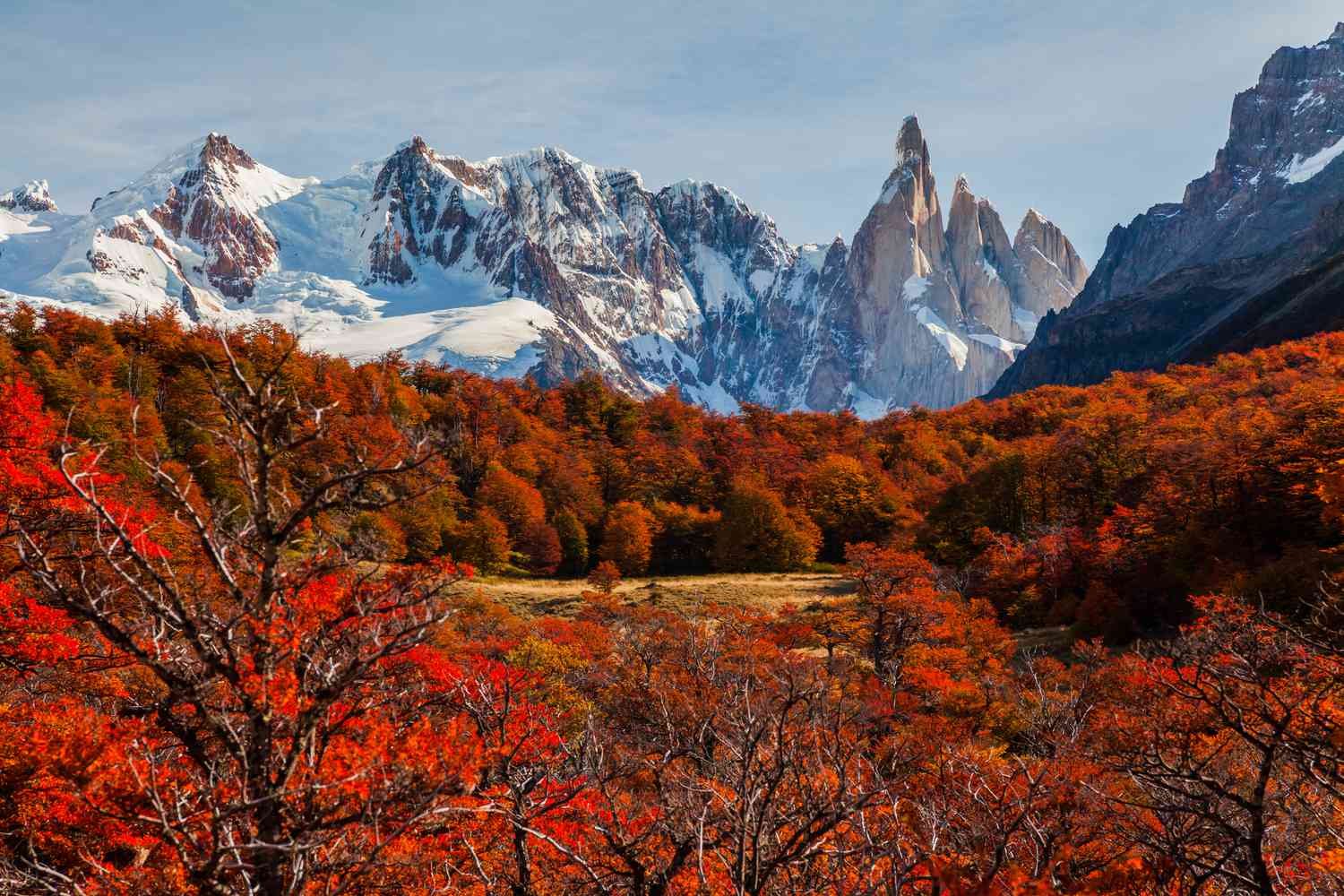
The park is also famous for Mount Fitz Roy. Known locally as Cerro Chaltén, this sharply pointed granite mountain dominates the skyline near the town of El Chaltén. Climbers and hikers from around the world travel to the area to experience its dramatic peaks and valleys.
Cerro Torre is another iconic mountain. Its narrow, spectacular summit and surrounding glaciers create one of Patagonia’s most recognizable landscapes.
Perito Moreno Glacier
Perito Moreno Glacier is the most famous attraction in Los Glaciares National Park. It is located in the southern portion of the park and flows into Lake Argentino.
The glacier is enormous, with a broad ice front that extends across the lake. Its vertical walls of ice can reach impressive heights above the water. The colors range from white to deep blue, especially where dense ice absorbs different wavelengths of light.
Visitors can observe the glacier from a network of viewing platforms and walkways. These paths provide different perspectives of the ice front and surrounding landscape. The viewpoints are among the most accessible ways to experience a major Patagonian glacier.
One of the most exciting natural events at Perito Moreno is ice calving. As the glacier moves forward and ice breaks from its front, enormous blocks can fall into the lake with a powerful crash. The sound may travel across the water, creating an unforgettable experience.
Ice calving is a natural part of glacier dynamics. It occurs when sections of ice become unstable and break away from the glacier. Visitors should never approach unstable areas outside designated viewing zones because falling ice and waves can be extremely dangerous.
Lake Argentino
Lake Argentino is the largest freshwater lake in Argentina and one of the major geographical features of Los Glaciares National Park.
The lake receives water from glaciers, rivers, streams, and melting snow. Its waters can display striking shades of blue and turquoise because of glacial sediment known as rock flour. This extremely fine material is produced when glaciers grind against the underlying rock.
Several major glaciers flow toward the lake. Boat excursions allow travelers to explore portions of the lake and view glaciers from the water. These trips can provide perspectives that are impossible to experience from land.
The surrounding mountains and forests create a dramatic background for Lake Argentino. On clear days, the combination of blue water, white ice, dark mountains, and green vegetation makes the landscape particularly impressive.
Upsala Glacier
Upsala Glacier is one of the largest glaciers associated with Lake Argentino. It occupies a broad glacial valley and extends toward the lake.
The glacier is best experienced from the water because its remote position makes direct access more difficult than access to Perito Moreno. Boat tours can take visitors across Lake Argentino toward the glacier region.
Large floating pieces of ice may be seen in the water around glacier fronts. These icebergs originate from calving events. Their shapes and colors can vary greatly, making the journey itself part of the experience.
Upsala Glacier is also important scientifically because glaciers provide evidence of changing climate conditions and long-term environmental processes. Monitoring glaciers helps researchers understand changes in temperature, precipitation, ice movement, and water systems.
Spegazzini Glacier
Spegazzini Glacier is another spectacular glacier in the Lake Argentino region. It is particularly impressive because of the dramatic mountains surrounding it and the great height of its ice front.
Boat excursions are one of the best ways to see Spegazzini Glacier. Approaching by water allows visitors to appreciate the enormous scale of the glacier and the surrounding mountains.
The glacier environment is constantly changing. Ice breaks away, snow accumulates, water flows beneath the glacier, and weather conditions alter the appearance of the landscape. A photograph taken at one time may look completely different from the same location several months or years later.
Mount Fitz Roy
Mount Fitz Roy is one of the most recognizable mountains in Patagonia. It rises dramatically near El Chaltén in the northern sector of Los Glaciares National Park.
The mountain is also known as Cerro Chaltén. The name is connected with the Tehuelche cultural landscape and is often interpreted in relation to clouds or smoke because the peak is frequently surrounded by clouds.
Fitz Roy is famous among climbers because of its steep granite walls and challenging weather conditions. However, visitors do not need to climb the mountain to appreciate it. Numerous hiking trails provide spectacular views of the massif.
Sunrise and sunset can create particularly dramatic scenes. The granite walls may appear orange, pink, red, or golden depending on the angle of the sunlight and atmospheric conditions.
Cerro Torre
Cerro Torre is another legendary mountain in the northern part of the park. Its narrow granite summit and steep walls have attracted climbers for generations.
The mountain is surrounded by glaciers, lakes, forests, and rocky valleys. Hiking toward Laguna Torre is one of the most popular ways to experience the landscape.
The trail to Laguna Torre passes through forests and open areas before reaching a beautiful lake surrounded by dramatic mountains. Icebergs may sometimes float in the water depending on seasonal conditions.
Weather around Cerro Torre can change quickly. Strong winds, clouds, rain, and snow can appear even when conditions were calm earlier in the day. This unpredictable weather is one reason the mountain has such a powerful reputation among mountaineers.
El Chaltén
El Chaltén is a small mountain town located near the northern part of Los Glaciares National Park. It is widely regarded as one of Argentina’s major trekking destinations.
The town serves as a base for visitors exploring Mount Fitz Roy, Cerro Torre, Laguna de los Tres, Laguna Torre, and numerous other trails.
El Chaltén has accommodation, restaurants, outdoor equipment stores, guides, transportation services, and other facilities for travelers. Its location makes it an excellent starting point for exploring the mountains.
The town itself is surrounded by spectacular scenery. On clear days, impressive mountain views can appear almost immediately beyond the streets.
El Calafate
El Calafate is the main gateway for many visitors traveling to the southern sector of Los Glaciares National Park.
The town is located on the southern shore of Lake Argentino and offers hotels, restaurants, tour operators, shops, transportation services, and other visitor facilities.
Many travelers stay in El Calafate before visiting Perito Moreno Glacier. Guided excursions, boat trips, glacier walks, and other activities can be arranged from the town.
The name El Calafate comes from a native Patagonian shrub that produces small berries. The plant is common in the region and has become part of local identity.
Hiking in Los Glaciares National Park
Hiking is one of the best ways to experience Los Glaciares National Park. The northern area around El Chaltén contains numerous trails ranging from relatively easy walks to demanding mountain routes.
Popular destinations include Laguna de los Tres, Laguna Torre, Loma del Pldias, Piedras Blancas, and other viewpoints and valleys.
Hikers should prepare carefully because Patagonia can experience rapidly changing weather. Even during warmer months, strong winds, rain, cold temperatures, and snow can occur in mountain areas.
Good hiking preparation includes appropriate footwear, layered clothing, rain protection, sufficient water, food, navigation equipment, and knowledge of current trail conditions.
Laguna de los Tres
Laguna de los Tres is one of the most famous hiking destinations near El Chaltén. The route provides a spectacular view toward Mount Fitz Roy.
The trail passes through forests and open mountain terrain. The final section can be steep and physically demanding, but the reward is an extraordinary view of the turquoise lagoon and the granite peaks beyond it.
Weather plays an important role in the experience. Clouds can completely hide Fitz Roy, while clear conditions can reveal the full mountain massif. Because weather can change quickly, hikers should be prepared for different conditions throughout the day.
Laguna Torre
Laguna Torre is another famous hiking destination. The route leads through beautiful Patagonian forests and valleys toward a lake with views of Cerro Torre.
The landscape changes gradually along the trail. Forested sections provide shelter from the wind, while open viewpoints reveal broad mountain scenery.
At the lake, visitors may see ice floating on the water. The surrounding peaks and glaciers create a dramatic natural amphitheater.
Flora of Los Glaciares National Park
Although glaciers and mountains dominate the landscape, Los Glaciares also contains diverse vegetation.
Forests in the region include southern beech species such as lenga and ñire. These trees are adapted to the cool and windy climate of Patagonia.
During autumn, forests can become especially colorful as leaves change from green to yellow, orange, and reddish tones. This creates a striking contrast with the surrounding mountains.
Lower areas also contain shrubs, grasses, flowers, mosses, and other plants adapted to the Patagonian environment.
Vegetation varies considerably according to altitude, rainfall, temperature, soil, exposure, and distance from the mountains. Near glaciers, plant life is limited by cold conditions and the relatively young age of recently exposed land.
Wildlife
Los Glaciares National Park provides habitat for numerous species. Wildlife observation is an important part of visiting the park, although animals are often easier to find in quieter areas away from heavily visited attractions.
Visitors may encounter guanacos, foxes, armadillos, hares, pumas, and many bird species. The exact animals visible depend on location, season, weather, and luck.
Guanacos are among the most recognizable mammals of Patagonia. They are related to llamas and are well adapted to the region’s open landscapes.
Andean condors may also be seen flying over mountain areas. Their enormous wingspans allow them to glide efficiently through rising air currents around cliffs and valleys.
Pumas inhabit parts of the wider Patagonian landscape. They are elusive and generally avoid people. Visitors should never approach wildlife, attempt to feed animals, or interfere with natural behavior.
Birdwatching
Los Glaciares is a rewarding destination for birdwatchers. The combination of forests, lakes, wetlands, mountains, and steppe provides habitat for many species.
Birds that may be encountered include condors, eagles, caracaras, woodpeckers, ducks, geese, and smaller forest species.
Early morning is often a good time for birdwatching because many species are more active before the strongest winds develop.
A pair of binoculars can significantly improve the experience. Visitors should observe birds from a respectful distance and avoid disturbing nests or breeding areas.
Climate and Weather
The climate of Los Glaciares National Park varies significantly between locations and elevations. Patagonia is known for strong winds and rapidly changing weather.
Summer, roughly from December through February, is the most popular period for hiking. Days are longer and many trails are more accessible. However, summer does not guarantee warm or stable weather.
Autumn brings beautiful colors to the forests. March and April can provide attractive conditions for travelers who want fewer crowds and dramatic fall scenery, although conditions can become colder.
Winter brings snow and shorter days. Some trails and services may become limited, but snow-covered mountains create a beautiful landscape.
Spring brings increasing daylight and renewed vegetation. Weather can still be unpredictable, especially in mountain areas.
Travelers should always check current weather forecasts and official park information before hiking.
Best Time to Visit
The best time to visit depends on the type of experience a traveler wants.
Summer
Summer is generally the busiest season and is popular for hiking, boat tours, and glacier excursions. Long daylight hours make it easier to complete longer trails.
Autumn
Autumn is especially attractive for photographers because forests may display beautiful colors. Visitor numbers can also be lower than during peak summer periods.
Winter
Winter offers snow-covered scenery and a quieter atmosphere. However, travelers need to consider shorter daylight hours, colder temperatures, and seasonal restrictions.
Spring
Spring provides increasing daylight, blooming vegetation, and changing mountain conditions. It can be a beautiful period for visitors who prefer a quieter experience.
Things to Do
1. Visit Perito Moreno Glacier
Viewing Perito Moreno from the designated walkways is one of the essential experiences in the park.
2. Take a Glacier Boat Tour
Boat trips on Lake Argentino allow visitors to see glaciers from the water and appreciate their enormous scale.
3. Go Hiking
The El Chaltén region offers many hiking routes with views of Fitz Roy, Cerro Torre, glaciers, lakes, and forests.
4. Photograph the Mountains
Patagonia is famous for dramatic mountain photography. Sunrise, sunset, clouds, reflections, and changing weather can create constantly different scenes.
5. Watch for Wildlife
Visitors can explore the landscape while looking for guanacos, birds, foxes, and other wildlife.
6. Explore El Chaltén
The mountain town provides access to numerous trails and is an excellent base for outdoor adventures.
7. Explore El Calafate
El Calafate offers visitor services and is an important gateway to the southern part of the park.
Glacier Trekking
For adventurous travelers, guided glacier trekking provides an opportunity to walk directly on glacial ice. These activities should always be undertaken with qualified guides and appropriate equipment.
Glacier surfaces are not simple flat blocks of ice. They can contain cracks, holes, streams, unstable sections, and hidden hazards. Professional guides understand the terrain and select safer routes.
Glacier trekking also provides a closer look at the structure of ice. Visitors can see blue ice, crevasses, meltwater channels, and sediment carried by the glacier.
Boat Tours
Boat excursions are among the most popular activities around Lake Argentino. They provide access to glacier fronts that are difficult or impossible to reach by land.
Passengers may see floating icebergs, steep mountain walls, waterfalls, glaciers, and remote valleys.
Weather conditions strongly affect boat trips. Wind can make the lake rough, while clouds may change visibility. Nevertheless, the experience can be spectacular even during cloudy weather because glaciers often appear particularly dramatic beneath dark skies.
Photography
Los Glaciares National Park is one of the world’s great landscapes for nature photography.
Photographers can capture glaciers, mountain peaks, forests, lakes, wildlife, waterfalls, icebergs, and changing weather.
Wide-angle lenses are useful for landscapes, while telephoto lenses are valuable for distant wildlife and mountain details. A tripod can be useful in low-light conditions.
However, photography should never come before safety. Visitors should remain on designated trails and viewpoints, especially around glaciers and steep mountain terrain.
Geology of the Park
The geology of Los Glaciares is closely connected with the Andes and the long history of glacial activity.
Mountain uplift, erosion, volcanic processes, and glacial movement have all contributed to the formation of the region’s present landscape.
Glaciers act as powerful geological agents. As they move, they grind against rock, transport sediment, deepen valleys, and reshape mountain slopes.
The U-shaped valleys found in Patagonia are classic examples of glacial erosion. Lakes occupying these valleys may have formed or expanded as glaciers excavated the landscape.
Moraines are another visible feature. These ridges of rock and sediment are deposited by glaciers and can provide evidence of former glacier positions.
The Southern Patagonian Ice Field
The Southern Patagonian Ice Field is one of the most important glacial systems in South America. It extends across the Andes between Argentina and Chile.
Many glaciers in Los Glaciares National Park are connected to this enormous ice field. Snow accumulates at high elevations and gradually transforms into dense glacial ice.
The ice then flows downhill under gravity. Some glaciers eventually reach lakes, where portions of the ice may break away and become icebergs.
The ice field is scientifically important because its glaciers respond to climate conditions. Long-term monitoring helps researchers understand changes in precipitation, temperature, ice thickness, glacier length, and water resources.
Conservation Importance
Los Glaciares National Park protects an extraordinary collection of natural environments. Conservation efforts help preserve glaciers, forests, lakes, wildlife, and geological features for future generations.
Tourism provides economic benefits to nearby communities, but it must be managed responsibly. Large numbers of visitors can create pressure on trails, vegetation, wildlife, water resources, and waste-management systems.
Visitors can support conservation by staying on marked trails, carrying waste out when required, respecting wildlife, avoiding unnecessary noise, and following park regulations.
Climate Change and Glaciers
Climate change is one of the major environmental issues affecting glaciers around the world, including glaciers in Patagonia.
Glaciers respond to changes in temperature, precipitation, wind, snow accumulation, and other environmental factors. Some glaciers in Patagonia have experienced substantial retreat over historical periods, although individual glaciers can behave differently.
Perito Moreno is particularly interesting because its position has shown periods of stability and advance compared with many other glaciers in the region. This does not mean it is unaffected by climate change. Glacier behavior depends on several interacting factors.
Scientific monitoring of Patagonia’s glaciers is important because glacier melt contributes to river and lake systems and provides information about broader environmental changes.
Responsible Tourism
Responsible tourism is essential in a fragile environment such as Los Glaciares National Park.
- Stay on marked trails.
- Do not feed wildlife.
- Keep a safe distance from animals.
- Never climb barriers around dangerous glacier areas.
- Take waste with you when required.
- Avoid damaging plants.
- Respect local communities and park staff.
- Follow fire regulations.
- Use authorized guides for technical activities.
- Check official safety information before hiking.
What to Pack
Because Patagonia’s weather can change quickly, visitors should pack carefully.
- Waterproof hiking shoes or boots
- Warm layers
- Waterproof jacket
- Hat and gloves
- Sunglasses
- Sun protection
- Reusable water bottle
- Snacks for hikes
- Small backpack
- Basic first-aid supplies
- Phone or camera
- Power bank
- Binoculars for wildlife
- Navigation equipment for longer hikes
The exact equipment required depends on the season, route, and activity.
Safety Tips
Los Glaciares is a wild mountain environment. Even popular trails require responsible preparation.
Weather can change rapidly. A sunny morning may become cold, windy, or rainy within a few hours. Hikers should check forecasts before leaving and be prepared to turn back if conditions become dangerous.
Visitors should stay on established routes and follow local warnings. River crossings, unstable rocks, snow, ice, and strong winds can create serious hazards.
Never approach glacier fronts or climb onto ice without an authorized guided activity. Large pieces of ice can fall suddenly and produce dangerous waves.
It is also important to tell someone about your hiking plans when undertaking longer or remote routes.
Accommodation
Visitors can find accommodation in towns near the park, particularly El Calafate and El Chaltén.
El Calafate has a wide range of hotels, hostels, guesthouses, apartments, and lodges. It is particularly convenient for travelers visiting Perito Moreno Glacier and taking excursions on Lake Argentino.
El Chaltén offers accommodation close to many hiking trails. Options range from hostels and small guesthouses to hotels and cabins.
During the busiest travel months, booking accommodation in advance is recommended because popular properties can fill quickly.
Food and Local Culture
Travelers visiting the region can enjoy a variety of Argentine and Patagonian foods. Restaurants around El Calafate and El Chaltén commonly offer meat dishes, empanadas, pasta, soups, baked foods, and desserts.
Patagonian lamb is particularly associated with the region. Local berry products made from calafate berries are also popular.
Mate, Argentina’s traditional herbal drink, is deeply connected with local culture. Visitors may encounter people sharing mate during outdoor activities and social gatherings.
Getting to Los Glaciares National Park
Most international travelers reach the region through El Calafate. The town has an airport with connections to other Argentine cities, making it the main entry point for the southern sector.
From El Calafate, travelers can use buses, private transfers, rental vehicles, and organized tours to reach attractions around the park.
El Chaltén can be reached from El Calafate by road. The journey provides opportunities to see the open Patagonian landscape.
Travel plans should account for the large distances involved in Patagonia. Roads between destinations can be long, and weather can affect transportation.
How Many Days Should You Spend?
The ideal length of a visit depends on interests.
A short trip of two or three days can provide time to visit Perito Moreno Glacier and enjoy a basic introduction to the region.
A longer four- to six-day trip allows travelers to combine glacier experiences with several hiking routes or boat excursions.
Visitors interested in serious trekking may want a week or more to explore the El Chaltén area and allow flexibility for changing weather.
Spending extra time is useful because weather can prevent certain activities on a particular day. A flexible schedule provides opportunities to move activities to better weather days.
Family Travel
Los Glaciares can be an excellent destination for families, particularly when activities are chosen according to the ages and abilities of children.
Viewing Perito Moreno Glacier from established walkways is generally much easier than completing long mountain hikes. Boat excursions can also provide an exciting experience without requiring strenuous trekking.
Families should prepare children for changing weather and ensure they have warm, waterproof clothing.
Wildlife should always be observed responsibly. Children should understand that wild animals need space and should never be approached or fed.
Los Glaciares for Adventure Travelers
Adventure travelers have numerous opportunities in the park and surrounding region. Trekking, mountaineering, glacier walking, climbing, kayaking in selected areas, and long-distance hiking are among the possibilities.
Mountaineering on Fitz Roy and Cerro Torre is technically demanding and requires substantial experience. Weather conditions can be severe, and climbing should only be undertaken by properly prepared teams.
For visitors without advanced mountaineering skills, guided trekking offers a safer way to experience the spectacular mountain environment.
Why the Park Is Important for Science
Los Glaciares National Park functions as a natural laboratory for scientists studying glaciers, climate, geology, ecology, hydrology, and mountain environments.
Glaciers preserve information about past environmental conditions. Ice, sediments, rocks, and landscape formations can help researchers understand how Patagonia’s environment changed over thousands of years.
Scientists also study modern glacier movement and melting. These observations help improve understanding of water resources and the effects of global climate change.
Interesting Facts About Los Glaciares National Park
- Los Glaciares is located in Argentine Patagonia.
- The park is famous for its glaciers and mountain landscapes.
- Perito Moreno is its best-known glacier.
- The park includes part of the Southern Patagonian Ice Field.
- Lake Argentino is a major geographical feature of the park.
- Mount Fitz Roy is one of the region’s most famous peaks.
- Cerro Torre is another iconic mountain.
- El Chaltén is a major trekking base.
- El Calafate is a major gateway to the southern sector.
- The park became a UNESCO World Heritage Site in 1981.
- Glaciers have shaped many of the park’s valleys and lakes.
- Guanacos are among the notable mammals found in the region.
- Andean condors can be seen in the mountain landscape.
- Patagonian weather can change very quickly.
- The park is an important area for scientific research.
Photography Tips for Los Glaciares
Photography opportunities are almost unlimited in the park. For glacier photography, a wide-angle lens can help capture the enormous scale of the ice and mountains.
For wildlife, a longer lens is useful because animals should be photographed from a respectful distance.
Early morning and late afternoon often provide softer light. Mountain peaks can also change color dramatically when sunlight reaches their granite surfaces.
Protect camera equipment from rain, snow, dust, and sudden temperature changes. Extra batteries are useful because cold temperatures can reduce battery performance.
Environmental Challenges
Like many major natural destinations, Los Glaciares faces environmental pressures. Climate change, increasing tourism, trail erosion, waste management, and infrastructure demands all require careful management.
Glacier retreat is particularly important because glaciers are sensitive indicators of environmental change. Protecting the park cannot stop global climate change by itself, but conservation ensures that natural systems remain protected while scientists continue to monitor them.
Visitors play an important role by minimizing their environmental impact and supporting responsible tourism practices.
Best Experiences for First-Time Visitors
For a first visit, several experiences stand out. Perito Moreno Glacier should be near the top of the list because it provides an accessible introduction to the park’s glacial landscape.
Visitors who enjoy hiking should spend time around El Chaltén. Even relatively short walks can provide impressive mountain scenery.
A boat trip on Lake Argentino can add another perspective by allowing travelers to approach glaciers from the water.
Wildlife watching, photography, local food, and exploring the surrounding towns can complete the experience.
Frequently Asked Questions
What is Los Glaciares National Park famous for?
It is famous for spectacular glaciers, especially Perito Moreno Glacier, as well as Mount Fitz Roy, Cerro Torre, Lake Argentino, and Patagonia’s dramatic landscapes.
Where is Los Glaciares National Park?
The park is located in Santa Cruz Province in southern Argentina, within the Patagonian region.
What is the most famous glacier in the park?
Perito Moreno Glacier is the most famous and accessible glacier in the park.
Can you walk on a glacier?
Yes. Guided glacier trekking experiences are available in the region, but glacier travel should only be undertaken with qualified guides and appropriate equipment.
Is Los Glaciares good for hiking?
Yes. The northern sector around El Chaltén is especially famous for hiking and trekking.
What is the best town to stay in?
El Calafate is convenient for glacier excursions in the southern sector, while El Chaltén is ideal for hiking around Fitz Roy and Cerro Torre.
Can families visit Los Glaciares?
Yes. Families can enjoy glacier viewpoints, boat tours, shorter walks, wildlife viewing, and other activities suitable for their abilities.
Is the weather cold?
Weather varies by season and location, but Patagonia can be cold and windy even during summer. Visitors should bring warm and waterproof clothing.
How long should I stay?
Three to six days is a useful starting point, while serious hikers and outdoor enthusiasts may want a week or longer.
Is Perito Moreno Glacier always moving?
Yes. Like other glaciers, Perito Moreno is a moving body of ice. Its movement can result in cracking and occasional ice calving.
Conclusion
Los Glaciares National Park is one of the most remarkable natural destinations in Argentina and one of the world’s great glacial landscapes. Its combination of enormous glaciers, turquoise lakes, granite mountains, forests, wildlife, and open Patagonian valleys creates scenery that is difficult to match.
Perito Moreno Glacier provides one of the most accessible glacier experiences in South America, while the northern landscapes around El Chaltén offer outstanding opportunities for hiking and mountain exploration. Fitz Roy and Cerro Torre provide unforgettable backdrops for trekkers, photographers, and adventure travelers.
The park is much more than a beautiful tourist destination. It is an important protected ecosystem, a center for scientific research, and a living example of the powerful relationship between glaciers, mountains, water, climate, and wildlife.
Visitors who travel responsibly can enjoy the extraordinary landscapes while helping protect them. Staying on trails, respecting wildlife, following park regulations, preparing for changing weather, and supporting conservation are all important parts of a responsible visit.
For anyone interested in glaciers, mountains, hiking, photography, wildlife, or wild landscapes, Los Glaciares National Park offers an unforgettable Patagonian experience. From the immense blue walls of Perito Moreno Glacier to the sharp granite summit of Fitz Roy, every part of the park tells a story about the forces of nature that continue to shape our planet.