Nairobi National Park
Nairobi National Park: A Complete Guide to Kenya’s Amazing Wildlife Park
Nairobi National Park is one of the most unique wildlife destinations in Africa. Located just outside Kenya’s capital city, Nairobi, the park offers visitors an extraordinary opportunity to see wild animals against a backdrop of modern buildings and an urban skyline. It is famous for its lions, giraffes, zebras, rhinos, buffaloes, leopards, cheetahs, and many species of birds. The unusual combination of wild African landscapes and a major city makes Nairobi National Park different from almost every other safari destination in the world.
For travelers visiting Kenya, the park is often one of the easiest places to experience an authentic African safari without traveling hundreds of kilometers away from an urban center. A visitor can leave Nairobi in the morning, enter a natural wildlife environment, watch animals moving across open grasslands, and still return to the city on the same day. This accessibility has made Nairobi National Park an important destination for both international tourists and local residents.
The park is also extremely important from a conservation perspective. It protects a large area of grassland and other habitats that support wildlife despite being surrounded by a rapidly developing metropolitan area. Its location demonstrates that conservation and urban development can exist close together when natural habitats receive appropriate protection and management.
Table of Contents
- Introduction to Nairobi National Park
- Where Is Nairobi National Park?
- History of Nairobi National Park
- Why Nairobi National Park Is Important
- Landscape and Natural Environment
- Wildlife of Nairobi National Park
- Lions
- Black Rhinoceros
- Giraffes
- Zebras
- Buffaloes
- Leopards
- Cheetahs
- Birdlife
- Plants and Vegetation
- Major Attractions
- Safari Experience
- Things to Do
- Best Time to Visit
- Weather and Climate
- Photography Opportunities
- Visiting with Family
- Conservation Efforts
- Rhino Conservation
- Community and Conservation
- Places to Visit Nearby
- Travel Tips
- Wildlife Safety
- Frequently Asked Questions
- Conclusion
Introduction to Nairobi National Park
Nairobi National Park is one of Kenya’s best-known protected wildlife areas and holds a special place in the history of African conservation. Unlike many major safari parks that are located far from cities, Nairobi National Park sits immediately south of Nairobi. The park’s proximity to the capital makes it an exceptional gateway to Kenya’s wildlife.
The park covers a relatively compact area compared with some of Kenya’s larger conservation landscapes, but its wildlife diversity is impressive. Open grasslands, scattered trees, riverine areas, wetlands, and seasonal water sources create habitats for many animals. During suitable seasons, large groups of herbivores can be seen grazing across the plains.
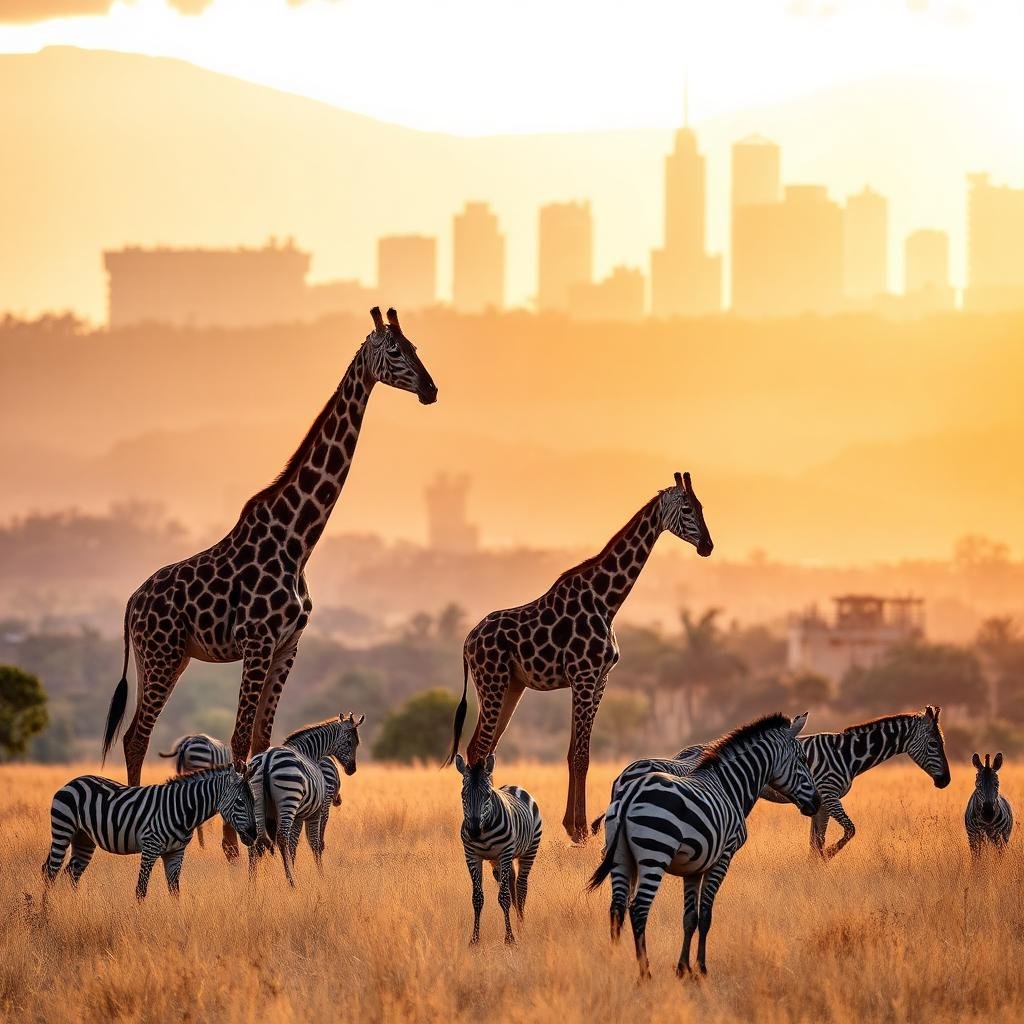
The skyline of Nairobi can sometimes be visible from parts of the park. This creates a fascinating contrast: giraffes may be feeding in the grasslands while tall buildings stand in the distance. Lions can rest under trees while traffic moves somewhere beyond the park boundary. This unusual scenery is one of the reasons Nairobi National Park has become famous around the world.
The park is particularly valuable for visitors who have limited time in Kenya. Someone with only one or two days in Nairobi can still enjoy a genuine game drive and see wild African animals in their natural environment.
Where Is Nairobi National Park?
Nairobi National Park is located on the southern edge of Nairobi, Kenya’s capital city. Its location is one of its most remarkable features. Instead of requiring a long journey into the countryside, visitors can reach the park from many parts of Nairobi relatively quickly depending on traffic and the entrance being used.
The park’s urban location has both advantages and challenges. For tourists, easy access is a major advantage. For conservationists, protecting a wildlife area next to a large and growing city requires continuous planning and management.
The park is connected to the wider landscape through ecological relationships with surrounding areas. Wildlife movements, seasonal resources, water availability, human development, and land-use changes all influence the park’s ecological condition.
History of Nairobi National Park
The history of Nairobi National Park is closely connected with the development of Nairobi itself and the evolution of wildlife conservation in Kenya. Before the city expanded to its modern size, the surrounding region contained open plains used by wildlife and pastoral communities.
As Nairobi grew, concerns increased about the protection of wildlife habitats close to the city. Kenya eventually established Nairobi National Park in 1946, making it Kenya’s first national park.
The establishment of the park represented an important step in formal wildlife conservation. It provided a protected area where animals could live and reproduce while the city continued to develop outside its boundaries.
Over the decades, Nairobi National Park became an important conservation and tourism destination. It also became an important educational resource because people living in the capital could easily experience wildlife and learn about conservation.
The park’s history demonstrates an important lesson in environmental protection: conservation does not always have to happen in remote wilderness areas. Natural habitats can also be protected near large human settlements when governments, conservation organizations, local communities, and visitors support responsible management.
Why Nairobi National Park Is Important
Nairobi National Park is important for several reasons. First, it protects wildlife habitat immediately beside one of East Africa’s major cities. Second, it provides a refuge for many species, including threatened animals. Third, it supports tourism and environmental education.
The park is especially well known for rhinoceros conservation. Seeing a rhinoceros in the wild is one of the most memorable experiences for many visitors, and Nairobi National Park has played an important role in protecting these remarkable animals.
The park also provides a living classroom for students, researchers, photographers, conservationists, and wildlife enthusiasts. Its accessibility means that people who might never travel to a distant safari reserve can still learn about African wildlife.
Tourism also creates economic value. Safari operators, guides, drivers, accommodation providers, restaurants, transport companies, and other businesses can benefit from visitors who come to experience the park.
Landscape and Natural Environment
Nairobi National Park is characterized by open grasslands, scattered trees, bushland, wetlands, and riverine habitats. These different environments support different species and create a diverse ecological system.
The open plains are particularly attractive for grazing animals. Zebras, wildebeest, antelopes, and other herbivores can often be seen moving through the grasslands. Predators such as lions and cheetahs depend on these herbivore populations for food.
Areas with thicker vegetation provide shelter for animals that prefer cover. Riverine environments provide water and additional vegetation, making them important during dry periods.
The changing appearance of the landscape throughout the year is one of the park’s attractions. After rainfall, grasses can become green and fresh, while dry periods may produce golden-brown plains. Each season creates a different visual experience.
Wildlife of Nairobi National Park
Nairobi National Park is home to a remarkable collection of African wildlife. Visitors may encounter large mammals, predators, herbivores, reptiles, and numerous bird species during a game drive.
The exact animals a visitor sees can never be guaranteed because wildlife is free to move throughout the park. However, the park is well known for several iconic species.
Lions
Lions are among the most exciting animals to encounter in Nairobi National Park. These powerful predators often spend considerable parts of the day resting, especially during hot weather. Early morning and late afternoon can provide excellent opportunities to observe their behavior.
A lion sighting may involve a single animal resting beneath a tree or a group moving across the grassland. Observing lions from a safe safari vehicle allows visitors to appreciate their strength, social behavior, and role as apex predators.
Lions are an important part of the park ecosystem because they help regulate populations of herbivores. Their presence also demonstrates the importance of maintaining healthy food chains within protected areas.
Black Rhinoceros
One of Nairobi National Park’s greatest conservation treasures is its population of black rhinoceros. These large animals are highly impressive and are among the most sought-after sightings for safari visitors.
Black rhinoceroses are generally associated with areas containing suitable vegetation and cover. Despite their large size, they can move quietly through the landscape.
Rhino conservation is challenging because rhinoceros populations have historically faced severe pressure from illegal hunting. Protected areas such as Nairobi National Park play an important role in providing secure habitat and supporting conservation programs.
Giraffes
Giraffes are among the easiest animals to recognize in the African landscape. Their long necks, distinctive patterns, and graceful movements make them particularly attractive subjects for photography.
In Nairobi National Park, giraffes may be seen browsing on leaves from trees and shrubs. Watching a giraffe move across an open grassland with Nairobi’s skyline in the distance can create one of the most memorable scenes of a visit.
Young giraffes are especially interesting because they remain close to adults while learning how to survive in the environment.
Zebras
Zebras are common and highly recognizable members of the park’s herbivore community. Their black-and-white stripes create striking patterns across the grasslands.
Groups of zebras can often be seen grazing together. They may also occur near other grazing animals, creating large and visually impressive wildlife scenes.
Zebras are important prey animals for large predators. Their presence contributes to the complex relationships that make the park’s ecosystem function.
Buffaloes
African buffaloes are powerful herbivores and can be encountered in different parts of Nairobi National Park. They often move in groups and spend considerable time grazing.
Although buffaloes may appear calm, they are strong wild animals and should always be observed from a safe distance. Safari visitors should never attempt to approach them on foot without professional guidance.
Leopards
Leopards are among the more difficult predators to spot. They are secretive, adaptable, and often use vegetation or trees as cover.
Because leopards are masters of camouflage, seeing one can be a particularly rewarding experience. Experienced guides often know where suitable leopard habitat exists and can help visitors look for signs such as tracks or movement.
Cheetahs
Cheetahs are famous for their incredible speed and elegant body shape. They prefer open environments where they can use their speed to chase prey.
Seeing a cheetah in the wild can be unforgettable. Unlike lions, which often depend on group hunting, cheetahs are known for their speed and specialized hunting techniques.
Birdlife in Nairobi National Park
Nairobi National Park is not only a destination for large mammals. It is also an excellent place for birdwatching. The combination of grasslands, wetlands, trees, and seasonal water sources provides habitat for many bird species.
Visitors may see birds of prey, waterbirds, grassland species, colorful smaller birds, and migratory species depending on the season.
Birdwatchers should carry binoculars and remain patient. Some birds may be obvious, while others require careful observation. Early morning is often a particularly enjoyable time for birdwatching because bird activity can be high.
For photographers, birds offer another opportunity to capture wildlife beyond the famous big mammals. A complete safari experience can include birds, insects, plants, landscapes, and animal behavior.
Plants and Vegetation
The vegetation of Nairobi National Park reflects its grassland and woodland environments. Grasses form a major part of the landscape, while shrubs and scattered trees provide food and shelter.
Different plant communities support different wildlife species. Herbivores depend on grasses and other vegetation, while predators depend indirectly on those herbivores.
During rainy periods, vegetation can become lush and green. During dry periods, the landscape may become more golden and open. These seasonal changes are a natural part of the ecosystem.
Major Attractions of Nairobi National Park
The wildlife itself is the park’s greatest attraction, but there are several other reasons to visit.
1. Big Wildlife Near a Major City
The combination of wild animals and Nairobi’s skyline is perhaps the park’s most famous feature. Few places offer such a close relationship between urban life and a protected wildlife ecosystem.
2. Rhinoceros Viewing
Rhino conservation is one of the major reasons wildlife lovers visit the park. Observing these powerful animals in a natural environment is an unforgettable experience.
3. Open Grasslands
The open plains create excellent opportunities for viewing grazing animals and, with luck, predators.
4. Birdwatching
The park’s bird diversity makes it appealing to bird enthusiasts and photographers.
5. Scenic Landscapes
The combination of grassland, trees, wetlands, wildlife, and city views produces unusual photographic scenery.
Safari Experience in Nairobi National Park
A game drive is the classic way to explore Nairobi National Park. Visitors travel through the park in a safari vehicle accompanied by a driver or guide who understands animal behavior and the local environment.
Safari drives are usually more rewarding when visitors remain patient. Wildlife does not follow a schedule. A vehicle may spend several minutes watching an animal resting before suddenly encountering something exciting nearby.
Good guides can make a major difference. They can explain animal behavior, identify species, discuss tracks, and help visitors understand the ecological relationships between different animals.
A typical safari may include multiple stops for wildlife observation and photography. Visitors should remain inside the vehicle unless they are in an officially designated safe area and have permission from their guide.
Things to Do in Nairobi National Park
Game Drives
Game drives are the most popular activity. They provide opportunities to search for lions, rhinos, giraffes, zebras, buffaloes, antelopes, and other animals.
Wildlife Photography
The park is ideal for photography because animals can be found in open landscapes. A telephoto lens is useful for photographing animals from a safe distance.
Birdwatching
Birdwatchers can spend hours searching for different species. Binoculars, a bird guide, and patience are useful.
Nature Observation
Visitors can also pay attention to plants, insects, tracks, landscapes, and animal interactions rather than focusing only on famous mammals.
Conservation Education
The park provides an opportunity to learn about Kenya’s wildlife conservation history and the challenges of protecting animals close to a growing city.
Best Time to Visit Nairobi National Park
Nairobi National Park can be visited throughout much of the year, but the experience may vary according to rainfall, vegetation, temperature, and wildlife behavior.
Dry periods can make some animals easier to locate because vegetation may be less dense and wildlife can concentrate around available water sources. However, the landscape may appear less green.
Rainy periods can transform the park into a lush landscape. Young animals may be seen, bird activity can be excellent, and the scenery can be especially beautiful. However, rain may affect road conditions and wildlife visibility.
Many visitors prefer early morning or late afternoon game drives because temperatures are often more comfortable and animals can be more active.
Weather and Climate
Nairobi has a relatively moderate climate compared with many other tropical locations because of its elevation. Temperatures can vary throughout the day, and mornings may feel cool before becoming warmer later.
Visitors should prepare for changing conditions. Lightweight clothing can be useful during warmer periods, while a light jacket may be valuable during early morning drives.
Sun protection is important. Hats, sunglasses, sunscreen, and drinking water can make a safari much more comfortable.
Photography Opportunities
Nairobi National Park is a wonderful destination for wildlife photography. The open grasslands allow photographers to capture animals against broad landscapes.
The city skyline can add a unique element to photographs. A giraffe or zebra photographed with Nairobi visible in the background can communicate the unusual relationship between nature and urban development.
Wildlife photography requires patience. Animals may move unexpectedly, so keeping a camera ready is helpful.
Photographers should always prioritize animal welfare. Never ask a driver to chase an animal, block its movement, or get dangerously close just to obtain a photograph.
Visiting Nairobi National Park with Family
Nairobi National Park can be an excellent destination for families. Children often find wild animals exciting and educational, and the park provides an opportunity to learn about nature outside a classroom.
Parents should prepare children before the visit. Explain that wild animals are not pets and that visitors must remain quiet and follow safety instructions.
Shorter drives may be more comfortable for young children. Bringing water, snacks where permitted, sun protection, and appropriate clothing can also improve the experience.
Conservation Efforts
Conservation is at the heart of Nairobi National Park’s importance. Protecting wildlife inside a small protected area next to a major city presents complex challenges.
Park managers must consider habitat protection, wildlife security, human development, tourism, pollution, water resources, and animal movement.
Conservation also requires monitoring wildlife populations and responding to threats. Anti-poaching activities, habitat management, research, education, and cooperation with other conservation organizations all contribute to protecting the park.
Rhino Conservation
Rhinoceros conservation is particularly important because several rhino species have experienced serious population declines due to illegal hunting and habitat pressures.
Nairobi National Park has long been associated with rhino protection. Secure habitats allow rhinos to feed, reproduce, and survive away from some of the pressures they face elsewhere.
Visitors can contribute indirectly by supporting responsible tourism and conservation programs. Choosing ethical safari operators and respecting park rules helps create a tourism industry that values living wildlife.
Community and Conservation
Wildlife conservation cannot be separated completely from people. Nairobi is a large and growing city, and land around the park has many human uses.
Successful conservation therefore requires cooperation, education, planning, and communication. When local communities see economic and social benefits from conservation, support for protected areas can become stronger.
Tourism can contribute by creating jobs and generating revenue. However, tourism should always be managed responsibly so that the needs of wildlife and local communities are considered together.
Places to Visit Near Nairobi National Park
A visit to Nairobi National Park can easily be combined with other attractions in Nairobi.
Nairobi National Museum
The museum provides opportunities to learn about Kenya’s natural history, culture, archaeology, and heritage.
Giraffe Centre
The Giraffe Centre is another popular wildlife-related attraction in Nairobi, particularly for visitors interested in giraffes and conservation education.
David Sheldrick Wildlife Trust
Wildlife conservation centers in Nairobi provide additional opportunities to learn about efforts to protect endangered and vulnerable animals.
Karen Area
The Karen area contains several attractions, restaurants, gardens, and cultural sites and can be combined with a wildlife-focused Nairobi itinerary.
Travel Tips for Nairobi National Park
- Plan your safari in advance.
- Choose a reputable safari operator or experienced guide.
- Carry binoculars if possible.
- Bring a camera with enough storage and battery power.
- Wear comfortable clothing suitable for outdoor conditions.
- Use sunscreen and carry drinking water.
- Follow all park rules and instructions from your guide.
- Never feed wild animals.
- Do not attempt to approach animals on foot.
- Keep noise levels low during wildlife viewing.
- Be patient because animals move according to their own behavior.
- Respect the natural environment and avoid leaving litter behind.
Wildlife Safety
Wild animals are unpredictable, even when they appear calm. Visitors should always follow instructions from guides and park authorities.
Do not leave a safari vehicle unless the guide confirms that it is safe and permitted. Never approach a lion, buffalo, rhinoceros, elephant, or other wild animal on foot.
Visitors should avoid shouting, sudden movements, or attempts to attract an animal’s attention. These behaviors can disturb wildlife and potentially create dangerous situations.
Keeping a respectful distance is beneficial for both humans and animals. Responsible wildlife tourism means observing animals without interfering with their natural behavior.
Why Nairobi National Park Is Different from Other African Parks
Many famous African national parks are located in remote landscapes far from major cities. Nairobi National Park is different because it is directly connected to a major metropolitan area.
This makes the park particularly valuable for short-stay travelers. Someone arriving in Nairobi for business, a conference, or a short holiday can potentially experience a safari without making a long journey to another region.
The contrast between skyscrapers and wildlife is also visually unique. In one direction, visitors may see open grasslands and wild animals. In another direction, they may see Nairobi’s urban landscape.
This unusual setting makes Nairobi National Park more than a traditional safari destination. It is also an important example of how protected natural areas can survive alongside modern cities.
Ecological Importance of the Grasslands
Grasslands are essential to many of the park’s herbivores. Grazing animals depend on grasses for food, while predators depend on these herbivores.
This creates a food web that connects plants, herbivores, predators, decomposers, insects, birds, and microorganisms.
Maintaining healthy grasslands therefore requires careful management. Too much disturbance, habitat fragmentation, invasive species, or changes in water availability can affect the entire ecosystem.
Water and Wildlife
Water is one of the most important resources in any African wildlife ecosystem. Seasonal rainfall affects vegetation growth, animal movement, and the availability of drinking water.
During dry conditions, animals may concentrate near reliable water sources. These areas can become important wildlife viewing locations.
Water availability also influences plant growth. When rainfall arrives, grasses and other vegetation can recover, creating better feeding conditions for herbivores.
Understanding the Safari Experience
A safari is different from visiting a zoo. Animals are not placed in predictable locations for visitors. They live according to natural patterns and may be difficult to find.
Sometimes the most memorable safari moments happen unexpectedly. A guide may suddenly notice tracks, movement in tall grass, or birds behaving unusually. A careful search can then reveal a predator or another interesting animal.
This uncertainty is part of what makes wildlife tourism exciting. Every drive is different, and no two visitors are guaranteed to have exactly the same experience.
Responsible Tourism in Nairobi National Park
Responsible tourism is essential for protecting the park. Visitors should remember that the destination exists primarily to protect wildlife and its habitat.
Tourists should follow speed limits, remain on authorized routes, avoid disturbing animals, and never leave rubbish behind.
Choosing responsible tourism businesses can also support conservation. Visitors should prefer operators who respect wildlife rules and prioritize animal welfare over getting the closest possible photograph.
What to Pack for a Visit
A thoughtful packing list can make a safari more comfortable.
- Comfortable outdoor clothing
- Light jacket for cool mornings
- Sun hat
- Sunglasses
- Sunscreen
- Drinking water
- Binoculars
- Camera
- Extra camera batteries or power bank
- Small backpack
- Comfortable shoes
Visitors should avoid wearing excessively bright clothing if they want to blend more naturally into the safari environment, although comfort and weather protection should remain the main priorities.
Morning Safari Experience
A morning game drive can be an excellent way to begin a Nairobi National Park visit. The temperatures are generally more comfortable, and many animals may still be active after the night.
The soft morning light can also be excellent for photography. Grasslands may appear golden, and long shadows can create beautiful landscape scenes.
Bird activity can be especially interesting in the morning. Visitors who enjoy photography should keep their cameras ready because wildlife encounters can happen suddenly.
Afternoon and Evening Wildlife Viewing
Later in the day, temperatures may become more comfortable again. Predators may begin becoming active after spending much of the hottest part of the day resting.
Late afternoon light can produce attractive photographs and memorable scenery. Watching animals move across the grasslands as the day begins to cool can be a peaceful conclusion to a safari.
Educational Value of Nairobi National Park
The park is an important educational resource for Kenya. Children and adults can learn about animal behavior, ecosystems, biodiversity, conservation, and environmental responsibility.
Seeing a wild animal in its natural habitat can create a deeper understanding of conservation than simply reading about it in a book.
The park also demonstrates how environmental protection can exist near urban development. This lesson is increasingly important as cities around the world continue to expand.
Nairobi National Park for Wildlife Lovers
Wildlife enthusiasts can spend many hours exploring the park. The diversity of species means that every drive has the potential to reveal something interesting.
Some visitors focus on big cats, while others prefer rhinoceroses, giraffes, birds, or smaller animals. The park offers opportunities for all these interests.
Returning to the same area on different days can also produce different wildlife encounters because animal movements change constantly.
Nairobi National Park for Photographers
Photographers can enjoy the park’s combination of wildlife and landscapes. The open plains allow broad compositions, while trees and vegetation provide natural framing.
The urban skyline adds an unusual storytelling element. A photograph showing wildlife with Nairobi in the background can communicate the central conservation challenge of the park: protecting nature next to a growing city.
Patience is one of the most important photography skills. Rather than trying to photograph everything, photographers can wait for natural behaviors such as grazing, walking, resting, grooming, or interaction between animals.
How Long Should You Spend in Nairobi National Park?
The amount of time required depends on the visitor’s interests and schedule. A half-day visit can provide a good introduction, while a longer visit gives more opportunities for wildlife observation.
Visitors with a strong interest in photography or birdwatching may prefer spending additional time in the park. Those with limited time in Nairobi can still experience a rewarding safari within a shorter itinerary.
Can You See the Big Five?
Nairobi National Park contains several famous large African mammals and is particularly known for rhinoceros and lion sightings. However, wildlife is naturally unpredictable, and visitors should not expect to see every famous species during one drive.
A safari should be viewed as an opportunity to observe wildlife rather than as a checklist. Every sighting, whether a large predator or a small bird, is part of the natural experience.
The Beauty of Nairobi National Park
The beauty of Nairobi National Park comes from its diversity and contrast. The landscape may appear simple at first, but closer observation reveals a complex ecosystem.
Golden grasslands, green vegetation, distant hills, birds in the sky, grazing animals, and predators create constantly changing scenes.
The presence of Nairobi’s buildings in the distance makes the scenery even more distinctive. It is a reminder that wild nature can survive surprisingly close to human civilization when protected areas are valued and managed responsibly.
Conservation Challenges
Being close to a large city creates significant conservation challenges. Urban expansion can place pressure on natural habitats and wildlife movement.
Traffic, pollution, land-use changes, human activity, and barriers around the park can influence ecological processes.
Another major challenge is maintaining connections between protected areas and surrounding landscapes. Some wildlife species naturally move across large territories, so isolated protected areas can create conservation difficulties.
Effective planning, scientific research, habitat protection, and cooperation among stakeholders are essential for addressing these challenges.
The Future of Nairobi National Park
The future of Nairobi National Park depends on continued commitment to conservation. Protecting the park requires balancing tourism, urban development, wildlife needs, and the interests of surrounding communities.
As Nairobi continues to grow, the park’s importance may become even greater. It provides a rare natural space within the metropolitan region and gives millions of people a connection to Kenya’s wildlife heritage.
Future conservation efforts will likely continue to focus on habitat protection, wildlife security, ecological monitoring, responsible tourism, and public education.
Frequently Asked Questions About Nairobi National Park
1. What is Nairobi National Park famous for?
Nairobi National Park is famous for its wildlife, especially rhinoceroses, lions, giraffes, zebras, buffaloes, and many bird species. It is also famous for being located immediately next to Nairobi city.
2. Where is Nairobi National Park located?
The park is located on the southern edge of Nairobi, Kenya’s capital city.
3. When was Nairobi National Park established?
Nairobi National Park was established in 1946 and became Kenya’s first national park.
4. Can I visit Nairobi National Park in one day?
Yes. Its location near Nairobi makes it especially suitable for day trips and short safari experiences.
5. What animals can I see in Nairobi National Park?
Visitors may see lions, black rhinoceroses, giraffes, zebras, buffaloes, wildebeest, antelopes, cheetahs, leopards, and many other animals. Wildlife sightings are never guaranteed.
6. Is Nairobi National Park good for photography?
Yes. The park provides excellent wildlife and landscape photography opportunities. The combination of animals and Nairobi’s skyline creates especially distinctive photographs.
7. Is Nairobi National Park suitable for families?
Yes. Families can enjoy wildlife viewing and conservation education. Children should always follow safety instructions and remain under adult supervision.
8. Can I walk around the park?
Visitors should only leave vehicles or walk in areas where it is officially permitted and safe. Wild animals can be dangerous, so instructions from park authorities and guides must always be followed.
9. What should I bring on safari?
Useful items include comfortable clothing, a hat, sunglasses, sunscreen, drinking water, binoculars, a camera, and a light jacket for cooler mornings.
10. Is Nairobi National Park worth visiting?
Yes. For visitors interested in wildlife, nature, photography, or conservation, Nairobi National Park offers a unique experience. Its proximity to Nairobi makes it particularly convenient.
Conclusion
Nairobi National Park is one of Kenya’s most remarkable protected areas because it combines wildlife conservation with an urban setting. The park offers visitors the opportunity to see iconic African animals while remaining close to one of East Africa’s largest cities.
Its lions, rhinoceroses, giraffes, zebras, buffaloes, cheetahs, leopards, and diverse birdlife make it an exciting destination for wildlife lovers. At the same time, its grasslands, wetlands, trees, and other habitats demonstrate the importance of protecting natural ecosystems.
The park’s greatest strength may be its unique relationship with Nairobi. Few wildlife destinations allow visitors to observe wild animals while seeing a major city’s skyline in the distance. This contrast makes Nairobi National Park visually impressive and environmentally significant.
For travelers with limited time in Kenya, the park provides an accessible introduction to the country’s famous wildlife. For conservationists, it represents an important refuge for threatened species. For photographers, it offers unusual landscapes and unforgettable animal encounters. For families and students, it provides an opportunity to learn about nature and environmental responsibility.
Ultimately, Nairobi National Park is more than a place to see animals. It is an example of how people can protect valuable natural habitats even as cities expand. Its continued protection will be important for Kenya’s wildlife, environment, tourism industry, and future generations.
If you are planning a trip to Nairobi, including Nairobi National Park in your itinerary can add a memorable wildlife experience to your journey. With responsible tourism, careful conservation, and respect for wildlife, this extraordinary park can continue to remain a living symbol of Kenya’s natural heritage.