Triglav National Park
Triglav National Park: A Complete Guide to Slovenia’s Alpine Wilderness
Triglav National Park is one of the most beautiful protected natural areas in Europe and the only national park in Slovenia. Located in the heart of the Julian Alps, the park is famous for its dramatic mountain peaks, clear alpine lakes, deep valleys, forests, waterfalls, rivers, traditional villages, and spectacular hiking trails. Named after Mount Triglav, Slovenia’s highest mountain, the park represents the natural and cultural heritage of the country.
For travelers who love mountains, hiking, photography, wildlife, peaceful landscapes, and outdoor adventures, Triglav National Park offers an extraordinary experience. The landscape changes from green valleys and forests to rocky alpine ridges and high mountain environments. Visitors can enjoy everything from easy walks around Lake Bohinj to demanding climbs toward high-altitude mountain shelters and the summit of Triglav.
This comprehensive guide explores the history, geography, attractions, wildlife, activities, hiking opportunities, villages, seasons, travel tips, environmental importance, and cultural heritage of Triglav National Park.
1. Introduction to Triglav National Park
Triglav National Park is situated in northwestern Slovenia within the Julian Alps. It covers a large mountainous area and protects some of the country’s most spectacular natural scenery. The park is named after Mount Triglav, which rises to approximately 2,864 meters above sea level and is the highest point in Slovenia.
The park is important not only because of its scenery but also because of its biodiversity and cultural landscape. Alpine meadows, forests, limestone mountains, rivers, streams, caves, waterfalls, and traditional settlements create a diverse environment supporting numerous species of plants and animals.
The Julian Alps are part of the larger Alpine mountain system of Europe. Their geological history has created dramatic limestone formations, steep cliffs, narrow valleys, underground caves, and karst landscapes. In many parts of Triglav National Park, visitors can see how water and ice have shaped the mountains over thousands and millions of years.
2. History of Triglav National Park
The history of nature protection in the Triglav region goes back more than a century. Growing awareness of the importance of protecting the Julian Alps led to early conservation proposals during the twentieth century. The area eventually developed into a formal national park designed to protect its exceptional natural and cultural values.
The modern park has evolved through several stages of protection. Earlier protected areas covered smaller portions of the Julian Alps, while later legislation expanded and strengthened protection. Today, Triglav National Park is managed as an important protected landscape where conservation, traditional activities, tourism, research, and education must be carefully balanced.
The park also reflects Slovenia’s national identity. Mount Triglav has a particularly strong symbolic importance for Slovenians. The mountain appears in Slovenia’s coat of arms and is widely regarded as a national symbol.
3. Mount Triglav
Mount Triglav is the central natural symbol of the national park. At about 2,864 meters, it is the highest mountain in Slovenia and one of the best-known peaks in the Julian Alps.
The mountain attracts experienced hikers and mountaineers from Slovenia and around the world. Reaching the summit can be a major achievement, but climbing Triglav requires preparation, appropriate equipment, good weather conditions, and knowledge of mountain safety.
Higher sections of the mountain contain exposed terrain and routes equipped with cables and climbing aids. These sections should not be treated like ordinary walking trails. Visitors should understand the difficulty of the route they intend to take and consider professional mountain guidance if they lack experience.
For people who do not want to climb the summit, there are many viewpoints and trails throughout the park that provide magnificent views of Triglav without requiring a technical ascent.
4. Lake Bohinj
Lake Bohinj is one of the most famous natural attractions associated with Triglav National Park. Located in a beautiful alpine valley, the lake is surrounded by mountains and forests, creating a peaceful landscape that attracts visitors throughout the year.
The lake is the largest permanent natural lake in Slovenia. Its clear water, mountain backdrop, and tranquil atmosphere make it an excellent destination for walking, photography, sightseeing, and outdoor recreation.
A walking route around parts of the lake allows visitors to appreciate changing views of the surrounding mountains. The nearby settlement of Ribčev Laz is a popular starting point for exploring the Bohinj area.
Visitors can also explore the surrounding valley, waterfalls, viewpoints, traditional villages, and mountain trails. Lake Bohinj is particularly beautiful during early morning and late afternoon when sunlight creates changing colors across the water and surrounding peaks.
5. Lake Bled and the Wider Region
Lake Bled is one of Slovenia’s most recognizable tourist destinations and is located near the eastern side of the park region. Although Bled itself is outside much of the national park, many travelers combine a visit to Bled with an exploration of Triglav National Park.
The famous lake features a small island with a church and a medieval castle overlooking the water. Its location makes it a convenient base for travelers who want to explore the Julian Alps.
Visitors should remember that Lake Bled and Triglav National Park are separate destinations, even though they are geographically close and often included in the same travel itinerary.
6. The Soča River
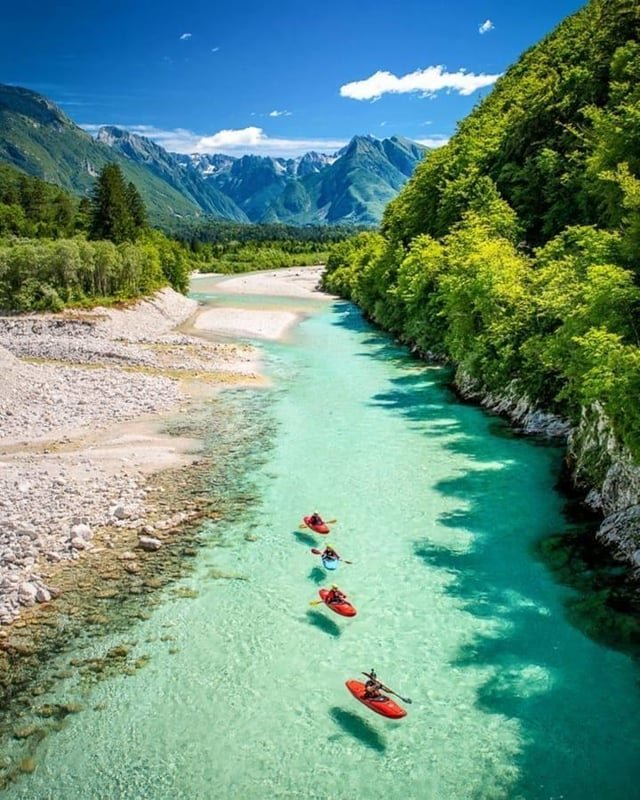
The Soča River is another major natural attraction of the Julian Alps. Famous for its striking turquoise and emerald colors, the river flows through spectacular mountain landscapes before continuing toward the Adriatic region.
The upper Soča Valley contains dramatic cliffs, forests, bridges, waterfalls, pools, and narrow sections of river. The clear water and surrounding mountains make the valley especially popular among photographers and outdoor enthusiasts.
The Soča region also provides opportunities for activities such as hiking, kayaking, rafting, fishing in permitted areas, and sightseeing. Water conditions can change rapidly, however, and visitors should always follow local safety instructions.
7. Vršič Pass
Vršič Pass is one of the most famous mountain passes in Slovenia. It crosses the Julian Alps and connects the upper Soča Valley with the Kranjska Gora area.
The road to the pass contains numerous bends and offers spectacular views of the surrounding mountains. During the warmer months, the pass can become a starting point for numerous hikes.
Because of heavy winter snowfall, road conditions can be very different during the colder months. Travelers should check current conditions before planning a journey across the pass.
8. Kranjska Gora
Kranjska Gora is a popular alpine resort town located near the northern edge of the national park. It is surrounded by mountains and provides accommodation, restaurants, outdoor recreation, and access to numerous trails.
During summer, visitors come for hiking, cycling, climbing, and sightseeing. During winter, the region becomes a major destination for skiing and other snow-related activities.
Kranjska Gora is also an excellent base for exploring the northern Julian Alps and visiting nearby natural attractions.
9. Bohinj Valley
The Bohinj Valley is one of the most scenic areas connected with Triglav National Park. The valley combines traditional settlements, meadows, forests, rivers, waterfalls, and high mountains.
Traditional agriculture remains an important part of the area’s cultural identity. Alpine pasture farming has shaped the landscape for generations, creating open mountain meadows surrounded by forests and rocky peaks.
Visitors can explore the valley by walking, cycling, driving, or using local transportation. The area provides both easy recreational opportunities and demanding mountain routes.
10. Savica Waterfall
Slap Savica, commonly known as Savica Waterfall, is one of the most famous waterfalls in the Bohinj region. Water emerges from the rocky landscape and drops dramatically into a lower pool.
The waterfall can be reached by a marked walking route from the nearby parking area. The path involves steps and some elevation gain, but the journey is manageable for many visitors with reasonable fitness.
The surrounding forest and mountain scenery make the walk particularly enjoyable. Visitors should stay on marked paths and respect conservation rules around the waterfall.
11. Peričnik Waterfall
Peričnik Waterfall is another spectacular waterfall in the wider Triglav region. It is especially famous because visitors can approach closely and, under suitable conditions, walk behind the falling water.
The waterfall consists of upper and lower sections, with the lower waterfall being particularly impressive. The surrounding cliffs, forest, and mountain landscape provide excellent photographic opportunities.
Visitors should be careful on wet and slippery surfaces and avoid entering dangerous areas around the waterfall.
12. The Julian Alps
The Julian Alps form the geographical heart of Triglav National Park. Their limestone mountains are characterized by dramatic ridges, steep cliffs, deep valleys, and extensive karst formations.
The mountains provide habitats for specialized alpine plants and animals. Elevation creates different ecological zones, from forests in lower valleys to alpine meadows and rocky environments at higher elevations.
Weather can change rapidly in the Julian Alps. A sunny morning can sometimes be followed by clouds, rain, strong winds, or storms. Mountain travelers should therefore prepare carefully before heading into high terrain.
13. Wildlife of Triglav National Park
Triglav National Park supports a rich variety of wildlife. The combination of forests, alpine meadows, cliffs, rivers, and high mountains provides habitats for many species.
Chamois
Chamois are among the characteristic mountain animals of the Julian Alps. These agile goat-like mammals are adapted to steep rocky terrain and can sometimes be seen moving across slopes and cliffs.
Alpine Ibex
Alpine ibex have also become an important part of the mountain wildlife of the region. Their specialized hooves allow them to move across rocky terrain with impressive agility.
Brown Bears
Brown bears occur in Slovenia, particularly in forested areas beyond and around the park. They are wild animals and should never be approached or intentionally fed.
Golden Eagles
The golden eagle is one of the impressive birds of prey associated with the alpine environment. It can soar above cliffs and mountain valleys while searching for prey.
Marmots
Alpine marmots are another recognizable mountain species. These social rodents often live in burrows and can sometimes be heard or seen in alpine meadows.
14. Plants and Alpine Flora
The plant life of Triglav National Park changes significantly with elevation. Lower areas contain forests dominated by species such as spruce, beech, fir, and other trees. Higher elevations contain alpine meadows, shrubs, grasses, and specialized mountain plants.
Spring and summer bring colorful displays of alpine flowers. Some species are adapted to cold temperatures, strong sunlight, rocky soils, and short growing seasons.
Visitors should never pick protected wildflowers. Taking photographs is a better way to preserve memories while allowing plants to remain part of the natural ecosystem.
15. Hiking in Triglav National Park
Hiking is one of the main reasons travelers visit Triglav National Park. The park contains routes ranging from gentle valley walks to challenging high-mountain climbs.
Easy trails can be suitable for families and casual visitors. More difficult routes may require substantial fitness, navigation skills, mountain experience, and specialist equipment.
Before starting a hike, visitors should check weather conditions, trail conditions, route difficulty, distance, elevation gain, and expected duration.
16. Popular Hiking Areas
Some popular hiking areas include the surroundings of Lake Bohinj, Pokljuka Plateau, Vrata Valley, Tamar Valley, Vršič Pass, and the Soča Valley.
Each area offers a different experience. Forest trails may provide shade during summer, while high mountain routes offer expansive views but greater exposure to weather.
Travelers should choose routes based on their own experience rather than simply selecting the most famous trail.
17. Climbing Mount Triglav
Climbing Mount Triglav is a dream for many visitors to Slovenia. The summit journey is a serious mountain adventure rather than an ordinary tourist walk.
Several approaches are possible, and many routes involve staying overnight in mountain huts. The final ascent can include exposed rocky sections and fixed cables.
Good physical fitness, suitable footwear, helmet, climbing protection where appropriate, weather awareness, navigation ability, and previous alpine experience can be important depending on the route.
People without appropriate experience should consider hiring a qualified mountain guide.
18. Mountain Huts
Mountain huts are an important part of hiking culture in the Julian Alps. They provide places where hikers can rest, eat, and in many cases spend the night.
Some huts are located at considerable elevations and may have limited supplies. Conditions can vary, and popular huts can become busy during peak hiking periods.
Travelers planning overnight trips should check opening periods, reservation requirements, services, and current conditions before departure.
19. Cycling
Cycling is another enjoyable way to explore the lower valleys and surrounding region. Roads and designated cycling routes can connect villages, forests, rivers, and alpine viewpoints.
Mountain biking is possible in suitable areas, but riders should follow park regulations and use only permitted routes. Protected natural areas require special care to avoid erosion and disturbance to wildlife.
20. Photography
Triglav National Park is an outstanding destination for landscape photography. Mountains, lakes, waterfalls, forests, flowers, wildlife, traditional buildings, and changing weather conditions provide countless subjects.
Lake Bohinj is particularly attractive during sunrise and sunset. The Soča River offers opportunities for photographing turquoise water against limestone mountains, while high trails provide wide panoramic views.
Wildlife photography should always be conducted from a respectful distance. Visitors should never chase animals for photographs or disturb nesting sites.
21. Winter in Triglav National Park
Winter transforms the Julian Alps into a snowy mountain landscape. Forests become covered in snow, frozen waterfalls create dramatic scenes, and high peaks appear especially impressive.
Winter hiking and mountaineering require significantly more experience than summer walking. Snow, ice, avalanches, short daylight hours, freezing temperatures, and rapidly changing weather can create serious hazards.
Visitors should choose winter activities appropriate to their skills and consult local experts when necessary.
22. Spring in the Park
Spring brings the return of greenery and alpine flowers. Lower valleys usually become pleasant earlier, while higher mountain areas can remain covered with snow well into the season.
Waterfalls can be especially impressive during the spring melt when snow and ice from higher elevations contribute additional water.
23. Summer in Triglav National Park
Summer is the most popular period for hiking and outdoor activities. Long daylight hours make it possible to explore many trails, while alpine meadows become filled with flowers.
However, summer also brings crowded trails and rapidly developing afternoon thunderstorms. Mountain visitors should begin demanding hikes early and monitor the weather carefully.
24. Autumn in Triglav National Park
Autumn is an excellent season for visitors who prefer cooler temperatures and colorful forests. Trees change color, creating beautiful contrasts between golden forests and rocky mountains.
As daylight becomes shorter and temperatures fall, visitors should plan routes conservatively and prepare for colder conditions.
25. Best Time to Visit
The best time to visit Triglav National Park depends on the activities you want to enjoy. Late spring, summer, and early autumn are generally popular for hiking and sightseeing.
For high-altitude mountain routes, conditions can remain snowy outside the main summer season. Visitors should never assume that a trail is safe simply because the calendar says summer.
For peaceful scenery and fewer crowds, shoulder seasons can be attractive, although some mountain facilities may have limited services.
26. Villages Around Triglav National Park
The park is surrounded by traditional Slovenian settlements. Villages such as Stara Fužina, Ribčev Laz, Mojstrana, Dovje, Trenta, Soča, and others provide access to different parts of the mountain landscape.
These communities contribute to the cultural identity of the region. Traditional architecture, farmhouses, churches, hayracks, mountain pastures, and local food traditions demonstrate the long relationship between people and the alpine environment.
27. Traditional Alpine Culture
Human activity has shaped the landscape around the Julian Alps for centuries. Farming communities developed systems for using valley farmland and high mountain pastures.
Seasonal movement of livestock to alpine pastures remains an important cultural tradition. Traditional dairy products and other local foods are connected with this way of life.
Respecting local communities is an important part of responsible tourism. Visitors should keep noise low, avoid blocking farm entrances, and follow local rules.
28. Conservation and Environmental Protection
Protecting Triglav National Park is essential because its ecosystems are sensitive to human activity. Increasing tourism creates opportunities for local communities but can also cause pressure on trails, wildlife, water resources, and vegetation.
Conservation efforts focus on maintaining biodiversity, protecting habitats, preserving landscapes, monitoring species, supporting sustainable land use, and educating visitors.
Visitors play an important role by staying on marked paths, carrying out their waste, avoiding disturbing animals, respecting restricted areas, and following park regulations.
29. Responsible Tourism
Responsible tourism helps protect Triglav National Park for future generations. Travelers should avoid littering, keep dogs under control where required, refrain from picking plants, and avoid making unnecessary noise.
Campfires should only be made where legally permitted. Camping and overnight stays should follow official rules because uncontrolled camping can damage vegetation and disturb wildlife.
Using public transportation or shared transportation when practical can also help reduce pressure on roads and parking areas.
30. Geological Features
The geology of Triglav National Park is dominated by limestone and other rocks associated with the development of the Julian Alps. Water has slowly dissolved limestone over geological time, producing caves, underground channels, sinkholes, and other karst features.
Glacial activity also played a major role in shaping valleys and landscapes. Evidence of ancient glaciers can be observed in the form of broad valleys, rocky formations, and deposits.
31. Rivers and Waterfalls
Water is one of the defining features of the park. Rivers and streams descend from mountain slopes and flow through valleys, feeding larger waterways.
The Soča and Sava systems are particularly important to the region. Waterfalls such as Savica and Peričnik demonstrate the dramatic changes in elevation across the landscape.
32. Caves and Karst Landscapes
The limestone geology of the Julian Alps has created numerous underground features. Water moves through cracks in the rock and gradually enlarges them, forming caves and underground drainage systems.
Many underground environments are fragile. Visitors should only enter caves through authorized routes and with appropriate guidance where required.
33. Cultural Heritage
Triglav National Park protects more than natural scenery. Cultural heritage is also an important part of its identity.
Historic villages, churches, farm buildings, shepherd settlements, traditional hayracks, mountain huts, and agricultural landscapes demonstrate how communities adapted to life in a challenging alpine environment.
Visitors can gain a deeper appreciation of the park by learning about these traditions rather than viewing the area only as a collection of scenic landscapes.
34. Food and Local Specialties
Local cuisine around the Julian Alps reflects Slovenian mountain traditions. Dairy products, cheeses, bread, soups, cured meats, potatoes, mushrooms, and other regional ingredients are common in traditional meals.
Bohinj is particularly associated with traditional dairy production and local cheese. Visitors can explore local restaurants, farms, and markets to discover regional food.
35. Accommodation
Travelers can find accommodation in towns and villages surrounding Triglav National Park. Options include hotels, guesthouses, apartments, farm stays, campsites, and mountain huts.
The best choice depends on the type of trip. Travelers interested in comfortable sightseeing may prefer a hotel or guesthouse, while hikers planning multi-day routes may choose mountain huts.
During the busiest summer periods, popular accommodation can fill quickly, so advance planning is recommended.
36. Camping
Camping can be an enjoyable way to experience the alpine environment, but visitors must use official campsites or otherwise comply with applicable regulations. Wild camping is not automatically permitted simply because an area appears remote.
Official campsites provide facilities and help concentrate visitor activity in appropriate locations, reducing environmental pressure on sensitive habitats.
37. Family Travel
Triglav National Park can be an excellent destination for families, especially when activities are selected according to children’s ages and abilities.
Easy walks around lakes and valleys can be suitable for families, while demanding high-mountain routes should only be attempted by experienced and appropriately equipped participants.
Families should plan for changing weather, carry water and food, use sun protection, and avoid exposing children to unnecessary mountain hazards.
38. Travel Safety
Mountain safety should be taken seriously. Even experienced hikers can encounter unexpected conditions in the Alps.
- Check the weather before leaving.
- Choose a route suitable for your experience.
- Wear appropriate hiking footwear.
- Carry sufficient water and food.
- Bring navigation equipment or a reliable map.
- Carry a charged phone, while remembering that mountain coverage can be limited.
- Start difficult hikes early.
- Turn back if conditions become dangerous.
- Do not underestimate exposure, snow, ice, or steep terrain.
39. Weather in the Julian Alps
Weather in Triglav National Park can vary considerably with elevation. A valley may be warm and sunny while higher mountain slopes experience clouds, strong winds, rain, or snow.
Mountain weather can also change quickly. This is one reason why visitors should check reliable forecasts and understand the limitations of their planned route.
40. What to Pack
A basic hiking trip requires more than casual clothing. Recommended equipment depends on the season and route, but useful items may include hiking boots, layered clothing, waterproof outerwear, sun protection, a first-aid kit, food, water, navigation equipment, and a fully charged phone.
For high-altitude routes, additional specialist equipment may be necessary depending on the conditions and route difficulty.
41. Photography Tips
Early morning and late afternoon often provide attractive light for landscape photography. Mountains can appear more dramatic when side lighting creates shadows across ridges and valleys.
Clouds and changing weather can also create powerful photographic scenes. Rather than waiting only for perfectly clear skies, photographers can use mist, clouds, reflections, and changing light to create more atmospheric images.
42. Digital and Offline Maps
Navigation is important in mountainous terrain. Digital maps can be useful, but visitors should not rely entirely on mobile connectivity because network coverage can be limited in remote areas.
A downloaded offline map or traditional topographic map can provide valuable backup. Experienced hikers should understand basic map reading and route navigation.
43. Why Triglav National Park Is Special
Triglav National Park is special because it combines spectacular alpine scenery with rich biodiversity and living cultural traditions. Few places offer such a combination of high mountains, lakes, rivers, forests, waterfalls, traditional villages, and historic mountain culture within one protected landscape.
The park also has a powerful connection to Slovenian identity through Mount Triglav. For many Slovenians, the mountain represents endurance, national pride, nature, and a connection to the country’s landscape.
44. Suggested One-Day Visit
A one-day visit can focus on the Bohinj area. Travelers can spend the morning around Lake Bohinj, explore nearby viewpoints, visit Savica Waterfall, enjoy a traditional meal, and take a relaxing walk through the valley.
Another option is to explore the Kranjska Gora and Mojstrana side of the region, depending on where you are staying.
45. Suggested Two-Day Visit
With two days, travelers can combine Lake Bohinj with another section of the park. The first day could focus on Bohinj and the second on the Soča Valley or northern Julian Alps.
Travelers should avoid trying to cover the entire park in a short period. The mountain roads can be slow, and stopping frequently to appreciate viewpoints is part of the experience.
46. Suggested Multi-Day Adventure
A longer trip allows visitors to explore several valleys and undertake longer hikes. A multi-day itinerary can include Bohinj, Pokljuka, Vrata Valley, Kranjska Gora, Vršič Pass, and the Soča Valley.
Experienced mountaineers can also plan an ascent of Mount Triglav, potentially using mountain huts as part of the journey.
47. Triglav for Nature Lovers
Nature lovers can spend days observing landscapes, plants, birds, insects, rivers, and wildlife. The park offers opportunities to slow down and appreciate natural processes rather than rushing from one attraction to another.
Walking quietly through forests and alpine meadows can reveal details that are easily missed from a vehicle, including flowers, birdsong, streams, and small animals.
48. Triglav for Adventure Travelers
Adventure travelers can enjoy hiking, mountaineering, climbing, canyoning in appropriate areas, cycling, rafting, kayaking, and other outdoor activities available in the wider region.
Every activity should be matched to weather, personal experience, and local regulations. Mountain adventure is most enjoyable when safety is treated as an essential part of the experience.
49. Triglav for Relaxation
The national park is not only for adventure. Visitors can also enjoy peaceful walks, scenic drives, traditional villages, lakeside views, local food, and quiet moments in nature.
Lake Bohinj is especially suitable for travelers who want a slower experience. Sitting beside the lake and watching the surrounding mountains can be as memorable as completing a difficult hike.
50. Tips for First-Time Visitors
- Plan your route before entering the mountains.
- Check weather and trail conditions.
- Choose activities appropriate to your fitness and experience.
- Wear proper footwear.
- Carry enough water.
- Respect wildlife.
- Stay on marked trails.
- Follow park regulations.
- Book popular accommodation early during busy seasons.
- Allow extra time for mountain roads and scenic stops.
- Carry emergency supplies on longer hikes.
- Leave no waste behind.
51. Frequently Asked Questions
Where is Triglav National Park?
Triglav National Park is located in northwestern Slovenia in the Julian Alps. It includes areas around Mount Triglav, Lake Bohinj, the Soča Valley, and several surrounding alpine valleys and plateaus.
What is Triglav National Park famous for?
The park is famous for Mount Triglav, Lake Bohinj, alpine landscapes, the Soča River, waterfalls, forests, wildlife, hiking trails, and traditional Slovenian mountain culture.
What is the highest mountain in the park?
Mount Triglav is the highest mountain in the park and in Slovenia, reaching approximately 2,864 meters above sea level.
Can beginners visit Triglav National Park?
Yes. Beginners can enjoy many easy trails, viewpoints, lakeside walks, villages, waterfalls, and valley attractions. However, high-altitude routes and the summit of Triglav require much greater experience and preparation.
Can families visit the park?
Yes. Families can enjoy many accessible areas, especially around Lake Bohinj and the lower valleys. Activities should always be selected according to the children’s ages and abilities.
Is Lake Bohinj inside Triglav National Park?
Yes. Lake Bohinj is one of the major natural attractions within Triglav National Park.
Is Triglav difficult to climb?
The difficulty depends on the route and conditions, but reaching the summit is a serious alpine undertaking. Some sections are exposed and equipped with fixed cables, so appropriate experience and equipment are important.
When is the best time to visit Triglav National Park?
Late spring, summer, and early autumn are popular for general sightseeing and hiking. High mountain conditions can remain challenging outside the main summer period.
Can you see wildlife in the park?
Yes. The park and surrounding Julian Alps support species such as chamois, marmots, golden eagles, and other alpine wildlife. Animals should always be observed from a safe distance.
Can you camp in Triglav National Park?
Visitors should use official campsites or follow the applicable regulations. Wild camping is not automatically permitted throughout the protected area.
Is Triglav National Park good for photography?
Yes. The park offers outstanding opportunities for landscape, wildlife, waterfall, lake, mountain, and cultural photography.
How long should I spend in Triglav National Park?
A day can provide a brief introduction, but several days are recommended for travelers who want to explore multiple valleys, lakes, waterfalls, and hiking areas.
52. Final Thoughts
Triglav National Park is one of Europe’s most remarkable alpine destinations. Its combination of towering mountains, clear lakes, emerald rivers, waterfalls, forests, flower-filled meadows, wildlife, traditional villages, and rich cultural heritage makes it a destination with something for almost every nature lover.
Mount Triglav stands at the center of this extraordinary landscape, but the park is much more than one mountain. Lake Bohinj provides peaceful waters and panoramic scenery, the Soča River brings unforgettable colors to the valleys, waterfalls demonstrate the power of alpine water, and traditional communities reveal the deep relationship between people and the mountains.
Whether you visit for a relaxing lakeside holiday, a family adventure, landscape photography, a multi-day hiking trip, or the challenge of climbing Mount Triglav, careful planning will make your experience safer and more rewarding.
The most important thing visitors can do is respect the park. Protecting plants, wildlife, water, trails, local communities, and cultural heritage ensures that the beauty of Triglav National Park remains available to future generations.
For anyone searching for a spectacular European national park where dramatic alpine scenery meets living cultural traditions, Triglav National Park deserves a place near the top of the list.