Iguazú National Park: A Complete Guide to Argentina’s Spectacular Waterfalls and Rainforest
Iguazú National Park: A Complete Guide to Argentina’s Spectacular Waterfalls and Rainforest
Iguazú National Park is one of the most extraordinary natural destinations in South America.
Located in the northeastern corner of Argentina, in the province of Misiones, the park protects
an impressive section of Atlantic Forest and is home to the world-famous Iguazú Falls. With its
enormous waterfalls, lush rainforest, winding rivers, tropical wildlife, scenic walking trails,
and remarkable biodiversity, Iguazú National Park offers an unforgettable experience for nature
lovers, photographers, adventure travelers, and families.
Introduction to Iguazú National Park
Iguazú National Park, known in Spanish as Parque Nacional Iguazú, is one of Argentina’s most
famous protected areas. It was established to conserve the remarkable natural environment around
the Iguazú River and the spectacular waterfalls that form along the river near the border between
Argentina and Brazil. The park combines dramatic scenery with one of the most important remaining
areas of Atlantic Forest in the region.
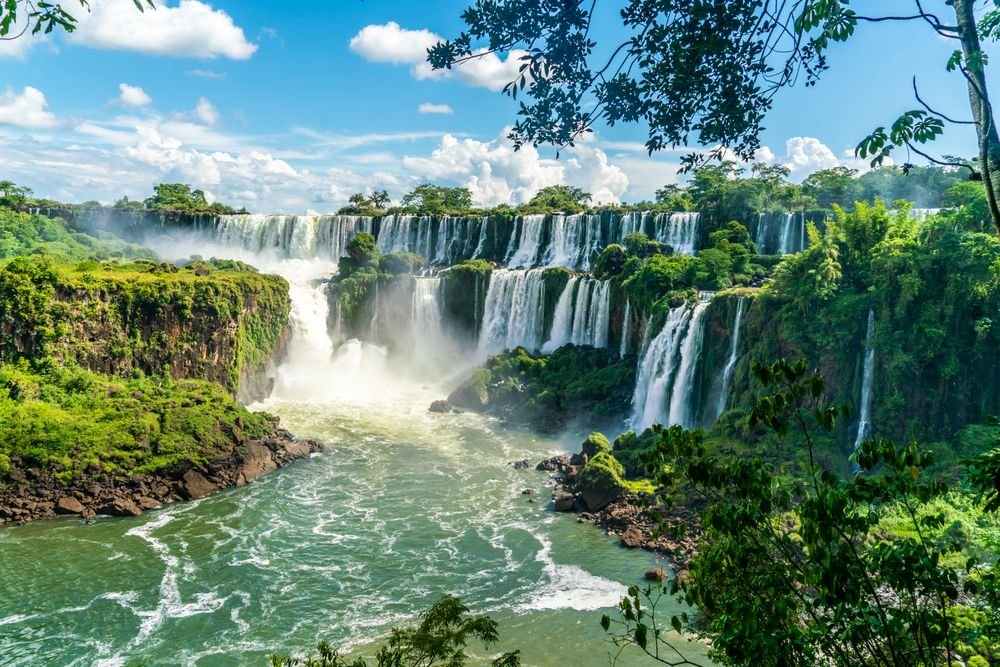
The main attraction is Iguazú Falls, a huge waterfall system made up of numerous individual
cascades spread across a broad section of the Iguazú River. Rather than being a single waterfall,
Iguazú Falls consists of many falls and channels separated by forest-covered islands. The result
is a landscape of rushing water, mist, cliffs, tropical vegetation, and dramatic viewpoints.
The park is much more than a waterfall destination. Its rainforest provides habitat for a rich
variety of plants, mammals, birds, reptiles, amphibians, insects, and other organisms. Visitors
can walk through the forest, travel along elevated paths, observe birds, discover native plants,
and experience the sounds and atmosphere of the subtropical environment.
Iguazú National Park is also part of a larger protected landscape that extends across the
international border. On the Brazilian side, Iguazú Falls is protected within Iguaçu National
Park. Together, these protected areas help conserve one of the world’s most recognizable waterfall
landscapes and an important portion of the Atlantic Forest.
Where Is Iguazú National Park?
Iguazú National Park is located in the far northeastern part of Argentina, in Misiones Province.
It lies near the city of Puerto Iguazú, which is the primary gateway for travelers visiting the
Argentine side of the waterfalls.
The park is situated close to two international borders. Brazil lies immediately across the
Iguazú River and surrounding area, while Paraguay is also nearby. This makes the region unusual
because visitors can experience three countries within a relatively small geographical area.
Puerto Iguazú is the most convenient base for exploring the Argentine park. The city has hotels,
restaurants, transportation services, tour operators, shops, and other facilities designed for
visitors. From the city, travelers can reach the national park by road in a relatively short
journey.
History of Iguazú National Park
The natural environment around Iguazú Falls has long been important to Indigenous communities
living in the region. The Guaraní people have deep cultural and historical connections with the
forests, rivers, and landscapes of northeastern Argentina and neighboring areas.
European exploration brought the waterfalls to wider international attention centuries ago.
Spanish explorers encountered the falls during expeditions through the region, although Indigenous
communities had known and lived around the landscape for much longer.
As settlement, agriculture, logging, and other economic activities expanded in the surrounding
region, concerns about protecting the remaining forest and the waterfalls increased. Creating a
national park provided a way to conserve the area’s natural resources while also establishing a
framework for tourism and environmental management.
Iguazú National Park was officially established in 1934. Its creation helped protect the falls
and surrounding Atlantic Forest from uncontrolled development. Over time, the park became one of
Argentina’s most important tourism destinations.
The international importance of the area was later recognized through UNESCO World Heritage
status. The Argentine park was designated a World Heritage Site in 1984 because of its exceptional
natural beauty and biological importance.
Iguazú Falls: The Main Attraction
Iguazú Falls is the spectacular centerpiece of the national park. The falls are created where
the Iguazú River drops dramatically over a series of cliffs and rocky ledges before continuing
downstream toward its meeting with the Paraná River.
The waterfall system stretches across a wide area and includes numerous separate cascades.
Depending on water levels, the appearance and power of individual falls can change considerably.
During periods of high rainfall, the river can become extremely powerful, producing huge volumes
of water and thick clouds of mist.
One of the most famous sections is the Devil’s Throat, known locally as Garganta del Diablo.
This enormous U-shaped waterfall section is one of the most dramatic sights in the entire park.
Water rushes into a deep, narrow gorge, creating enormous spray and a constant roar.
Standing near the viewpoints of Devil’s Throat gives visitors a powerful sense of the scale of
the waterfall system. The combination of moving water, rainforest, mist, sunlight, and sound
makes the experience particularly memorable.
Devil’s Throat
Devil’s Throat is often considered the highlight of a visit to Iguazú National Park. The Spanish
name is Garganta del Diablo, and it refers to the largest and most dramatic section of the falls.
The viewpoint is reached through a scenic route that takes visitors over the river and through
the surrounding wetland and forest environment. The final approach provides increasingly dramatic
views of the rushing water.
When visitors reach the main observation area, the enormous volume of water becomes immediately
apparent. The sound can be overwhelming, and the air is often filled with fine spray. On sunny
days, rainbows may appear in the mist, creating excellent opportunities for photography.
Water conditions can vary substantially. During high-flow periods, the falls may appear especially
powerful, while lower water levels can reveal more rocks and individual channels.
Upper Circuit
The Upper Circuit is one of the best ways to appreciate the broad structure of Iguazú Falls.
Elevated walkways take visitors across sections of the river and provide views from above the
waterfalls.
Unlike viewpoints that place visitors directly beside the falling water, the Upper Circuit gives
a wider perspective. Travelers can see multiple cascades, islands, forest-covered cliffs, and
sections of the river stretching across the landscape.
The route is particularly useful for photographers because it offers different angles and
opportunities to capture the relationship between the rainforest and waterfalls. Early morning
can provide softer light and a quieter atmosphere, while later in the day may produce strong
contrasts between sunlight and shadows.
Lower Circuit
The Lower Circuit provides a different experience from the Upper Circuit. Its paths descend
closer to the waterfalls and offer views from lower elevations.
Along this route, visitors can experience the waterfalls more directly. Some viewpoints are close
enough to the falling water that visitors may feel spray on their faces, especially when the wind
carries mist toward the walkway.
The Lower Circuit is also valuable because it passes through lush vegetation. The trail combines
waterfall viewpoints with rainforest scenery, making it a good choice for travelers who want more
than a quick visit to the main viewpoints.
Rainforest Environment
One of the defining features of Iguazú National Park is its subtropical Atlantic Forest. The
vegetation is dense, green, and diverse, creating a striking contrast with the powerful waterfalls.
The forest contains tall trees, vines, palms, ferns, orchids, bromeliads, shrubs, and countless
smaller plants. Moisture from rainfall and waterfall spray helps create a humid environment that
supports a wide variety of life.
Walking through the forest can feel completely different from walking through an ordinary city
park. The vegetation forms multiple layers, from plants growing on the forest floor to trees that
rise high above the canopy.
The forest is especially important because Atlantic Forest ecosystems have been heavily reduced
and fragmented in many parts of South America. Protected areas such as Iguazú National Park play
an important role in maintaining remaining habitat.
Wildlife of Iguazú National Park
Iguazú National Park supports a remarkable range of wildlife. Some animals are commonly seen by
visitors, while others are more difficult to spot because they are shy, nocturnal, or live deep
within the forest.
Coatis
South American coatis are among the most frequently noticed mammals in areas visited by tourists.
They are recognizable by their long noses, ringed tails, and curious behavior.
Coatis often move in groups and may approach areas where people are present. Visitors should never
feed them because feeding can encourage aggressive behavior and make animals dependent on human
food.
Jaguars
The jaguar is one of the most famous animals associated with the Atlantic Forest. Jaguars are
powerful predators and require large territories with healthy ecosystems.
Seeing a jaguar in the park is extremely rare for ordinary visitors. Their presence, however,
demonstrates the ecological importance of protecting large areas of continuous forest.
Ocelots
Ocelots are smaller wild cats that inhabit the forest. They are primarily nocturnal and secretive,
making sightings uncommon. Their patterned coats provide excellent camouflage among vegetation.
Tapirs
South American tapirs are large forest mammals with distinctive rounded bodies and flexible
snouts. They play an important role in forest ecosystems by eating fruits and vegetation and
helping distribute seeds.
Monkeys
Various monkey species can be found in the broader Iguazú forest ecosystem. Visitors may hear
monkeys moving through the canopy before seeing them. Keeping quiet and looking carefully into
the trees can increase the chance of spotting wildlife.
Birdlife in Iguazú National Park
Iguazú National Park is an excellent destination for birdwatching. The forest environment
provides habitat for numerous tropical and subtropical bird species.
Toucans are among the most visually impressive birds in the area. Their large colorful bills make
them easy to recognize when they appear in the treetops.
Visitors may also encounter parrots, parakeets, woodpeckers, hummingbirds, hawks, tanagers,
trogons, and many other species. Bird activity can be especially interesting during the early
morning when temperatures are cooler and many species are feeding.
Travelers interested in bird photography should bring binoculars and a camera with a suitable
telephoto lens. However, photography should never interfere with wildlife or other visitors.
Plants and Trees
The plant diversity of Iguazú National Park is one of its most important ecological features.
The humid climate supports dense vegetation throughout the protected area.
Large trees form the upper forest canopy, while smaller trees, palms, shrubs, vines, ferns,
orchids, and other plants occupy lower levels. Some plants grow directly on trees, using them
for support rather than extracting nutrients from them.
Visitors who slow down while walking the trails can discover many details that are easy to miss
when focusing only on the waterfalls. Leaves, flowers, tree trunks, fungi, butterflies, and
insects all contribute to the park’s ecological richness.
Climate of Iguazú National Park
Iguazú National Park has a humid subtropical climate. Temperatures can be warm for much of the
year, and rainfall can occur in every season.
Summer can be particularly hot and humid, while winter is generally more comfortable for
walking. Rainfall is an important part of the region’s ecology and directly influences river
levels and the appearance of the waterfalls.
Because rain can occur unexpectedly, visitors should be prepared for wet conditions regardless
of the season. Lightweight waterproof clothing can be useful, especially for travelers planning
to spend several hours outdoors.
Best Time to Visit Iguazú National Park
Iguazú National Park can be visited throughout the year, but the best time depends on personal
preferences.
Spring
Spring brings pleasant conditions and renewed plant growth. The forest can appear particularly
vibrant, and wildlife activity may be enjoyable for nature lovers.
Summer
Summer is warm and humid, with frequent rainfall. Higher rainfall can contribute to powerful
waterfall flows, but visitors should be prepared for hot weather and sudden showers.
Autumn
Autumn can provide a comfortable balance between temperatures and rainfall. It is a good period
for travelers who want to spend significant time walking the park’s trails.
Winter
Winter is often more comfortable for walking because temperatures can be lower. However, weather
conditions and water levels can still vary.
How to Reach Iguazú National Park
Most visitors reach the park through Puerto Iguazú. The city has transport connections with other
parts of Argentina and is also accessible from neighboring Brazil and Paraguay.
Travelers arriving by air commonly use the area’s regional airport and then continue to Puerto
Iguazú or directly toward the park. Buses, taxis, private transfers, and organized tours can
provide transportation depending on the traveler’s preferences.
International visitors may also approach the region from Foz do Iguaçu in Brazil. The Brazilian
city is located close to the falls and has its own airport and extensive tourism infrastructure.
Puerto Iguazú as a Travel Base
Puerto Iguazú is the main Argentine tourism center for visiting Iguazú National Park. The city
offers accommodation ranging from simple hostels and budget hotels to comfortable resorts and
luxury properties.
Restaurants in the city serve Argentine dishes, regional cuisine, international food, and meals
influenced by neighboring countries. Travelers can also find shops, travel agencies, transport
services, and tour operators.
Staying in Puerto Iguazú allows visitors to spend a full day or more exploring the waterfalls
without needing to travel long distances each morning.
Walking Trails and Visitor Routes
The Argentine side of Iguazú Falls is known for its extensive network of walkways. These routes
allow visitors to experience the waterfalls from different elevations and directions.
The Upper Circuit emphasizes panoramic views, while the Lower Circuit provides closer perspectives.
The route toward Devil’s Throat offers another unforgettable experience.
Visitors should allow enough time to walk slowly rather than rushing from one viewpoint to another.
The forest itself is an important part of the experience.
Photography at Iguazú National Park
Iguazú Falls is a dream destination for photographers. Moving water, tropical forest, mist,
rainbows, cliffs, and wildlife create countless photographic opportunities.
A wide-angle lens is useful for capturing large sections of the waterfalls, while a telephoto
lens can help photograph birds and distant wildlife. A waterproof camera cover or protective
equipment can be useful because spray is common near the falls.
Early morning and late afternoon can provide attractive natural lighting. Cloudy conditions can
also be excellent for waterfall photography because they reduce harsh highlights and shadows.
Visitors should protect their cameras and phones from water. Waterproof bags and protective cases
are especially useful when visiting viewpoints close to major cascades.
Boat Trips and Adventure Experiences
Boat excursions are among the most exciting experiences available in the Iguazú area. Depending
on the operator and current conditions, travelers may take boats along sections of the river and
approach the waterfalls.
These experiences can involve getting very wet because boats may travel close to the powerful
cascades. Waterproof clothing and secure storage for cameras and electronic devices are therefore
important.
Boat activities should always be taken through authorized operators and according to current
safety regulations and river conditions.
Jungle Experiences
The rainforest around Iguazú offers opportunities for visitors who want to explore beyond the
main waterfall viewpoints. Guided nature walks can provide information about plants, wildlife,
ecology, Indigenous history, and conservation.
A knowledgeable guide can help visitors notice animals and plants that might otherwise remain
hidden. Guides can also explain how different species interact within the forest ecosystem.
Conservation Importance
The conservation importance of Iguazú National Park extends far beyond tourism. The protected
forest provides habitat for many species and contributes to the preservation of the Atlantic
Forest ecosystem.
Protected areas help prevent habitat destruction and provide safer environments for wildlife.
They also support scientific research, environmental education, ecological monitoring, and
sustainable tourism.
Conservation is particularly important for large mammals and predators that require extensive
territories. Protecting forest corridors between protected areas can help maintain populations
and genetic diversity.
Threats to the Ecosystem
Like many tropical and subtropical ecosystems around the world, the Atlantic Forest faces
pressures from habitat loss, fragmentation, infrastructure development, invasive species,
pollution, and climate-related changes.
Fragmentation is particularly serious because animals may struggle to move between isolated
forest patches. Species that require large territories can be especially vulnerable.
Conservation organizations, governments, researchers, and local communities therefore have an
important role in protecting remaining forest and improving ecological connections between
protected areas.
Sustainable Tourism
Tourism provides economic benefits to the region, but responsible tourism is essential for
protecting the park.
Visitors should remain on marked paths, avoid feeding wildlife, take rubbish with them, avoid
damaging plants, and follow instructions from park staff.
Travelers can also support conservation by choosing responsible tour operators and local
businesses that respect environmental regulations.
Indigenous Culture and the Guaraní
The Iguazú region has deep connections to the Guaraní people. Their cultural history is closely
connected with the forests, rivers, plants, animals, and landscapes of the region.
Learning about Indigenous history can add another dimension to a visit. The park should not be
viewed only as a scenic attraction; it is part of a landscape with a long human history.
Responsible tourism should respect Indigenous communities, cultural traditions, and local
knowledge.
Visiting with Children
Iguazú National Park can be an exciting destination for families. Children often find the huge
waterfalls fascinating, while the rainforest provides opportunities to see birds, butterflies,
and other wildlife.
Parents should keep children close to marked walkways and observation areas. The combination of
water, slippery surfaces, and steep natural surroundings means that basic caution is important.
Families should also bring drinking water, sun protection, comfortable clothing, and suitable
walking shoes.
What to Pack
- Comfortable walking shoes
- Lightweight clothing
- Waterproof jacket or rain protection
- Hat and sun protection
- Reusable water bottle
- Insect protection
- Camera or smartphone
- Waterproof protection for electronics
- Binoculars for birdwatching
- Small backpack
Packing light is usually more comfortable because visitors may spend several hours walking
between viewpoints and trails.
Safety Tips
Iguazú National Park is a popular tourist destination, but visitors should still follow basic
safety practices.
- Stay on designated walkways.
- Follow instructions from park authorities.
- Do not climb barriers or restricted areas.
- Do not feed wildlife.
- Keep food secured.
- Protect electronics from water.
- Drink enough water in hot weather.
- Use sun protection.
- Wear suitable walking shoes.
- Check weather and park conditions before traveling.
How Long Should You Spend at Iguazú National Park?
A full day can provide a good introduction to the main waterfall circuits, but travelers who
enjoy nature may prefer spending two or more days in the wider Iguazú area.
One day can focus on the major Argentine-side trails and Devil’s Throat. Additional time allows
visitors to explore more slowly, take nature tours, enjoy boat experiences, visit nearby
attractions, or explore the Brazilian side of the falls.
Argentine Side vs Brazilian Side
Iguazú Falls can be experienced from both Argentina and Brazil, and each side provides a
different perspective.
The Argentine side generally provides a more extensive network of walking routes and allows
visitors to get very close to different sections of the waterfalls. The Brazilian side is famous
for broad panoramic views that show the overall scale of the waterfall system.
Travelers with enough time may benefit from visiting both sides. Each experience complements the
other rather than simply repeating the same scenery.
Nearby Attractions
The Iguazú region contains several attractions beyond the national park. Puerto Iguazú provides
restaurants, shops, hotels, and cultural experiences.
Travelers can also explore the wider Tri-Border region, where Argentina, Brazil, and Paraguay
meet. This geographical location makes the area particularly interesting for international
travelers.
Food Around Iguazú
Food is an enjoyable part of visiting the region. Travelers can experience Argentine cuisine as
well as regional dishes influenced by the cultural traditions of neighboring countries.
Grilled meats, empanadas, freshwater fish, regional fruits, and traditional beverages can often
be found in restaurants around Puerto Iguazú.
Visitors spending a full day in the park should also plan their meals and carry permitted snacks
or purchase food where available within the visitor facilities.
Why Iguazú National Park Is Special
Iguazú National Park is special because it combines several extraordinary features in one
destination. The waterfalls are spectacular, but the surrounding rainforest makes the experience
even more impressive.
Few natural attractions combine enormous waterfalls, tropical forest, diverse wildlife,
international borders, and strong conservation importance in such a concentrated area.
The park demonstrates how natural beauty and biodiversity can exist together. Protecting the
forest also protects the ecological systems that support the rivers and waterfalls.
Tips for a Better Visit
- Arrive early when possible to enjoy a more peaceful atmosphere.
- Wear comfortable shoes because the park involves walking.
- Carry rain protection even when the weather looks clear.
- Protect your phone and camera from waterfall spray.
- Take time to observe the rainforest instead of focusing only on the falls.
- Use binoculars if you enjoy birdwatching.
- Never feed or approach wild animals.
- Stay on official paths and viewing platforms.
- Drink plenty of water during hot and humid conditions.
- Allow enough time to enjoy the park without rushing.
Frequently Asked Questions
What is Iguazú National Park famous for?
Iguazú National Park is most famous for Iguazú Falls, one of the world’s great waterfall
systems. It is also known for its subtropical rainforest and exceptional biodiversity.
Where is Iguazú National Park located?
The park is located in Misiones Province in northeastern Argentina, near Puerto Iguazú and the
borders with Brazil and Paraguay.
What is Devil’s Throat?
Devil’s Throat, or Garganta del Diablo, is the most dramatic section of Iguazú Falls. It is a
large U-shaped gorge where enormous volumes of water plunge into the river below.
Can you see wildlife in Iguazú National Park?
Yes. Visitors may see coatis, birds, butterflies, monkeys, and other wildlife. Larger and more
secretive species such as jaguars are much more difficult to observe.
Is Iguazú National Park good for families?
Yes. The waterfalls and rainforest can be very exciting for children and adults. Families should
follow safety rules and keep children close to designated walkways.
How many days are needed for Iguazú?
One full day can cover the main attractions on the Argentine side, while two or more days allow
visitors to explore at a slower pace and potentially experience both sides of the falls.
Can you visit Iguazú Falls from Brazil?
Yes. Iguazú Falls extends across the border area, and Brazil has its own national park protecting
the Brazilian side of the waterfall system.
Is Iguazú National Park a UNESCO World Heritage Site?
Yes. Iguazú National Park was recognized as a UNESCO World Heritage Site in 1984 for its
exceptional natural beauty and biological importance.
What should I wear to Iguazú National Park?
Lightweight, comfortable clothing and good walking shoes are recommended. Rain protection is
useful because the region can experience showers and waterfall spray.
Can I take photographs at Iguazú Falls?
Yes. Photography is one of the most popular activities. Because there is considerable spray near
some viewpoints, waterproof protection for cameras and phones is recommended.
Conclusion
Iguazú National Park is one of the most remarkable natural destinations in Argentina and one of
the great waterfall landscapes of the world. Its combination of powerful waterfalls, subtropical
rainforest, diverse wildlife, scenic trails, and cultural history makes it much more than an
ordinary tourist attraction.
The spectacular Iguazú Falls naturally attracts most visitors, but the surrounding forest is
equally important. The sounds of birds, movement of wildlife, enormous trees, colorful plants,
butterflies, and humid tropical atmosphere create a complete nature experience.
A visit to the park can be exciting, peaceful, educational, and inspiring at the same time.
Whether you are interested in photography, wildlife, hiking, waterfalls, geography, or simply
beautiful natural places, Iguazú National Park offers something memorable.
Most importantly, the park reminds visitors of the importance of protecting natural environments.
The beauty of Iguazú Falls depends on the rivers, forests, wildlife, and ecological systems around
it. Responsible tourism and long-term conservation are therefore essential for ensuring that this
extraordinary landscape remains protected for future generations.