Bwindi Impenetrable National
Bwindi Impenetrable National Park: A Complete Guide to Uganda’s Ancient Rainforest
Bwindi Impenetrable National Park is one of Africa’s most remarkable natural destinations and one of the most important protected forests in the world. Located in southwestern Uganda, this ancient rainforest is famous for its extraordinary biodiversity, dramatic mountain scenery, and endangered mountain gorillas. For many travelers, visiting Bwindi is a once-in-a-lifetime experience because it offers the rare opportunity to walk through a misty tropical forest and observe mountain gorillas in their natural habitat.
The word “Bwindi” is commonly associated with darkness or an impenetrable place, a fitting description for a forest filled with thick vegetation, tall trees, tangled vines, ferns, bamboo, and deep valleys. The forest can feel mysterious and almost untouched as sunlight filters through the dense canopy. Beyond its famous gorillas, Bwindi supports many other animals, birds, plants, insects, and microorganisms, making it an important center of biological diversity.
This comprehensive guide explores the history, geography, wildlife, gorilla trekking, birdwatching, hiking opportunities, local communities, conservation efforts, climate, accommodation, travel planning, safety, responsible tourism, and many other aspects of Bwindi Impenetrable National Park.
1. Introduction to Bwindi Impenetrable National Park
Bwindi Impenetrable National Park is situated near Uganda’s borders with Rwanda and the Democratic Republic of the Congo. It forms part of the larger Albertine Rift landscape, an area internationally recognized for its exceptional biological richness. The park protects a vast tract of ancient montane and lowland forest spread across steep hills and valleys.
The park is particularly famous because it provides habitat for a significant population of critically endangered mountain gorillas. These powerful yet highly social primates have become the symbol of Bwindi and an important reason why international travelers visit southwestern Uganda.
However, Bwindi is much more than a gorilla destination. The forest contains hundreds of plant species, numerous mammals, reptiles, amphibians, butterflies, and an impressive variety of birds. Some species found in the region are endemic to the Albertine Rift, meaning they occur nowhere else in the world.
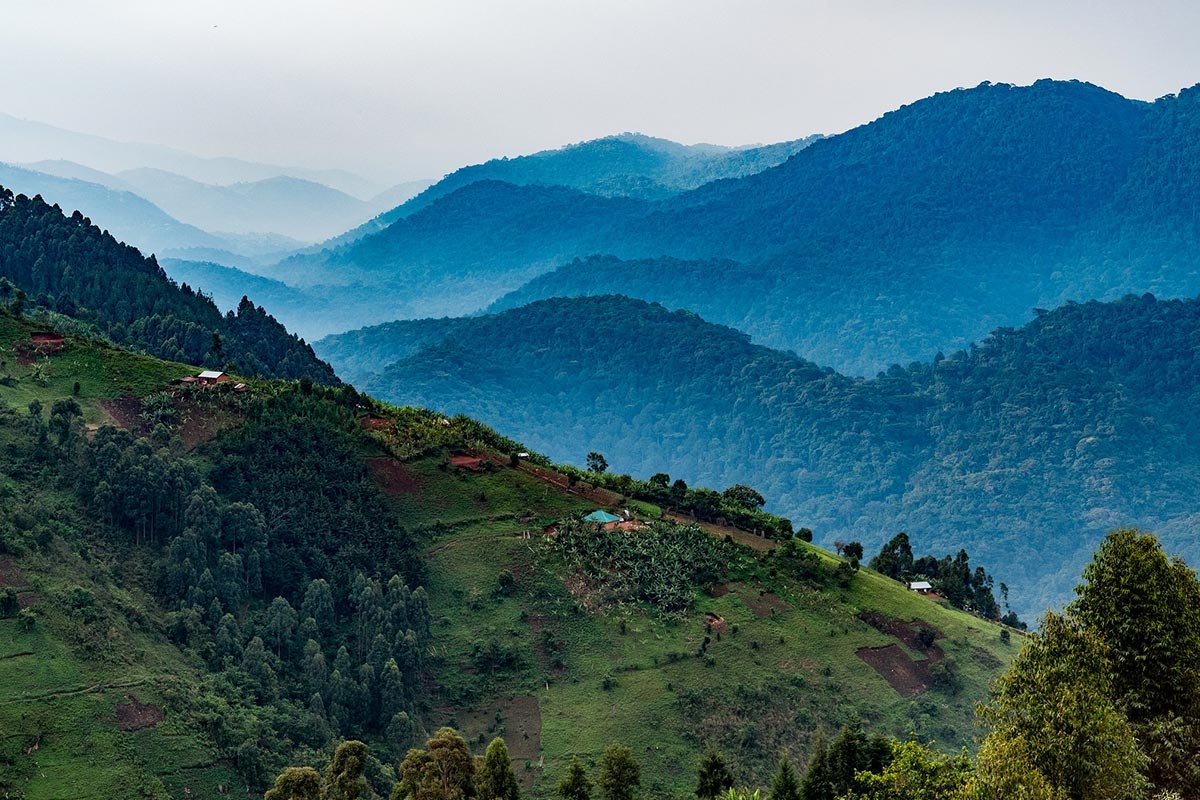
The landscape is equally impressive. Rather than being a flat forest, Bwindi is a mountainous environment characterized by ridges, valleys, streams, and steep slopes. Walking through the forest can therefore be physically demanding, but the scenery and wildlife encounters make the effort rewarding.
2. Where Is Bwindi Impenetrable National Park?
Bwindi Impenetrable National Park is located in southwestern Uganda in the districts surrounding the Bwindi forest region. It lies relatively close to the international borders of Rwanda and the Democratic Republic of the Congo.
The park occupies a mountainous part of Uganda where the landscape rises dramatically. Several communities and small towns provide access points to different sections of the park. The main trekking sectors include Buhoma, Ruhija, Rushaga, and Nkuringo.
Each sector has its own character, accommodation options, trekking routes, and gorilla families. Travelers should therefore choose their accommodation and transportation based partly on the sector where their gorilla permit is booked.
3. The History of Bwindi Forest
Bwindi is an extremely old forest landscape. Its ecological history stretches back thousands of years, and parts of the forest have survived major climatic changes that transformed many other areas of Africa.
Before modern conservation systems were established, local communities depended on forests and surrounding lands for resources such as food, medicine, building materials, and other necessities. Over time, increasing pressure on natural habitats created a need for stronger protection.
The forest was eventually brought under formal conservation management, and Bwindi was designated as a national park in 1991. This change strengthened efforts to protect the forest and its wildlife while creating a foundation for modern conservation tourism.
The international importance of Bwindi was further recognized when it became a UNESCO World Heritage Site as part of the Bwindi Impenetrable National Park listing. Its exceptional biodiversity and importance for mountain gorilla conservation have helped establish it as one of Uganda’s most important protected areas.
4. Why Is Bwindi Called “Impenetrable”?
The name “Impenetrable” is not simply a poetic description. Much of Bwindi contains dense vegetation that can make movement difficult. Thick undergrowth, vines, shrubs, bamboo, ferns, and tangled roots cover sections of the forest floor.
The steep terrain adds another challenge. Some trails pass along slopes and climb through mountainous terrain. Rain can make paths slippery and muddy, so visitors should be prepared for changing conditions.
The dense forest also creates a unique atmosphere. In many places, the canopy blocks much of the sunlight, producing a cool, shaded environment. Mist may appear around the hills, especially during wetter periods, adding to the magical appearance of the forest.
5. Geography and Landscape
Bwindi is part of the Albertine Rift, a region associated with the western branch of the East African Rift System. The landscape contains high mountains, deep valleys, ridges, streams, and forest-covered slopes.
The park’s elevation varies considerably, creating different ecological conditions within a relatively compact area. This variation contributes to the impressive range of habitats and species found inside the forest.
Unlike the open savannah landscapes associated with many famous African safaris, Bwindi offers a completely different experience. Visitors generally travel on foot beneath a dense forest canopy rather than watching large herds of animals from a safari vehicle.
6. The Famous Mountain Gorillas of Bwindi
The mountain gorilla is the most famous animal in Bwindi. These magnificent primates live in family groups led by dominant silverback males. They spend much of their time moving through the forest in search of vegetation and resting areas.
Mountain gorillas are highly social animals. A typical group can include a dominant silverback, adult females, younger males, juveniles, and infants. Relationships within the group are maintained through physical contact, vocal communication, grooming, play, and other social behaviors.
Although mountain gorillas are extremely powerful, they are generally peaceful animals when they are not threatened. Visitors participating in gorilla trekking must follow strict guidelines designed to protect both humans and gorillas.
7. Gorilla Trekking in Bwindi
Gorilla trekking is the primary reason many travelers visit Bwindi. The experience begins early in the morning when visitors meet guides and receive a briefing about forest safety and gorilla behavior.
Trekkers then enter the forest with trained guides and trackers. The length of the trek can vary greatly. Some groups may be located relatively close to the trailhead, while others may require several hours of walking through steep and dense terrain.
The journey itself is part of the adventure. Travelers may encounter colorful birds, butterflies, trees, vines, streams, and other signs of wildlife before reaching their assigned gorilla family.
Once the gorillas are located, visitors spend a limited amount of time observing them. The rules are designed to minimize stress and reduce the possibility of disease transmission between humans and gorillas.
8. What Makes Gorilla Trekking Special?
Seeing a mountain gorilla in the wild is very different from seeing one in a zoo or documentary. In Bwindi, visitors experience the animals within the same environment where they have evolved and survived for generations.
A gorilla may sit quietly among vegetation, climb a slope, feed on leaves, interact with another member of the group, or play with a younger animal. Sometimes the animals may move through dense vegetation, requiring visitors to carefully follow the trackers.
The experience is not guaranteed to look exactly like photographs or documentaries. Wildlife is unpredictable, which is precisely what makes a wild encounter special.
9. Gorilla Families
Mountain gorillas live in social groups commonly known as families. These groups may change over time because of births, deaths, migrations, leadership changes, and other natural events.
Some gorilla groups are habituated to the presence of humans. Habituation is a carefully managed process that allows gorillas to become accustomed to limited human observation without losing their natural behaviors.
Different trekking sectors of Bwindi are associated with different habituated gorilla groups. Travelers are assigned to groups according to conservation and tourism management arrangements.
10. Gorilla Habituation Experience
In addition to standard gorilla trekking, Bwindi has been associated with special gorilla habituation experiences. These activities provide participants with a longer and more detailed opportunity to observe certain gorilla groups undergoing habituation.
Such experiences can be particularly interesting for wildlife enthusiasts, photographers, researchers, and travelers who want to understand gorilla behavior more deeply.
Availability, rules, costs, and permitted group sizes can change, so travelers should confirm current arrangements with the relevant Ugandan wildlife authorities or an authorized tour operator before planning their visit.
11. Other Wildlife in Bwindi
Although gorillas receive most of the attention, Bwindi contains a much broader range of wildlife. The forest provides habitat for several species of mammals, including forest elephants, duikers, primates, and other small forest animals.
Many animals are difficult to see because dense vegetation provides excellent cover. Unlike open savannah ecosystems, Bwindi does not usually provide long-distance views of wildlife.
Patience is therefore important. Sometimes the most interesting evidence of wildlife may be a sound, footprint, movement in the vegetation, or distant call.
12. Chimpanzees and Other Primates
Bwindi supports several species of primates. Visitors may encounter monkeys moving through the canopy or hear their calls echoing across the forest.
Different monkey species occupy different ecological niches. Some spend much of their time in trees, while others regularly travel along the forest floor.
Primate diversity is one of the reasons Bwindi is so important to scientists and conservationists. The forest provides a natural laboratory for studying behavior, ecology, evolution, and relationships between species.
13. Birdwatching in Bwindi
Bwindi is one of the best birdwatching destinations in Uganda. The forest’s location within the Albertine Rift gives it exceptional importance for bird conservation.
Birdwatchers may encounter colorful forest species, including turacos, sunbirds, flycatchers, hornbills, barbets, and other birds adapted to dense woodland habitats.
Some birds can be identified by their calls before they are seen. Experienced local bird guides can be extremely helpful because they know where particular species are commonly found and can recognize subtle sounds.
14. Butterflies of Bwindi
The forest is also home to a remarkable diversity of butterflies. Warm temperatures, moisture, flowering plants, and dense vegetation create suitable conditions for many species.
Butterflies are particularly noticeable during sunny periods when they become active around flowers, streams, clearings, and forest edges.
For nature lovers, butterfly observation can add another dimension to a Bwindi visit. Small creatures that are easy to overlook can reveal just how biologically complex the rainforest really is.
15. Plants and Vegetation
Bwindi contains an extraordinary variety of plants. Tall trees form the upper canopy, while smaller trees, shrubs, vines, ferns, mosses, orchids, and other plants occupy lower layers.
The layered structure of the forest creates numerous habitats. Birds can feed in the canopy, primates can move through branches, insects can live among leaves and bark, and ground-dwelling organisms can survive in the moist leaf litter.
Many plants also have traditional cultural and medicinal importance for communities living around the forest.
16. The Climate of Bwindi
Bwindi has a tropical highland climate influenced by elevation and the surrounding mountains. Rainfall can occur throughout the year, and weather conditions may change quickly.
Temperatures are generally cooler than visitors might expect from a tropical destination because of the park’s elevation. Early mornings can be particularly cool, while hiking can become warm and humid once the sun appears.
Rain is an important part of the rainforest ecosystem. It supports vegetation, replenishes streams, and maintains the lush conditions that make Bwindi so distinctive.
17. Best Time to Visit Bwindi
Bwindi can be visited throughout the year. However, many travelers prefer periods that are traditionally considered drier because trails may be easier to navigate.
The wetter seasons can bring heavier rain and muddy trails, but they also produce exceptionally green landscapes. Rain should therefore not automatically discourage visitors.
Anyone planning a trip should check current weather conditions and local travel information because seasonal patterns can vary.
18. Buhoma Sector
Buhoma is one of the best-known areas of Bwindi and has historically been an important center for gorilla tourism. It offers access to forest trails and a range of accommodation choices.
The area is also known for community tourism opportunities. Visitors can learn about local culture, traditional crafts, food, music, and daily life.
Buhoma’s established tourism infrastructure makes it a popular choice for first-time visitors to Bwindi.
19. Ruhija Sector
Ruhija is another important trekking sector. It is particularly attractive to birdwatchers because of the surrounding forest habitats and excellent opportunities to explore the region’s birdlife.
The landscape around Ruhija is mountainous and scenic. Visitors staying in this area can combine gorilla trekking with nature walks and birdwatching.
20. Rushaga Sector
Rushaga is located in the southern part of Bwindi. It is another major gorilla trekking area and is associated with several habituated gorilla groups.
The sector provides opportunities to explore the forest while also interacting with communities around the park. Travelers may find a variety of lodges and guesthouses in the surrounding area.
21. Nkuringo Sector
Nkuringo is known for its spectacular mountain scenery and dramatic landscapes. The area sits in a highland environment overlooking forested valleys.
For travelers who enjoy scenery as much as wildlife, Nkuringo can be especially appealing. Hiking in this region can be physically demanding because of steep slopes, but the views can be extraordinary.
22. Hiking Beyond Gorilla Trekking
Bwindi offers hiking opportunities beyond gorilla trekking. Forest trails can lead visitors through different habitats while providing opportunities to observe plants, birds, insects, and smaller wildlife.
Nature walks should be undertaken with an authorized guide. Guides understand the terrain and can help visitors identify species that would otherwise be difficult to notice.
Hiking conditions can change rapidly after rain, so sturdy footwear is essential.
23. Waterfalls and Forest Streams
Streams and small waterfalls contribute to the beauty and ecological health of Bwindi. Rainwater flows through the mountainous landscape, creating waterways that support plants and animals.
Some guided forest walks include opportunities to see waterfalls and streams. The sound of flowing water combined with bird calls and rustling vegetation creates a peaceful rainforest atmosphere.
24. Local Communities Around Bwindi
People living around Bwindi are an important part of the park’s conservation story. Conservation is more successful when local communities can benefit from protecting natural resources.
Tourism provides employment and business opportunities for guides, drivers, lodge workers, craft producers, porters, farmers, and other community members.
Visitors can support local communities by purchasing locally made crafts, hiring authorized local guides and porters, staying at locally operated accommodations, and participating respectfully in cultural experiences.
25. The Batwa People and Cultural Heritage
The Batwa are Indigenous people historically associated with the forests of the Great Lakes region of Central Africa. Their relationship with forest environments forms an important part of the cultural history of the Bwindi region.
Modern conservation has created complex social and economic changes for communities that historically depended on forests. Responsible tourism should therefore approach cultural experiences with respect and avoid treating communities merely as attractions.
When participating in cultural tourism, visitors should listen respectfully, ask permission before taking photographs, and support programs that provide genuine benefits to local people.
26. Conservation of Mountain Gorillas
Mountain gorilla conservation is one of the major success stories associated with Bwindi. Decades of conservation work, research, monitoring, veterinary care, community involvement, and carefully managed tourism have contributed to improved protection of these animals.
Gorilla trekking fees help support conservation programs and the management of protected areas. Tourism therefore plays an important economic role in maintaining the forest and its wildlife.
Conservation remains challenging because gorillas are vulnerable to habitat pressure, disease, climate change, and human disturbance. Continuous monitoring is essential.
27. Why Tourism Matters for Conservation
Well-managed tourism can create a strong economic argument for protecting forests. When communities and governments receive benefits from conservation, natural habitats can become more valuable when standing than when converted for other uses.
Gorilla tourism also creates global awareness. Visitors return home with a stronger understanding of rainforest conservation and may support environmental causes or encourage others to travel responsibly.
However, tourism must always be carefully controlled. Too many visitors, poor hygiene, irresponsible behavior, or habitat disturbance could threaten the very wildlife that attracts tourists.
28. Rules for Gorilla Trekking
Visitors must follow strict rules when observing mountain gorillas. These rules are designed to protect both people and wildlife.
- Maintain the required distance from gorillas.
- Follow the instructions of guides and trackers.
- Do not feed or touch gorillas.
- Do not use flash photography when prohibited.
- Do not visit gorillas when seriously ill.
- Avoid sudden movements or loud behavior.
- Never leave litter in the forest.
- Do not attempt to attract animals.
- Remain with the assigned group.
- Respect all current wildlife regulations.
29. Why Health Rules Are Important
Gorillas share many biological similarities with humans, which means they can be vulnerable to certain human diseases. A simple respiratory infection that is mild for a person could potentially become serious for a gorilla.
For this reason, travelers should be honest about illness and follow all health requirements. Responsible behavior helps protect one of the world’s most endangered primates.
30. What to Pack for Bwindi
Good preparation can make a major difference during a Bwindi trekking experience. The following items are useful for most visitors:
- Waterproof hiking boots
- Lightweight long trousers
- Long-sleeved shirts
- Rain jacket or poncho
- Warm layer for cool mornings
- Water bottle
- Small backpack
- Insect repellent
- Sunscreen
- Hat
- Gloves for handling vegetation
- Binoculars for birdwatching
- Camera with spare batteries
- Personal medication
31. Physical Fitness for Gorilla Trekking
Gorilla trekking requires a reasonable level of fitness. The forest is mountainous, and trails can involve steep climbs, descents, mud, and uneven ground.
The exact difficulty varies depending on the location of the gorilla family assigned to a group. Some treks may be relatively short, while others can last several hours.
Travelers who are concerned about fitness should discuss their needs with the tour operator in advance. Porters can often assist with carrying bags and providing practical support during the trek.
32. The Role of Porters
Hiring a local porter can make a trek easier while providing direct economic support to community members. Porters can carry backpacks, assist on difficult sections, and provide encouragement during challenging climbs.
Using porters is therefore more than a convenience. It can be an effective way for visitors to contribute to the local economy.
33. Photography in Bwindi
Bwindi provides extraordinary photography opportunities. The forest itself is highly photogenic, with misty mountains, enormous trees, colorful plants, birds, butterflies, and dramatic landscapes.
Gorilla photography requires special care. Visitors should follow guide instructions and avoid actions that could disturb the animals.
A lightweight camera is often more practical than heavy professional equipment during long hikes. Extra batteries and waterproof protection are strongly recommended because rainforest conditions can be wet.
34. Birdwatching Tips
Birdwatchers should bring binoculars and, if possible, a field guide covering Uganda or the Albertine Rift. Early morning is often a productive period because many birds are active.
Listening is just as important as looking. Experienced guides can identify species from calls and may point out birds hidden high in the canopy.
35. Accommodation Around Bwindi
Accommodation is available in and around the main trekking sectors. Options range from luxury lodges to mid-range hotels, eco-lodges, guesthouses, and community-based accommodation.
Travelers should choose accommodation according to their trekking sector. Staying close to the correct trailhead can reduce early-morning travel time and make the trekking day more comfortable.
Because Bwindi is a remote destination, accommodation may differ from city hotels. Visitors should be prepared for a nature-focused experience rather than urban-style facilities.
36. Food and Dining
Lodges and guesthouses commonly provide meals for visitors, and menus may include both international and Ugandan dishes.
Local foods can include bananas, beans, vegetables, potatoes, rice, meat, and other regional staples. Travelers with dietary restrictions should inform their accommodation in advance.
During trekking, carrying sufficient drinking water and a small snack is advisable, subject to the rules of the park and tour operator.
37. How to Reach Bwindi
Traveling to Bwindi generally requires planning because the park is located in a mountainous and relatively remote region of southwestern Uganda.
Many international travelers arrive in Uganda through Entebbe International Airport and continue by road toward southwestern Uganda. Depending on the itinerary, some travelers may use domestic or charter flights to an airstrip closer to the region and then continue by road.
Road travel can take many hours, but it also provides opportunities to see Uganda’s landscapes, towns, farms, hills, and rural communities.
38. Traveling from Kigali
Because Bwindi is relatively close to Rwanda, some travelers combine Uganda and Rwanda in the same itinerary. Kigali can provide an alternative access point depending on border arrangements, permits, transportation, and the chosen trekking sector.
Anyone planning cross-border travel should verify current visa, immigration, border, health, and transportation requirements before departure because regulations can change.
39. Combining Bwindi With Other Uganda Destinations
Bwindi can be combined with several other Ugandan destinations. Travelers may create itineraries that include Queen Elizabeth National Park, Kibale National Park, Murchison Falls National Park, Lake Mburo National Park, or other attractions.
A multi-destination itinerary allows visitors to experience different ecosystems, including rainforest, wetlands, lakes, and savannah.
40. Bwindi and Queen Elizabeth National Park
A popular combination is Bwindi with Queen Elizabeth National Park. The two destinations provide very different wildlife experiences.
Queen Elizabeth is known for savannah landscapes, lakes, wetlands, and classic game drives, while Bwindi offers dense rainforest and mountain gorilla trekking.
Combining the two creates a diverse Uganda wildlife holiday.
41. Bwindi and Kibale National Park
Kibale National Park is famous for chimpanzee tracking and primate diversity. Combining Kibale with Bwindi allows travelers to experience two important rainforest environments.
Chimpanzee tracking and gorilla trekking are different activities, but both provide opportunities to observe great apes in natural habitats.
42. Responsible Tourism in Bwindi
Responsible tourism is essential in a fragile rainforest environment. Visitors should minimize waste, avoid unnecessary noise, follow designated trails, respect wildlife, and support local communities.
Choosing environmentally responsible accommodation and local services can increase the positive impact of a trip.
Travelers should also avoid purchasing products made from illegal wildlife materials or endangered species.
43. Protecting the Forest
Forest protection requires more than preventing illegal hunting. It involves maintaining ecological processes, protecting water sources, restoring damaged areas, monitoring wildlife, controlling invasive species, and working with surrounding communities.
Bwindi’s conservation value extends far beyond gorillas. The forest stores carbon, regulates water, supports biodiversity, and provides ecological services that benefit surrounding landscapes.
44. Climate Change and Bwindi
Climate change is an emerging challenge for mountain ecosystems. Changes in rainfall, temperature, extreme weather, and vegetation patterns can affect wildlife and forest communities.
Mountain species can be particularly sensitive to environmental changes because suitable habitats may become fragmented or shift geographically.
Protecting large, connected forest areas is therefore important for maintaining ecological resilience.
45. Scientific Research
Bwindi provides important opportunities for scientific research. Researchers study gorilla behavior, forest ecology, birds, plants, insects, disease, genetics, climate, and conservation strategies.
Long-term research is especially valuable because it allows scientists to understand how wildlife populations change over time.
46. Education and Conservation
Environmental education can help create long-term support for conservation. Local schools, communities, visitors, and international organizations can all play a role in spreading awareness about the importance of forests.
When young people understand the ecological and economic value of natural areas, they can become future conservation leaders.
47. The Beauty of the Forest
One of the most memorable aspects of Bwindi is simply walking through the forest. The experience can be sensory and immersive.
You may hear distant bird calls, insects buzzing, leaves moving in the wind, and water flowing through valleys. Moist air, moss-covered trees, ferns, and mist create an environment that feels completely different from urban life.
Even travelers who do not encounter spectacular wildlife can leave with powerful memories of the forest itself.
48. Bwindi as a Bucket-List Destination
For wildlife lovers, Bwindi is one of Africa’s most extraordinary destinations. The chance to see mountain gorillas in their natural environment is rare, and the experience combines wildlife, adventure, culture, conservation, and scenery.
The destination is especially attractive to travelers who prefer meaningful nature experiences over conventional sightseeing.
49. Tips for First-Time Visitors
- Book your gorilla permit well in advance.
- Choose accommodation close to your trekking sector.
- Wear waterproof hiking footwear.
- Prepare for rain even during drier periods.
- Hire a porter if you need assistance.
- Listen carefully to the pre-trekking briefing.
- Respect the required distance from gorillas.
- Carry enough drinking water.
- Protect cameras and electronics from rain.
- Respect local people and their traditions.
- Follow all current park regulations.
50. Common Mistakes to Avoid
One common mistake is assuming that gorilla trekking is a simple walk through a forest. The terrain can be challenging, and travelers should prepare accordingly.
Another mistake is bringing inappropriate footwear. Smooth-soled shoes can become uncomfortable and unsafe on muddy slopes.
Travelers should also avoid planning extremely tight schedules around their trekking day. Delays can occur because of weather, road conditions, or the unpredictable location of wildlife.
51. Is Bwindi Suitable for Families?
Bwindi can be suitable for families, but age restrictions and trekking requirements must be checked before booking. Gorilla trekking involves physical activity and specific conservation rules.
Families with children can also enjoy cultural activities, nature walks, birdwatching, and scenic experiences depending on available programs and local regulations.
52. Is Bwindi Safe?
Bwindi is a professionally managed wildlife destination, but visitors should follow all instructions from park officials and guides.
Wild animals are unpredictable, and visitors should never approach wildlife independently. Staying with authorized guides is essential.
Travelers should also follow current government travel advice and local security information before visiting the region.
53. The Emotional Experience of Seeing Gorillas
Many visitors describe gorilla trekking as one of the most emotionally powerful wildlife experiences they have ever had. Standing quietly near a gorilla family can create a strong sense of connection with nature.
Seeing an infant playing near its mother or watching a silverback calmly observe the forest can make the importance of conservation feel very real.
The experience often changes the way travelers think about endangered species and the value of protecting wild places.
54. Why Bwindi Matters to the World
Bwindi matters because it protects one of the planet’s most important tropical forest ecosystems and provides critical habitat for endangered mountain gorillas.
Its value is ecological, scientific, cultural, economic, and educational. Protecting Bwindi contributes to global biodiversity conservation while also supporting local livelihoods.
55. Frequently Asked Questions
What is Bwindi Impenetrable National Park famous for?
Bwindi is best known for its mountain gorillas and exceptional rainforest biodiversity. It is one of the world’s most important destinations for observing mountain gorillas in the wild.
Where is Bwindi Impenetrable National Park?
Bwindi is located in southwestern Uganda near the borders with Rwanda and the Democratic Republic of the Congo.
Can tourists see gorillas in Bwindi?
Yes. Visitors with valid permits can participate in guided gorilla trekking experiences involving habituated gorilla families.
How difficult is gorilla trekking?
The difficulty varies. Some treks are relatively short, while others can involve several hours of walking over steep and muddy terrain.
What should I wear for gorilla trekking?
Long trousers, a long-sleeved shirt, sturdy waterproof hiking boots, and rain protection are recommended. Clothing should be comfortable and suitable for wet forest conditions.
Can I take photographs of gorillas?
Photography is generally permitted subject to park rules. Visitors must follow guide instructions and avoid disturbing the animals.
Is Bwindi good for birdwatching?
Yes. Bwindi is one of Uganda’s important birdwatching destinations and contains many forest and Albertine Rift bird species.
When is the best time to visit Bwindi?
Bwindi can be visited year-round. Many travelers prefer periods with relatively drier conditions, but wet periods can also provide beautiful green landscapes and excellent forest experiences.
How long should I stay in Bwindi?
A minimum of two or three nights can work well for many travelers, although longer stays allow time for gorilla trekking, birdwatching, cultural experiences, hiking, and relaxation.
Can I combine Bwindi with other national parks?
Yes. Bwindi can be combined with destinations such as Queen Elizabeth National Park and Kibale National Park to create a broader Uganda wildlife itinerary.
56. Final Thoughts
Bwindi Impenetrable National Park is much more than a place to see mountain gorillas. It is an ancient rainforest filled with life, culture, history, mountains, streams, birds, plants, insects, and extraordinary landscapes. Its dense vegetation and steep terrain make exploration challenging, but those same qualities help create its unique character.
The mountain gorillas remain the greatest attraction, and seeing them in their natural habitat can be an unforgettable experience. Yet the wider importance of Bwindi should never be overlooked. The forest protects countless species, supports ecological processes, provides benefits to surrounding communities, and represents one of the world’s most valuable natural environments.
A visit to Bwindi should therefore be approached not simply as a holiday but as an opportunity to learn about conservation and the relationship between people and nature. By following park rules, respecting wildlife, supporting local communities, minimizing environmental impact, and choosing responsible tourism services, visitors can help ensure that this remarkable forest remains protected for future generations.
For anyone interested in wildlife, rainforests, photography, adventure, conservation, and authentic African nature experiences, Bwindi Impenetrable National Park deserves a place near the top of the world’s most memorable travel destinations.