Torres del Paine National Park: A Complete Guide to One of Patagonia’s Most Beautiful National Parks
Torres del Paine National Park: A Complete Guide to One of Patagonia’s Most Beautiful National Parks
Torres del Paine National Park is one of the most spectacular protected natural areas in Chile and one of the world’s most famous destinations for hiking, mountains, glaciers, lakes, forests, and wildlife. Located in the southern Chilean region of Magallanes and Chilean Antarctica, the park forms part of the extraordinary Patagonian landscape and attracts travelers from around the world.
With its dramatic granite towers, turquoise lakes, enormous glaciers, wild rivers, golden grasslands, and snow-covered mountains, Torres del Paine offers an unforgettable combination of scenery and adventure. The park is especially famous for the three granite towers known as the Torres del Paine, but these mountains are only one part of a much larger wilderness.
Introduction to Torres del Paine National Park
Torres del Paine National Park is a breathtaking wilderness area in Chilean Patagonia. It is famous for its combination of enormous mountains, ancient forests, open steppe, blue-green lakes, glaciers, waterfalls, and diverse wildlife. The park is a dream destination for hikers and nature lovers because relatively short trails can lead to landscapes that look completely untouched.
The name Torres del Paine is generally associated with the enormous granite towers that dominate the landscape. These towers rise dramatically above the surrounding valleys and are among the most recognizable natural landmarks in Patagonia. However, the park contains far more than the towers. Travelers can explore the French Valley, Grey Glacier, Lake Pehoé, Lake Nordenskjöld, Salto Grande, Paine Grande, and numerous other remarkable locations.
Torres del Paine is also part of a much larger Patagonian ecosystem. The region is influenced by powerful winds, changing weather, glaciers, rivers, and mountain systems. The combination of these natural forces has created a landscape of exceptional variety.
For many visitors, the park is not simply a sightseeing destination. It is a place where travelers spend several days walking through wilderness, sleeping in mountain refuges or campsites, and experiencing the dramatic changes of Patagonian weather.
Where Is Torres del Paine National Park?
Torres del Paine National Park is located in southern Chile, in the Magallanes and Chilean Antarctica Region. It lies in the Patagonia area, relatively close to the border with Argentina. The nearest major tourism center is Puerto Natales, which serves as an important gateway for visitors traveling to the park.
The park is surrounded by vast landscapes typical of southern Patagonia. Its location far south of most major population centers gives it a remote and wild atmosphere. Visitors commonly travel through Puerto Natales before entering the park.
Punta Arenas is another important city in the wider region. International travelers may reach southern Chile through flights to Punta Arenas and then continue toward Puerto Natales by road.
Because Torres del Paine is located in a remote region, planning transportation, accommodation, food, and hiking routes before arrival is important. During the busiest travel season, popular campsites and refuges can become heavily booked.
History of Torres del Paine National Park
The landscape of Torres del Paine has a long geological and human history. Indigenous peoples lived in and traveled through Patagonia long before modern tourism developed. The region provided opportunities for hunting, gathering, and seasonal movement across the landscape.
European exploration and settlement changed the region significantly. Over time, ranching and other economic activities expanded throughout Patagonia. Sheep farming became particularly important in southern Chile and Argentina.
The national park was established in the twentieth century as Chile increasingly recognized the importance of protecting its spectacular southern landscapes. The protected area later became internationally recognized as one of Patagonia’s most important natural destinations.
Conservation has remained an important part of the park’s development. Tourism has grown dramatically, creating both economic opportunities and environmental challenges. Park managers and conservation organizations have therefore focused increasingly on trail maintenance, fire prevention, habitat protection, waste management, and responsible tourism.
The park has also experienced serious wildfires in the past. These events demonstrated how vulnerable Patagonian forests can be to human-caused fires. Today, visitors are expected to follow strict rules regarding fire and camping.
Landscape and Geography
One of the reasons Torres del Paine is so extraordinary is the variety of landscapes found within a relatively concentrated area. Visitors can move from grass-covered plains to dense forests, alpine valleys, enormous lakes, glaciers, and steep mountain passes.
Mountain Landscapes
The mountains are the visual centerpiece of the park. The Paine Massif contains spectacular peaks and rock formations, including the famous Torres and the imposing Paine Grande. The mountains were shaped by powerful geological processes and glacial erosion over extremely long periods.
Patagonian Steppe
Open grasslands cover large sections of the surrounding region. These areas provide habitat for guanacos, rheas, foxes, and numerous bird species. The open landscape also provides excellent opportunities for observing wildlife from a safe distance.
Forests
Native forests grow in sheltered areas where moisture and climate conditions allow trees to survive. These forests create a completely different atmosphere from the open steppe. Hiking through them can feel peaceful and secluded, especially during early morning hours.
Glacial Valleys
Glaciers have played a major role in shaping the park. Deep valleys, U-shaped formations, lakes, and exposed rock surfaces demonstrate the influence of ancient and modern ice.
The Famous Torres del Paine
The three granite towers are the symbol of the park. Their dramatic vertical walls rise high above the surrounding landscape and attract thousands of hikers every year.
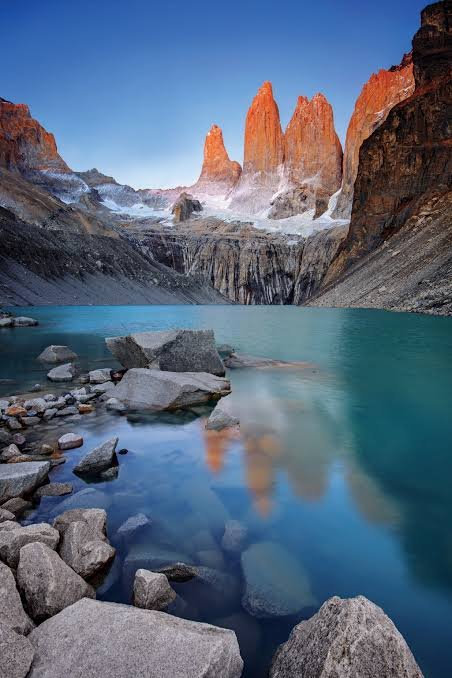
The classic hike to the base of the towers is one of the most famous trekking experiences in Patagonia. The route passes through forests, mountain terrain, and a steep final section before reaching the viewpoint overlooking the towers and a beautiful glacial lake.
The towers can look completely different depending on weather and light. On clear mornings, their rock faces can appear sharply defined against the sky. Clouds and mist can create a more mysterious atmosphere, while sunrise may illuminate the rock with warm colors.
The hike requires good physical preparation because the trail includes significant elevation gain. Hikers should also remember that Patagonian weather can change quickly, so proper clothing and footwear are essential.
Lakes and Rivers
Water is one of the defining features of Torres del Paine. The park contains several large lakes and countless rivers, streams, and waterfalls.
Lake Pehoé
Lake Pehoé is one of the most photographed lakes in the park. Its blue-green water contrasts beautifully with the surrounding mountains. The views toward the Paine Massif are especially impressive.
Lake Nordenskjöld
Lake Nordenskjöld sits beneath dramatic mountain scenery and is an important landmark along several trekking routes. Its unusual color comes from glacial sediments carried into the water.
Lake Grey
Lake Grey is closely associated with Grey Glacier. Large pieces of blue ice can sometimes be seen floating in its waters after breaking away from the glacier.
Waterfalls
The park also contains beautiful waterfalls. Salto Grande is among the best-known. The waterfall connects the waters of Lake Nordenskjöld and Lake Pehoé and is easily accessible from nearby trails.
Glaciers and Ice Fields
Glaciers are among the most spectacular natural features of Torres del Paine. The park is connected to the Southern Patagonian Ice Field, one of the largest ice masses outside Antarctica and Greenland.
Grey Glacier is the most famous glacier accessible to visitors in the park. Its enormous wall of ice extends toward Lake Grey, where chunks of ice can break off and float across the water.
The color of glacial ice can range from white to deep blue. Blue ice appears when dense ice absorbs many wavelengths of visible light while allowing blue light to be reflected.
Visitors can experience the glacier from viewpoints, boat excursions, and, where permitted and operated safely, guided activities near the ice. Glacier conditions can change, so travelers should always follow official instructions and professional guides.
Glaciers are also important indicators of climate change. Changes in temperature and precipitation can influence the size and behavior of glaciers over time. Seeing these landscapes in person provides travelers with a powerful reminder of the importance of protecting Earth’s cold environments.
Wildlife of Torres del Paine National Park
Torres del Paine is home to a fascinating variety of wildlife. The open grasslands, forests, wetlands, mountains, and lakes provide habitats for many species.
Guanacos
Guanacos are among the most commonly observed large mammals in the park. These relatives of llamas are well adapted to the harsh Patagonian environment. They can often be seen grazing in open areas.
Visitors should never approach or feed guanacos. Wild animals need space, and approaching them can create stress and potentially dangerous situations.
Pumas
Torres del Paine is internationally known for its population of pumas. These powerful cats are elusive and usually avoid people. Experienced wildlife observers may occasionally see them in open landscapes, especially in areas where guanacos are abundant.
Andean Condors
The Andean condor is one of the most impressive birds in Patagonia. With an enormous wingspan, condors can often be seen soaring above valleys and mountains.
Foxes
Foxes can be encountered in different habitats throughout the park. They are adaptable predators and scavengers and may occasionally be seen near trails.
Birds
The park supports numerous bird species, including rheas, geese, ducks, hawks, eagles, woodpeckers, and other Patagonian birds. Birdwatchers should carry binoculars and avoid disturbing nesting areas.
Plants and Vegetation
The vegetation of Torres del Paine reflects the park’s varied climate and geography. Different plant communities grow in forests, wetlands, grasslands, and higher mountain areas.
Native forests include species adapted to the cool and windy conditions of southern Patagonia. Trees may appear dramatically shaped because of persistent winds.
Wildflowers add color to the landscape during the warmer months. In open areas, grasses and shrubs provide important food and shelter for herbivores.
Protecting native vegetation is extremely important. Hikers should remain on designated trails whenever required because repeated foot traffic can damage fragile plants and cause soil erosion.
Hiking and Trekking in Torres del Paine
Hiking is the main reason many people visit Torres del Paine. The park offers trails ranging from relatively easy walks to demanding multi-day expeditions.
Some routes can be completed in a few hours, while others require several days. Hikers can choose between staying in refuges, camping, or using accommodations outside the park depending on their itinerary.
Physical preparation is important for longer routes. Even experienced hikers should respect the conditions because strong winds, rain, cold temperatures, snow, and sudden weather changes can make trails considerably more difficult.
Trail Preparation
- Check current park conditions before starting.
- Carry sufficient drinking water and food.
- Wear sturdy hiking shoes or boots.
- Bring waterproof and windproof clothing.
- Carry sun protection.
- Use navigation tools and follow marked routes.
- Start early for longer hikes.
- Never underestimate changing weather.
The W Trek
The W Trek is perhaps the most famous multi-day hiking route in Torres del Paine. It is called the W because the route’s shape resembles the letter W when viewed on a map.
The route connects several of the park’s major attractions, including the Base of the Towers, French Valley, and Grey Glacier. Depending on the exact itinerary, hikers can complete the route over several days.
Base of the Towers Section
This section leads toward the famous Torres viewpoint. It is physically demanding, particularly near the final ascent, but the reward is one of Patagonia’s most recognizable landscapes.
French Valley
The French Valley provides extraordinary views of surrounding mountains and hanging glaciers. Weather conditions can dramatically alter the experience, with clouds moving rapidly through the valley.
Grey Glacier Section
The western portion of the W leads toward Grey Lake and Grey Glacier. Hikers can enjoy views of mountains, forest, water, and ice along the route.
Because accommodation capacity is limited, reservations should be made well in advance during peak season.
The O Circuit
The O Circuit is a longer trekking route that provides a more complete experience of the park. Unlike the W Trek, which focuses heavily on the southern highlights, the O Circuit travels around the Paine Massif and includes more remote terrain.
The route generally takes considerably longer than the W Trek and requires stronger preparation. One of its highlights is the crossing of the John Gardner Pass, where hikers can encounter challenging conditions and spectacular views of the surrounding ice fields.
The O Circuit is particularly attractive to experienced trekkers who want to spend more time away from the busiest sections of the park.
Before attempting the circuit, hikers should carefully check current rules, trail conditions, accommodation availability, and weather forecasts.
Best Day Trips and Short Hikes
Not every visitor needs to complete a multi-day trek. Torres del Paine has many locations that can be explored on day trips.
Salto Grande
Salto Grande is an accessible waterfall surrounded by dramatic scenery. It is an excellent choice for travelers looking for a relatively short walk with impressive views.
Mirador Cuernos
This viewpoint offers beautiful views toward the distinctive Cuernos del Paine mountains and Lake Nordenskjöld.
Grey Lake
Visitors can explore the area around Grey Lake and enjoy views toward the glacier and floating ice.
Base of the Towers
Although the Base of the Towers hike is a full-day challenge for many visitors, it remains one of the most rewarding options for travelers who have limited time but want a major hiking experience.
Best Time to Visit Torres del Paine
The best time to visit depends on the traveler’s goals. The main trekking season generally falls during the warmer months of the Southern Hemisphere, particularly from late spring through summer and into early autumn.
Summer offers longer daylight hours and generally more favorable conditions for hiking, but it is also the busiest period. Trails and accommodations can become crowded.
Autumn brings beautiful colors to forests and fewer visitors in some periods. Winter can be extremely cold and snowy, with shorter daylight hours and limited access to some trails and services.
Spring offers a combination of changing weather, emerging vegetation, and increasing daylight. Travelers should always check current operating conditions because access and services can vary throughout the year.
Weather and Climate
Torres del Paine is famous for unpredictable Patagonian weather. A sunny morning can quickly become cloudy, rainy, or extremely windy.
Strong winds are one of the most important weather factors. Wind can make hiking physically harder and can significantly reduce the apparent temperature.
Rain and snow are also possible depending on the season and elevation. Hikers should therefore use a layered clothing system.
Recommended Clothing System
- Moisture-wicking base layer
- Warm insulating layer
- Windproof outer layer
- Waterproof rain jacket
- Warm hat and gloves
- Comfortable hiking trousers
- Waterproof hiking footwear
The key lesson is simple: do not dress only for the weather you see when leaving your accommodation. Conditions can change quickly during the day.
How to Reach Torres del Paine National Park
Most international travelers reach the park through southern Chile or neighboring Argentina.
Via Punta Arenas
Punta Arenas is a major transportation hub in the region. Travelers can arrive by air from Santiago or other Chilean locations and continue by road toward Puerto Natales.
Via Puerto Natales
Puerto Natales is one of the most convenient bases for Torres del Paine. The town has accommodation, restaurants, equipment rental services, supermarkets, and transportation options.
From Argentina
Travelers may also combine Torres del Paine with destinations in Argentine Patagonia, such as El Calafate. Border crossings require appropriate travel documents and should be checked carefully before departure.
Transportation schedules can vary by season, so visitors should verify current bus, shuttle, boat, and transfer arrangements before traveling.
Where to Stay
Accommodation options around Torres del Paine range from campsites and mountain refuges to hotels and luxury lodges.
Campsites
Camping is popular with trekkers who want to experience the wilderness directly. Campers should use authorized campsites and follow all fire and waste regulations.
Mountain Refuges
Refuges provide beds and basic facilities for hikers. They can be especially convenient for travelers who want to complete multi-day routes without carrying a full camping setup.
Lodges and Hotels
Comfortable accommodations are available in and around the park. These are suitable for travelers who prefer day hikes and return to a comfortable room each evening.
During peak season, accommodation can fill quickly. Booking early is especially important for the W Trek and O Circuit.
Food and Supplies
Food planning is an important part of a Torres del Paine hiking trip. Travelers staying in hotels or lodges may have meals available, while independent trekkers often need to carry food.
Puerto Natales is a useful place to purchase groceries and prepare for a trek. Hikers should calculate how much food they need based on the length and difficulty of their route.
High-energy foods such as nuts, dried fruit, oats, chocolate, sandwiches, energy bars, and dehydrated meals can be useful for hiking days.
Water is generally available from streams and other natural sources, but travelers should follow current park guidance regarding water treatment and safe drinking practices.
Safety Tips for Visitors
Torres del Paine is a wilderness area, and visitors should treat it with appropriate respect. Most problems can be avoided through good preparation.
- Check weather forecasts: Conditions can change rapidly.
- Follow park rules: Rules exist to protect visitors and the environment.
- Stay on marked trails: Avoid shortcuts and closed areas.
- Carry enough water: Do not assume every water source is safe.
- Wear appropriate clothing: Wind and rain can arrive unexpectedly.
- Protect yourself from the sun: UV exposure can be strong.
- Keep distance from wildlife: Never feed wild animals.
- Do not hike beyond your ability: Turn back if conditions become unsafe.
- Tell someone your plans: This is especially important for independent trekkers.
- Carry basic emergency supplies: A first-aid kit and communication device can be valuable.
Photography in Torres del Paine
Torres del Paine is a paradise for landscape photographers. The combination of mountains, glaciers, lakes, wildlife, forests, and changing weather provides endless opportunities.
Sunrise
The Torres are particularly dramatic around sunrise when the early light can illuminate their granite surfaces.
Mountain Reflections
Calm water can create beautiful reflections of mountains. Early morning often provides better conditions for reflections than windy afternoons.
Wildlife Photography
Wildlife should always be photographed from a respectful distance. A telephoto lens is preferable to approaching animals.
Weather Photography
Do not assume that cloudy weather means bad photographs. Clouds, mist, rain, and changing light can create dramatic images that communicate the character of Patagonia.
Conservation and Responsible Tourism
Torres del Paine is a fragile ecosystem. The popularity of the park creates pressure on trails, forests, water resources, wildlife, and accommodation facilities.
Visitors can help protect the park by following Leave No Trace principles. This includes carrying out waste, respecting wildlife, avoiding unnecessary noise, staying on designated trails, and following all camping regulations.
Fire prevention is particularly important. Campfires should only be used where officially permitted, and visitors must follow current regulations. A single uncontrolled fire can destroy large areas of native forest and threaten wildlife.
Responsible tourism also means respecting local communities and workers. Choosing local services, guides, accommodation, restaurants, and transportation can contribute to the regional economy.
Simple Eco-Friendly Practices
- Carry a reusable water bottle.
- Avoid single-use plastics whenever possible.
- Take all rubbish with you.
- Stay on marked trails.
- Never feed wildlife.
- Keep noise levels low.
- Follow fire restrictions.
- Respect closed areas.
- Use authorized campsites.
- Support responsible local tourism businesses.
Visiting Torres del Paine With Family
Families can enjoy Torres del Paine, although the best activities depend on children’s ages, fitness levels, and weather tolerance.
Shorter walks and scenic viewpoints can be excellent for families who do not want to undertake multi-day trekking. Wildlife watching can also be exciting for children because guanacos, birds, and other animals may be visible in the open landscape.
Families should avoid treating the park like an ordinary city attraction. The environment is remote and weather conditions can be challenging. Children should have warm, waterproof clothing and comfortable footwear.
For longer hikes, parents should select routes appropriate to the family’s experience and monitor weather conditions carefully.
What to Pack for Torres del Paine
Packing correctly can make a major difference to your experience.
Essential Clothing
- Waterproof jacket
- Windproof outer layer
- Warm fleece or insulated jacket
- Base layers
- Hiking trousers
- Warm socks
- Gloves
- Warm hat
- Sun hat
Hiking Equipment
- Hiking boots
- Daypack
- Water bottle or hydration system
- Headlamp
- Navigation tools
- First-aid kit
- Sun protection
- Power bank
- Personal medications
Camping Equipment
Travelers camping independently should bring suitable equipment for cold, wet, and windy conditions. Tent quality matters greatly because Patagonian winds can be strong.
Suggested Torres del Paine Itinerary
Day 1: Arrival in Puerto Natales
Arrive in Puerto Natales, organize transportation, purchase supplies, and check your hiking equipment. Use the evening to review the next day’s plan.
Day 2: Enter Torres del Paine
Travel into the park and spend the day exploring scenic areas around the lakes and mountains. Depending on your accommodation, you may complete a short hike.
Day 3: Base of the Towers
Begin early for the hike toward the Torres viewpoint. Allow enough time for the ascent, photography, rest, and return journey.
Day 4: Lake Nordenskjöld and Salto Grande
Explore the area around Lake Nordenskjöld and visit Salto Grande. Enjoy views toward the Cuernos and surrounding mountains.
Day 5: French Valley
Spend the day exploring the French Valley. Weather conditions can change quickly, so allow flexibility.
Day 6: Grey Glacier
Travel toward Grey Lake and enjoy views of the glacier. Depending on the season and available services, visitors may also have opportunities for boat excursions or guided activities.
Day 7: Return
Return toward Puerto Natales and continue your journey through Patagonia or travel onward to another destination.
This itinerary is only an example. Actual routes should be planned according to current park regulations, accommodation availability, weather, transportation schedules, and individual fitness.
Frequently Asked Questions About Torres del Paine National Park
What is Torres del Paine National Park famous for?
Torres del Paine is famous for its dramatic granite towers, mountains, glaciers, turquoise lakes, forests, wildlife, and world-class hiking routes such as the W Trek and O Circuit.
Where is Torres del Paine located?
It is located in southern Chilean Patagonia in the Magallanes and Chilean Antarctica Region, near the Argentine border.
What city is closest to Torres del Paine?
Puerto Natales is the main gateway town commonly used by visitors traveling to the park.
How many days should I spend in Torres del Paine?
A short visit can focus on major viewpoints and day hikes, while a multi-day visit of around four to seven days or longer allows travelers to experience more of the park.
Is Torres del Paine suitable for beginners?
Yes, beginners can visit the park, especially by choosing shorter hikes and guided activities. However, some routes are physically demanding and require good preparation.
Can I see pumas in Torres del Paine?
Yes. The park is well known for pumas, although sightings are never guaranteed. Visitors should maintain a safe distance and never approach or feed wildlife.
Can I visit Torres del Paine without hiking?
Yes. Scenic drives, viewpoints, boat trips, wildlife observation, and shorter walks allow travelers to experience the park without completing a long trek.
Is Torres del Paine expensive?
Costs vary depending on accommodation, transportation, food, guided tours, and the length of the trip. Multi-day trekking can require careful budgeting because accommodation and transport in remote areas may be relatively costly.
What should I wear in Torres del Paine?
Layered clothing is recommended. Waterproof and windproof outerwear is particularly important because conditions can change quickly.
Is camping allowed?
Camping is available at authorized campsites, subject to current park rules and availability. Visitors should never camp in prohibited areas.
When is the best season for hiking?
The main hiking season is generally during the warmer months of the Southern Hemisphere. However, conditions vary, and travelers should check current park information before planning their trip.
What is the W Trek?
The W Trek is a famous multi-day hiking route that connects major attractions including the Base of the Towers, French Valley, and Grey Glacier.
What is the O Circuit?
The O Circuit is a longer trekking route that travels around the Paine Massif and includes more remote areas than the W Trek.
Is Torres del Paine good for photographers?
Absolutely. The park offers exceptional opportunities for landscape and wildlife photography, especially around sunrise, sunset, lakes, glaciers, and mountain viewpoints.
Conclusion
Torres del Paine National Park is one of the world’s great wilderness destinations. Its combination of granite mountains, enormous glaciers, colorful lakes, forests, rivers, waterfalls, grasslands, and wildlife creates a landscape unlike almost anywhere else.
The famous Torres are undoubtedly the park’s most recognizable feature, but they represent only one part of a much larger natural world. From the blue waters of Lake Pehoé to the ice of Grey Glacier, from the peaceful forests to the windswept Patagonian steppe, every section of the park offers something different.
For hikers, the W Trek and O Circuit provide opportunities to experience Patagonia on foot. For travelers with less time, day hikes, viewpoints, boat trips, and wildlife observation can still create unforgettable memories.
Perhaps the most important part of visiting Torres del Paine is understanding that it is a fragile wilderness rather than simply a tourist attraction. Weather can be unpredictable, trails can be demanding, and natural ecosystems require protection. Travelers who prepare carefully, follow park regulations, respect wildlife, and practice responsible tourism help ensure that this extraordinary landscape remains beautiful for future generations.
Whether you are an experienced trekker searching for a major adventure, a photographer looking for dramatic landscapes, a wildlife enthusiast hoping to see guanacos and pumas, or simply a traveler who wants to experience the beauty of Patagonia, Torres del Paine National Park offers an unforgettable journey into one of the world’s most remarkable natural environments.